
This is going to be my last “John” entry for awhile but this is a really interesting story. Some years back, an English translation of the “Evangelikon”, which accompanied a text titled the “Levitikon”, was published. What is this you ask? It is an alternate version of the Gospel of John. The manuscript was reportedly found by Bernard-Raymond Fabré-Palaprat in 1804 France. As far as I know, the other texts in the codex have not been published in English, but the version of John has, and that is what I will be going through. I am not going to talk about the history of the manuscript. I HIGHLY recommend just picking up this book. It is titled The Levitikon: The Gospels According to the Primitive Church, translated by Rev. Donald Donato of the Apostolic Johannite Church. Let it be known the person who discovered this text had started a Templar revival / Gnostic church in the early 1800s, and this text, along with others from that codex, was the basis of that movement.
So what is different between this version and the regular Gospel of John? Besides minor translation differences, there are quite a few. I may not catch everything with this comparison, but I’ll do my best.
The first major difference I spotted is in the second chapter. The Passover of the Jews verses are different. In the ESV translation, it states:
13 The Passover of the Jews was at hand, and Jesus went up to Jerusalem. 14 In the temple he found those who were selling oxen and sheep and pigeons, and the money-changers sitting there. 15 And making a whip of cords, he drove them all out of the temple, with the sheep and oxen. And he poured out the coins of the money-changers and overturned their tables. 16 And he told those who sold the pigeons, “Take these things away; do not make my Father's house a house of trade.” 17 His disciples remembered that it was written, “Zeal for your house will consume me.”

18 So the Jews said to him, “What sign do you show us for doing these things?” 19 Jesus answered them, “Destroy this temple, and in three days I will raise it up.” 20 The Jews then said, “It has taken forty-six years to build this temple, and will you raise it up in three days?” 21 But he was speaking about the temple of his body. 22 When therefore he was raised from the dead, his disciples remembered that he had said this, and they believed the Scripture and the word that Jesus had spoken.

23 Now when he was in Jerusalem at the Passover Feast, many believed in his name when they saw the signs that he was doing.
What I have in BOLD above, this is omitted in the Levitikon version. After finding the money changers, Jesus scorns them and they leave. The story jumps immediately to verse 23. In this aspect, it did not show a violent outburst towards the money changers. In fact, they co-operated and left. The Gospel of John has been criticized over the years for it’s anti-Semitic tone but the omission of this section changes that narrative, at least in this chapter.
In John 6, we have these two verses in the ESV translation:
42 They said, “Is not this Jesus, the son of Joseph, whose father and mother we know? How does he now say, ‘I have come down from heaven’?” 43 Jesus answered them, “Do not grumble among yourselves.
In the Levitikon version (LV), we have some extra verses in between 42 and 43. It is asked that since he (Jesus) has come from the Greeks, is this why he is allowed to converse with us. It is also asked if what Jesus learned among the Egyptians, and what their fathers had taught them, is he allowed to converse among them. After these two questions are posed, it goes back to the normal narrative. This implies that Jesus had travelled to foreign lands and learned from various Greek and Egyptian teachers. The canonical gospels leaves out what Jesus did after a short mention of his teenage years all the way through the start of his ministry (roughly 15 years). Did he travel to Greece and Egypt? This version would like you to believe that.
Another John 6 difference is the omission of Judas. In the ESV translation, it states:
66 After this many of his disciples turned back and no longer walked with him. 67 So Jesus said to the twelve, “Do you want to go away as well?” 68 Simon Peter answered him, “Lord, to whom shall we go? You have the words of eternal life, 69 and we have believed, and have come to know, that you are the Holy One of God.” 70 Jesus answered them, “Did I not choose you, the twelve? And yet one of you is a devil.” 71 He spoke of Judas the son of Simon Iscariot, for he, one of the twelve, was going to betray him.
In the LV, after Jesus mentions about choosing you twelve (J6:70), last part is omitted about one of them being the devil. Instead it mentions he (Jesus) receiving strength from above in order that he may teach in the Father and Holy Spirit, and that he gives them the power he has received from the Father and Holy Spirit, in the temple where the bread of eternal life is kept. Now this quite the departure. It’s a more spiritual ending to this chapter. It makes the Judas mentions feel like a tacked on ending.
John 7:15 is the following verse:
15 The Jews therefore marveled, saying, “How is it that this man has learning, when he has never studied?”
In the LV we have a small addition. After this phrase, before the question mark, there is mention of ‘except Greek letters’. This addition harkens back to the earlier addition where it mentions that Jesus had studied with Greeks and implies he can read / write in the Greek language.
While comparing the two versions, I noticed a foot note that in early manuscripts, John 7:53 & 8:1-11 are not mentioned in the earliest manuscripts of the text. Let it be know that the LV does include that section, so by historical placement of it’s authorship, that would seem to indicate it was produced later and not an earlier version.
John 13:36 – 38 is omitted in the LV. These verses foretell Peter’s denial of Christ three times before the crow of the rooster.
John 17:26 ends with:
26 I made known to them your name, and I will continue to make it known, that the love with which you have loved me may be in them, and I in them.”
However, the LV adds quite a bit after this. Jesus speaks on length about the Holy Spirit. He tells his disciples to teach what they have been taught by him, and that they will receive the Holy Spirit to continue this work. An interesting note is that it mentions that “John will be your father until he comes to be with me in Paradise”. Now which John is this? Traditionally the church has attributed the Gospel of John to John the Evangelist/Theologian. But the introduction to the LV, it presents that the Gospel of John is actually in reference to John the Baptist. Not as in the author of the book, but rather John being the one who is a main character of the story. John the Baptist is not executed in the Gospel of John like he is in other gospels, so is this the John that Jesus is referring to in this version?
J19:42 states:
42 So because of the Jewish day of Preparation, since the tomb was close at hand, they laid Jesus there.
That is the ending of the chapter in the canonical version, but in the LV, there is an extra line that states John the Disciple whom Jesus loved gives testimony to this scripture and encourages the reader to teach it, and thus ENDS the LV! Just like the original ending to Mark, there is no resurrection. There is no appearance to the apostles.
I highly recommend everyone purchase the book. To read it all in full with these alterations does present a slightly different feel to it. Now whether this is a legit alternate version or a medieval forgery, we will never know. But it is a fascinating curiosity!
Be sure to check out these links for a bit more information on the Levitikon:
https://en.wikipedia.org/wiki/Bernard-Raymond_Fabré-Palaprat
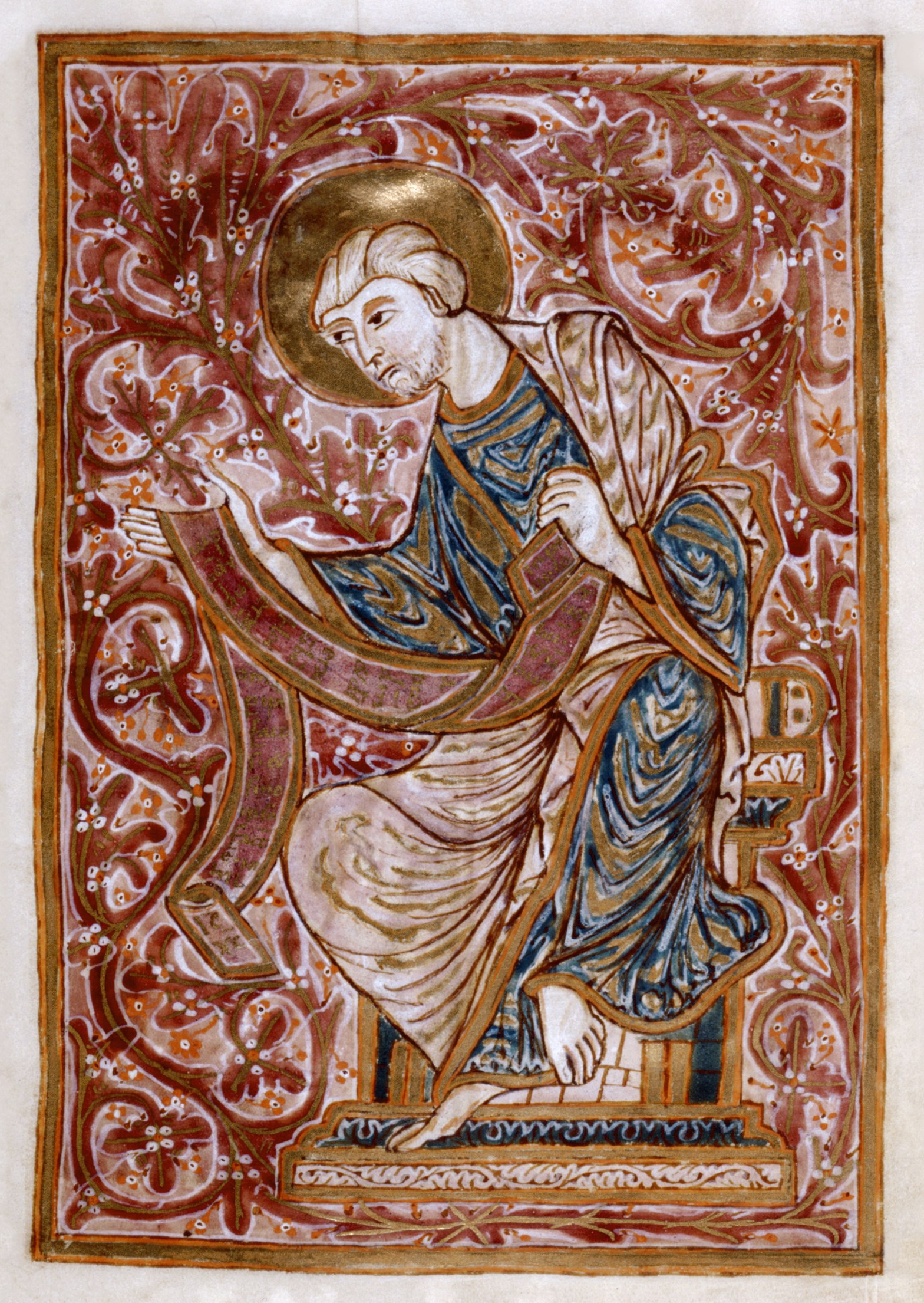
Artwork is a 10th century work depicting the Gospel of John
bP
 Culmination of Wisdom