This is going to be my last “John” entry for awhile but this is a really interesting story. Some years back, an English translation of the “Evangelikon”, which accompanied a text titled the “Levitikon”, was published. What is this you ask? It is an alternate version of the Gospel of John. The manuscript was reportedly found by Bernard-Raymond Fabré-Palaprat in 1804 France. As far as I know, the other texts in the codex have not been published in English, but the version of John has, and that is what I will be going through. I am not going to talk about the history of the manuscript. I HIGHLY recommend just picking up this book. It is titled The Levitikon: The Gospels According to the Primitive Church, translated by Rev. Donald Donato of the Apostolic Johannite Church. Let it be known the person who discovered this text had started a Templar revival / Gnostic church in the early 1800s, and this text, along with others from that codex, was the basis of that movement.
So what is different between this version and the regular Gospel of John? Besides minor translation differences, there are quite a few. I may not catch everything with this comparison, but I’ll do my best.
The first major difference I spotted is in the second chapter. The Passover of the Jews verses are different. In the ESV translation, it states:
13 The Passover of the Jews was at hand, and Jesus went up to Jerusalem. 14 In the temple he found those who were selling oxen and sheep and pigeons, and the money-changers sitting there. 15 And making a whip of cords, he drove them all out of the temple, with the sheep and oxen. And he poured out the coins of the money-changers and overturned their tables. 16 And he told those who sold the pigeons, “Take these things away; do not make my Father's house a house of trade.” 17 His disciples remembered that it was written, “Zeal for your house will consume me.”

18 So the Jews said to him, “What sign do you show us for doing these things?” 19 Jesus answered them, “Destroy this temple, and in three days I will raise it up.” 20 The Jews then said, “It has taken forty-six years to build this temple, and will you raise it up in three days?” 21 But he was speaking about the temple of his body. 22 When therefore he was raised from the dead, his disciples remembered that he had said this, and they believed the Scripture and the word that Jesus had spoken.

23 Now when he was in Jerusalem at the Passover Feast, many believed in his name when they saw the signs that he was doing.
What I have in BOLD above, this is omitted in the Levitikon version. After finding the money changers, Jesus scorns them and they leave. The story jumps immediately to verse 23. In this aspect, it did not show a violent outburst towards the money changers. In fact, they co-operated and left. The Gospel of John has been criticized over the years for it’s anti-Semitic tone but the omission of this section changes that narrative, at least in this chapter.
In John 6, we have these two verses in the ESV translation:
42 They said, “Is not this Jesus, the son of Joseph, whose father and mother we know? How does he now say, ‘I have come down from heaven’?” 43 Jesus answered them, “Do not grumble among yourselves.
In the Levitikon version (LV), we have some extra verses in between 42 and 43. It is asked that since he (Jesus) has come from the Greeks, is this why he is allowed to converse with us. It is also asked if what Jesus learned among the Egyptians, and what their fathers had taught them, is he allowed to converse among them. After these two questions are posed, it goes back to the normal narrative. This implies that Jesus had travelled to foreign lands and learned from various Greek and Egyptian teachers. The canonical gospels leaves out what Jesus did after a short mention of his teenage years all the way through the start of his ministry (roughly 15 years). Did he travel to Greece and Egypt? This version would like you to believe that.
Another John 6 difference is the omission of Judas. In the ESV translation, it states:
66 After this many of his disciples turned back and no longer walked with him. 67 So Jesus said to the twelve, “Do you want to go away as well?” 68 Simon Peter answered him, “Lord, to whom shall we go? You have the words of eternal life, 69 and we have believed, and have come to know, that you are the Holy One of God.” 70 Jesus answered them, “Did I not choose you, the twelve? And yet one of you is a devil.” 71 He spoke of Judas the son of Simon Iscariot, for he, one of the twelve, was going to betray him.
In the LV, after Jesus mentions about choosing you twelve (J6:70), last part is omitted about one of them being the devil. Instead it mentions he (Jesus) receiving strength from above in order that he may teach in the Father and Holy Spirit, and that he gives them the power he has received from the Father and Holy Spirit, in the temple where the bread of eternal life is kept. Now this quite the departure. It’s a more spiritual ending to this chapter. It makes the Judas mentions feel like a tacked on ending.
John 7:15 is the following verse:
15 The Jews therefore marveled, saying, “How is it that this man has learning, when he has never studied?”
In the LV we have a small addition. After this phrase, before the question mark, there is mention of ‘except Greek letters’. This addition harkens back to the earlier addition where it mentions that Jesus had studied with Greeks and implies he can read / write in the Greek language.
While comparing the two versions, I noticed a foot note that in early manuscripts, John 7:53 & 8:1-11 are not mentioned in the earliest manuscripts of the text. Let it be know that the LV does include that section, so by historical placement of it’s authorship, that would seem to indicate it was produced later and not an earlier version.
John 13:36 – 38 is omitted in the LV. These verses foretell Peter’s denial of Christ three times before the crow of the rooster.
John 17:26 ends with:
26 I made known to them your name, and I will continue to make it known, that the love with which you have loved me may be in them, and I in them.”
However, the LV adds quite a bit after this. Jesus speaks on length about the Holy Spirit. He tells his disciples to teach what they have been taught by him, and that they will receive the Holy Spirit to continue this work. An interesting note is that it mentions that “John will be your father until he comes to be with me in Paradise”. Now which John is this? Traditionally the church has attributed the Gospel of John to John the Evangelist/Theologian. But the introduction to the LV, it presents that the Gospel of John is actually in reference to John the Baptist. Not as in the author of the book, but rather John being the one who is a main character of the story. John the Baptist is not executed in the Gospel of John like he is in other gospels, so is this the John that Jesus is referring to in this version?
J19:42 states:
42 So because of the Jewish day of Preparation, since the tomb was close at hand, they laid Jesus there.
That is the ending of the chapter in the canonical version, but in the LV, there is an extra line that states John the Disciple whom Jesus loved gives testimony to this scripture and encourages the reader to teach it, and thus ENDS the LV! Just like the original ending to Mark, there is no resurrection. There is no appearance to the apostles.
I highly recommend everyone purchase the book. To read it all in full with these alterations does present a slightly different feel to it. Now whether this is a legit alternate version or a medieval forgery, we will never know. But it is a fascinating curiosity!
Be sure to check out these links for a bit more information on the Levitikon:
Martha, sister of Mary (of Bethany) and Lazarus, is a well known secondary character in the Gospels of Luke and John. But has she appeared elsewhere in non-canonical sources? There are some Latin medieval tales (particular of the “Golden Legend” lore) but there are much earlier stories, those being from the Gnostic tradition! I have collected references to this famous myrrh-bearer and provided them below. There are some passages from various Church fathers that refer to Martha as a leader of various groups, but unfortunately no writings exist from those traditions. Hopefully one day something will come out that supports these claims.
While there is mention of Martha in The Gospel of Bartholomew and First Apocalypse of James, it’s the massive Pistis Sophia that supplies the material I have presented. I used the G.S.R. Mead translation for these quotes, but did slightly clean up the wording to make it an easier read for the modern reader.
Chapter 37:
She (Sophia) continued again and uttered the third repentance, saying:
“O Light of powers, give heed and save me. May they who would take away my light, lack and be in the darkness. May they who would take away my power, turn into chaos and be put to shame. May they turn quickly to darkness, who press me sore and say: We have become lords over her. May rather all those who seek the Light, rejoice and exult, and they who desire thy mystery, say ever: May the mystery be exalted. Save me then now, O Light, for I lacked my light, which they have taken away, and I needed my power, which they have taken from me. Thou then, O Light, thou art my savior, and thou art my deliverer, O Light. Save me quickly out of this chaos.”
Chapter 38:
And it came to pass, when Jesus had finished speaking these words unto his disciples, saying: “This is the third repentance of Pistis Sophia,” that he said unto them: “Let him in whom a sensitive spirit has arisen, come forward and speak the thought of the repentance which Pistis Sophia had uttered.”
Martha asked and received permission to speak. It came to pass then, before Jesus had finished speaking, that Martha came forward, fell down at his feet, kissed them, cried aloud and wept with lamentation and in humbleness, saying: “My Lord, have mercy upon me and have compassion with me, and let me speak the solution of the repentance which Pistis Sophia had uttered.”
And Jesus gave his hand unto Martha and said unto her: “Blessed is every one who humbled himself, for on him they shall have mercy. Now, therefore, Martha, are thou blessed. But proclaim then the solution of the thought of the repentance of Pistis Sophia.”
And Martha answered and said unto Jesus in the midst of the disciples: “Concerning the repentance which Pistis Sophia had uttered, O my Lord Jesus, of it thy light-power in David prophesied aforetime in the sixty-ninth Psalm, saying:
‘O Lord God, give heed to my help. Let them be put to shame and con-founded who seek after my soul. May they turn straightway and be put to shame, who say unto me: Ha, ha. May all who seek thee, be joyful and exult because of thee, and they who love thy salvation, say ever: May God be exalted. But I am wretched, I am poor; O Lord, help me. Thou are my helper and defense; O Lord, delay not.’
This then is the solution of the third repentance which Pistis Sophia hath uttered, singing praises to the height.”
Chapter 39:
It came to pass then, when Jesus had heard Martha speak these words, that he said unto her: “Well said, Martha, and finely.”
Chapter 57:
And Jesus continued again in the discourse and said unto his disciples: “It came to pass again thereafter that Pistis Sophia cried unto me, saying:
‘O Light of lights, I have transgressed in the twelve aeons, and have descended from them; wherefore have I uttered the twelve repentances, one for each aeon. Now, therefore, O Light of lights, forgive me my transgression, for it is exceedingly great, because I have abandoned the regions of the height and have come to dwell in the regions of the chaos.’
When then Pistis Sophia had said this, she continued again in the thirteenth repentance, saying:
“Hearken unto me singing praises unto thee, O Light of lights. Hearken unto me uttering the repentance for the thirteenth aeon, the region out of which I have come down, in order that the thirteenth repentance of the thirteenth aeon may be accomplished,–those aeons which I have overstepped and out of which I have come down. Now, therefore, O Light of lights, hearken unto me singing praises unto thee in the thirteenth aeon, my region out of which I have come down. Save me, O Light, in thy great mystery and forgive my transgression in thy forgiveness. And give unto me the baptism and forgive my sins and purify me from my transgression. And my transgression is the lion-faced power, which will never be hidden from thee; for because of it have I gone down. And I alone among the invisibles, in whose regions I was, have transgressed, and have gone down into the chaos. Moreover I have transgressed, that thy commandment may be accomplished.’
This then Pistis Sophia said. Now, therefore, let him whom his spirit urges to understand her words, come forward and proclaim her thought.”
Martha came forward and said: “My Lord, my spirit urges me to proclaim the solution of that which Pistis Sophia hath spoken; thy power hath prophesied aforetime concerning it through David in the fiftieth Psalm, saying thus: ‘Be gracious unto me, O God, according to thy great grace; according to the fulness of thy mercy blot out my sin. Wash me thoroughly from my iniquity. And may my sin be ever present to thee, That thou may be justified in thy words and prevail when thou judges me.’
This is then the solution of the words which Pistis Sophia hath uttered.”
Jesus said unto her: “Well said, finely, Martha, blessed one.”
Chapter 73
And when Mary had said this, the First Mystery said unto her, “Well said, finely, Mary, blessed one.”
And he continued again in the discourse and said unto the disciples: “Sophia again continued in this song and said: ‘The Light had become my savior. And it had changed my darkness into light, and it has rent the chaos which surrounded me and girded me with light.’
It came to pass then, when the First Mystery had finished saying these words, that Martha came forward and said: “My Lord, thy power has prophesied aforetime through David concerning these words: ‘The Lord had become my helper. He had changed my lamentation into joy; he had rent my mourning-robe and girded me with joy.'”
And it came to pass when the First Mystery had heard Martha speak these words, that he said: “Well said, and finely, Martha.”
Chapter 79
“And when Pistis Sophia had said this, she looked at the region of Adamas and saw the dark and chaotic region which he had made, and saw also the two dark exceedingly violent emanations which Adamas had emanated, in order that they might seize Pistis Sophia and cast her down into the chaos which he had made, and constrain and harass her in that region, until they should take her light from her. It came to pass then, when Pistis Sophia had seen those two dark emanations and the dark region which Adamas had made, that she feared and cried unto the Light, saying: ‘O Light, lo! Adamas, the doer of violence, is wrathful; he had made a dark emanation, And he had also emanated another chaos and had made another dark and chaotic one and made it ready. Now, therefore, O Light, the chaos which he had made, in order to cast me down therein and take from me my light-power, take then from him his own. And the plan which he had devised, to take my light,–they are to take his own from him; and the injustice which he had spoken, to take my lights from me,–take then all of his.’
These are the words which Pistis Sophia had uttered in her song. Now, therefore, who is sober in spirit, let him come forward and set forth the solution of the words which Pistis Sophia had uttered in her song.”
Chapter 80
Martha again came forward and said: “My Lord, I am sober in my spirit and understand the words which thou has said. Now, therefore, give me commandment to set forth their solution in openness.”
And the First Mystery answered and said unto Martha: “I give thee commandment, Martha, to set forth the solution of the words which Pistis Sophia had uttered in her song.”
And Martha answered and said: “My Lord, these are the words which thy light-power hath prophesied aforetime through David in the seventh Psalm, saying: ‘God is a righteous vindicator and strong and long-suffering, who brings not on his wrath every day. If ye turn not, he will whet his sword; he had bent his bow and made it ready. And he had made ready for him instruments of death; he had made his arrows for those who will be burnt up. Behold, injustice had been in labor, had conceived wrong and brought forth iniquity. It had dug a pit and hollowed it out. It will fall into the hole which it had made. Its wrong will return on its own head, and its injustice will come down on its pate.'”
When Martha had said this, the First Mystery which looked without, said unto her: “Well said, finely, Martha, blessed one.”
Those are the various quotes of Martha in the Pistis Sophia. As you can see, she is just applying various Psalms to the Repentance of Sophia stoy line. If I find more Martha quotes elsewhere, I will be sure to update this page. I may put up some of those medieval tales as well. One of which sounds pretty interesting, so we shall see….
This particular Coptic tale is quite interesting. It is an ascension text, but then dives into a question and answer narrative. John the Theologian/Evangelist is taken up into the heavens by Jesus. There, John is handed over to a Cherubim, whom he questions rigorously. There are some interesting dialogue that is presented here. I find the Eucharist dialogue to be really fascinating. The manuscript from which this story originates is dated to about 1000AD, though like texts of this nature, an earlier date is most probable. This is a decently length read, and like always, I “modernized” some of the wording to make it a bit easier to read for the modern viewer. The original translation was done by E. A. Wallis Budge in 1913.
ALPHA OMEGA JESUS CHRIST
THESE ARE THE MYSTERIES OF JOHN THE APOSTLE, THE HOLY VIRGIN, WHICH HE LEARNED IN HEAVEN. IN THE PEACE OF GOD. AMEN.
And it came to pass that when the Savior had risen from the dead, He came on to the Mount of Olives, and sat down. And He made a cloud to envelop all the countries wherein were the Apostles, and it gathered them together into the presence of the Savior upon the Mount of Olives. And John answered and said unto the Savior, “My Lord, behold Thou did say unto me: ‘Thou are My beloved one, and thou has found grace before Me.’ Now therefore, my Lord, I wish Thee to take me into heaven, and show me all the mysteries so that I may know them.” And the Savior made answer and said unto him, “John, enquire thou of Me fully, and I on My part will hide nothing from you. Rise up, and let us pray to My Father, Who is blessed, and He shall hear us.”
Then the Savior and the Apostle John rose up, and He prayed a long, blessed prayer. And when He had said ‘Amen’, the heavens moved away upon this side and on that, and they opened out one beyond the other even to the seventh heaven. And behold, a great Cherubim came out from heaven, and the whole place shone with bright light, and the whole of his body was full of eyes, and flashes of lightning shot out from him.
Then the Apostles became like unto dead men, and they fell down upon the earth through fear; but the Savior took hold of their hands, and raised them up, and removed the fear from them, and established their hearts for them. And John answered, “My Lord, explain to me the order of the Cherubim, which is exceedingly terrible.” The Savior made answer and said unto John, “Hearken unto Me, and I will show you everything. Thou sees the Cherubim. The words of the Father are hidden within him, from their beginning until their fulfillment. Behold, I will make him to come to you so that he may explain everything, O My beloved John.”
And the Savior turned Himself towards the Cherubim, and He said unto him, “I tell you to take My beloved John into heaven. And you shall explain onto him every question which he shall ask you.” Then straightway the Cherubim lifted up John upon his wing of light, and he bore him up unto heaven. And when he arrived at the first gate, the gatekeepers opened the door to him with readiness and fear. Now I, John, saw great mysteries in the First Heaven. I saw twelve men seated upon twelve thrones, within the great gate, in great glory and dignity. And I said unto the Cherubim, “Master, who are these who are seated in such majestic dignity?” The Cherubim said unto me, “See these twelve men? These are the twelve Rulers of the worlds of light, and each one of them rules for one year at a time; but Michael is he who orders their operations, so that the earth brings forth its fruit all the same.” And I said, “There does come a year sometimes when there is a famine in one place or another.” The Cherubim answered and said unto me, “Behold, I have shown you that which you did ask me.” And I answered and said unto the Cherubim, “My Lord, there comes a year when water is scarce, and yet there is plenty, and there comes a year when water is exceedingly plentiful, yet there is a famine; how is this?” The Cherubim answered and said unto me, “See thou that the water is under the feet of the Father? If the Father lifts up His feet, the water rises upwards; but if at the time when God is about to bring the water up, man sins against Him, He is wont to make the fruit of the earth to be little because of the sins of men. Now if at the time when He is about to bestow a little fullness, and men keep guard over themselves so as not to commit sin, the Father is wont to bless the earth so that it may bring forth fruit, and abundance comes through the supplication of Michael. It only men were to know of the supplications of Michael at the time when the water should come upon the earth, they would never commit sin at all. However, Michael takes with him twelve times ten thousand angels, and they go into the presence of the Father, and they cast themselves down before Him, and they do not rise up again until God sends the waters down upon the world.”
Then I answered and said unto the Cherubim, “I have heard one say that ‘God created the heavens and the earth’, and again, that ‘God created the waters from the beginning.'” And the Cherubim said unto me, “Hearken, and I will inform you concerning everything. Before ever God created the heavens and the earth, water was in existence, and there is no one whatsoever who knows anything about the creation of water except God Himself. For this reason whosoever shall take an oath which is false, in the name of water, shall never receive forgiveness. And whosoever shall take an oath which is false by the wheat-plant, shall also never receive forgiveness, for the same ordinance applies to both the water and the wheat-plant.”
And I said to the Cherubim, “My Lord, I wish that you would inform me concerning the matter of the wheat-plant, and tell me where, in the beginning, before the earth had been cultivated, it was found that man might live upon it.”
The Cherubim said unto me, “Hearken, and I will inform you concerning everything. Now it came to pass that God having created Adam placed him in the Paradise of joy, and He gave him a command saying thus: ‘Of every tree which is in Paradise thou shall eat, with the exception of the tree of knowledge of that which is good and of that which is evil; of that thou shall not eat. And on that day wherein thou shall eat thereof, thou shall certainly die.’ Now the Devil was jealous of Adam when he saw with what great glory he was surrounded. The Sun and the Moon, the two great luminaries, used to come daily and worship Adam before they rose above the earth. And the Devil went and led astray Adam and his wife, until at length they were cast forth out from Paradise; and they were banished to the land of Eueilat, where Adam lived a life of care and anxiety. Now after all these things, Adam was hungered, and he could not find food to eat similar to that which they were wont to eat daily in Paradise. And he cried out to the Lord in grief and in tribulation of heart. And the Son of graciousness, Who acted as sponsor for him, had compassion upon him, and He spoke unto His Good Father, the Lord of the Angels and of the Spirits, saying, ‘Behold, the man whom We have created in Our image and likeness is hungered, and I am sorrowful on his account, O My Father. Now, if it be Thy will, do not let him die before Thy face.’
And in this wise did His Father of Compassion answer and say unto His beloved Son, ‘If it be that Thou are moved with compassion for the man whom We have created, and who has cast My commandment behind him, go Thou and give him Thy flesh and let him eat thereof, for it is Thou who has undertaken to act as his advocate.’
And the Son of Goodness made answer and said unto His Father, ‘Blessed by Thy word. That which Thou has said I will do.’ Then the beloved Son came forth from the presence of His Good Father, and He took a little piece of His right side, of His divine flesh, and He rubbed it down into small pieces, and brought it to His Holy Father. His Father said unto Him, ‘What is this?’ And He said, ‘This is My flesh, according to what Thou did say unto Me.’ His Father answered and said unto him, ‘Yea, certainly, My Son. Wait, and I will give unto Thee some of My own flesh, which is invisible.’
Then His Father took out a portion of His own body, and He made it into a grain of wheat, and He brought forth the seal of light wherewith He set a seal upon the worlds of light, and He sealed the grain of wheat in the middle thereof. And He said unto His beloved Son, ‘Take this, and give Thou it unto Michael, the Archangel, and let him give it unto Adam, and let him tell Adam that he and his sons shall live thereon. And Michael shall teach him to sow it, and to gather it in at harvest.’ Then Jesus called Michael, and said unto him, ‘Take this grain, and give it unto Adam so that he and all his sons may live thereon.’ And Michael came to Adam, and he was on the Jordan, and it was the eighth day since he had eaten anything, and he was crying out to the Lord for food. And Michael said unto him, ‘Peace be to thee! The Lord has heard your prayer, and He has sent unto you a seed of grain.’ And when Adam heard these words from Michael, his body recovered its strength, and he came from the water, and cast himself down at the feet of Michael. And Michael gave unto him the grain which had been sealed with the seal of light, and he taught him how to sow it and to reap it, and he went up into heaven with great glory. Therefore the water, and the wheat-plant, and grain, and the throne of the Father stand in one category, and they are the equals of the Son of God.” Now I John saw these things, and I rejoiced when I had heard them.
And it came to pass after these things that the Cherubim raised me up upon his wing of light, and carried me into the Seventh Heaven, and I saw mighty miracles take place therein. I saw there all the ranks of the angels. The first rank contained the Seraphim, who were dressed in grain-plant, and they had golden censers in their hands, and they said, ‘Hallelujah!’ The angels in the second rank had golden phials in their hands, and they were filled with dew, and they were emptying them out on to the fields. Now Michael was the governor who was over them, and he appointed unto each one of them his work.
And I saw another great and wonderful thing. While I John was looking at the angels as they were all divided into ranks, I found that the name of Michael was written upon all their garments, and that the angels were crying out his name always. And I answered and said unto the Cherubim, “How does it come to pass that the name of Michael is written upon their garments? And wherefore do they cry it out?” And the Cherubim answered and said unto me, “No angel is allowed to come upon the earth unless the name of Michael is written upon his garments, for otherwise the Devil would lead them astray.”
After this I saw a great fountain of water, whereof the waters were as white as snow, or as I might say, its waters were like unto milk, and there was an angel standing above it, and his wings were dipped in the water. And the place round about the fountain was planted with trees which were laden with fruit, and the fruits thereof were of a very great many different kinds. And this fountain was like unto a sea, and every tree which grew by the side of it consisted entirely of one branch.
And I, John, saw another great and wonderful thing there. I saw the root of a tree which emitted water into the fountain. And I said unto the cherubim, “My Lord, explain to me the matter of this fountain, the water whereof is white, and the matter of this angel, which stands above it.” The Cherubim said unto me, “This is the fountain which pours out the dew upon the earth.” I said unto him, “How is it that this angel is standing above it, with his wings always dipped in the waters of the fountain?” The Cherubim said unto me, “See thou this angel? His work is this. Every time the trumpet sounds he rises up, and he shakes his wings which are full of dew, and he smites the heavens therewith, and the heavens open, one beyond the other, so that the dew may distil through them upon the earth.” And I said unto the Cherubim, “In what way do these Seven Heavens open, one beyond the other, so that the daylight may penetrate them and fall upon the world?” And the Cherubim answered and said unto me, “Hearken, and I will explain everything to you. There are seven trumpets appointed over the dew, and all these are wont to sound before the dew comes upon the earth. When the first trumpet sounds, and the second, and so on until the seventh, the dew follows the sound of the trumpets from one heave to the other. The seventh trumpet belongs to Michael, and when Michael blows his trumpet, the dew runs swiftly, and all the governors withdraw, until it comes upon the earth in order to make all the fruits to swell.”
Now, while I was marveling at these things, I saw another angel coming from a distance in wrath, and he stood up by the fountain which was filled with dew; he wept, and his eyes dropped blood into the fountain which was full of dew. For he was filled with wrath against all mankind, and the whole of the place trembled and shook when he stood up there. Then the heavens opened on this side and on that and everywhere, and I saw a great and mighty angel come forth from the heavens, and they called his name Michael, and he was girt about the lions with a girdle of gold. There was a sponge in his hand, wherewith he wiped away all the tears of the angel of wrath, and he drove the Angel of Wrath afar off, saying, “Get thee gone from this fountain, you Angel of Wrath, for you wish to bring a famine upon the earth.”
And I said unto the Cherubim, “My Lord, show me the matter of the Angel of Wrath whose eyes drop blood into the fountain.” He said unto me, “See thou Angel of Wrath? He is the Angel of Famine. If Michael were to cease from the wiping away of his tears of blood which he lets drop, and were to allow them to enter the fountain, the water thereof would come to an end and the dew which falls down upon the earth, and diseases and dissensions would break out, and the land would be smitten with famine.” And moreover, he said unto me, “There are forty legions of angels, each legion containing ten thousand angels, who sing hymns over the dew until it comes upon the earth, without any blemish at all in it.”
After these things he brought me to the Land of Eden. He placed me upon his wing of light, and he brought me to the place where the sun rises, by the side of the fountain which supplies water to the four rivers, Phison, Tigris, the Nile and the Euphrates. I saw the Paradise of joy, which was filled with all kinds of trees which bore fruits of all kinds. And I said to the Cherubim, “My Lord, I would like for thou to show me the tree whereof Adam ate, and became naked, and God was afterwards wroth with him.” The Cherubim answered and said unto me, “Thou asks a question which concerns great mysteries, but I will hide nothing whatsoever from you. Now therefore, rise up, set thyself behind me, and I will explain to you everything, and I will show you the tree of the fruit which Adam ate.”
Then I rose up and I followed him. I walked through the Paradise, and I looked round about, and I saw the tree in the middle of Paradise; now it had no fruit upon it, and thorns grew all over it, and the trunk went down into the ground a very long way. And I answered and said to the Cherubim, “Make me to understand the matter of this tree which has no fruit on it, and which is grown over with thorns.” And the Cherubim said unto me, “This is the tree of which Adam ate and became naked.” And I said unto him, “There is no fruit on it; where did he find the fruit which he ate?” And the Cherubim said unto me, “A kind of fruit did grow on it, and it was not without fruit at the that time.” And I said unto him, “Of what kind was its fruit?” He said unto me, “It was a kind of apple.” And I said unto the Cherubim, “Shall it remain wholly without fruit, or not?” And he said unto me, “This is the order which God laid upon it from the beginning.”
Now while I was marveling at these things, I saw Adam. He was coming along at a distance, and he was like unto a man who was weeping. He was spreading out his garment, and he was carrying away in his garment the leaves which were under the tree, and pouring them out on the ground, and burying them. And I said unto the Cherubim, “Why is Adam spreading out his garment, and putting in it the dried leaves which have been blown off the tree, and digging a hole in the ground and burying them therein?” And the Cherubim said unto me, “From the moment when the Devil entered into Paradise, and seduced Adam, and Eve his wife, the trees, which up to that time had possessed a sweet smell, ceased to have any smell at all, and their leaves began to fall off. And Adam used to dress himself in the leaves, and to make them be witnesses for him in the judgment because of what he had done.” Then I said unto the Cherubim, “My Lord, by what means did the Devil enter into Paradise, and seduce Adam and Eve? Unless this matter had been permitted by God he could not have entered in, for nothing can take place without the consent of God.”
Then the Cherubim said unto me, “Four and twenty angels are appointed to Paradise daily, and twelve go in there daily to worship God. Now at the moment when the Devil went into Paradise, and seduced Adam, there was no angel at all in Paradise, but an agreement took place that they should remain outside it until Adam had eaten of the tree.” And I said to the Cherubim, “If they agreed to this, with the consent of God, then no sin rests upon Adam.” And the Cherubim said unto me, “By no means. If Adam had been patient for a short time, God would have said to him, ‘Eat of the tree.’ God removed the righteousness wherewith he was arrayed, and He cast him forth from Paradise, in order that the things which He spoke might be fulfilled when He should send His Son into the world.”
And I said unto the Cherubim, “My Lord, of what kind was this righteousness wherein Adam was arrayed, and which he received from His hand?” And the Cherubim said unto me, “On the day wherein God created Adam, Adam was twelve cubits in height, and six cubits in width, and his neck was three cubits long. And he was like unto an alabaster stone wherein there is no blemish whatsoever. But when he had eaten of the fruit of the tree, his body diminished in size, and he became small, and the righteousness wherein he was arrayed departed and left him naked, even to the tips of his fingers, that is to say, to his very nails. If he was not cold in the winter, he was not hot in the summer.”
And I answered and said unto the Cherubim, “My Lord, at the time when God created Adam, He also created Eve with him from the heavens. But, on the other hand, I have heard that God created Adam and Even from the beginning, and, again, I have heard that God brought a deep sleep upon Adam, and that when he was unconscious, He took one of the ribs from his side, and made it into a woman, and that He filled up the place where the rib was in his side with flesh. The Almighty did not then create two bodies, there being only one body.” And the Cherubim answered and said unto me, “Hearken, and I will explain unto you everything. At the time when God created Adam, He created Eve also with him, in one body, for at the time when the Master was working on Adam, the thought concerning Eve was with Him. For this reason two bodies came from one body, but He did not separate them from each other immediately. At the time when He brought slumber upon Adam, and Adam fell asleep, and slept heavily, He brought Eve forth from him, and she became his wife. She was, of a surety, hidden in the rib of the left side of Adam from the day wherein God created him. Consider, then, with great attention the sign which is in the sons of Adam.”
And I said unto the Cherubim, “O my Lord, what is the sign which is in the sons of Adam?” And the Cherubim said unto me, “At the moment when the ice was about to come upon the earth, the first things which went cold in the body of the man were his finger nails. Because at the time when God deprived Adam of the righteousness wherein he was arrayed, the first things which grew cold were his finger nails. And he wept, and cried out to the Lord, saying, ‘Woe is me, O my Lord. At the time when I kept the commandments of God, and before I did eat of the fruit of the tree, my whole body was white like my nails.’ For this reason every time Adam looked upon his nails, he used to cry out and weep, even as Hezekiah, when he was sick, used to turn towards the wall, and weep.”
And I answered and said unto the Cherubim, “When Hezekiah was weeping, why did he not look at the man instead of a wall?” And the Cherubim said unto me, “Hearken, and I will make everything manifest to you, O faithful virgin. Now it came to pass in the time of Solomon that the king compelled all the demons to describe to him all the various kinds of sicknesses, and the remedies which were to be employed in healing them all, and the various kinds of herbs which must be used in relieving the pains of sicknesses, and Solomon wrote them all down upon the wall in the House of God. And any man who was attacked by a sickness, no matter of what kind, used to go into the temple, and look upon the wall, until he found there written the remedy which was suitable for his sickness; then he would take that remedy, and would go into his house, ascribing glory to God. And it came to pass that, after Solomon the king was dead, Hezekiah plastered over the walls of the temple with lime, and the prescriptions for the relief of sickness could no longer be found. Now when Hezekiah the king had fallen sick, and was sick unto death, he could not find the prescription whereby to heal his sickness, because it was he himself who had plastered over the walls of the temple with lime. And when the prescriptions which had been written upon them could not be found again, he went into the house of the Lord, and lay down there, and he looked upon the wall, and he wept, saying, ‘My Lord, let not that which I have done in the matter of plastering over with lime the walls, whereon were inscribed the prescriptions for healing, be held to be a sin by Thee, for I said, Let men make supplication to God with hope, and they shall find healing. Never shall I find a prescription for healing whereby I may be made whole.’ And the Lord heard him, and had compassion upon him, and sent unto him Isaiah the Prophet, and he spoke to him, saying ‘Take the fruit of the wild fig tree, and plaster it over your body, and you shall find relief.’ Now therefore, O John, God will never forsake the man who performs his commandments.”
And again I said unto the Cherubim, “My Lord, I would that you did make me understand the matter of the Cherubim, whose voices cry so loudly in heaven that mankind tremble upon earth at the sounds from them.”
And the Cherubim said unto me, “Do you see these great winds which are shut up inside their storehouses, over which the angels are set? When the trumpet sounds inside the veil, the gentle winds come forth, and they breathe upon the wings of the angel who is over the fountain of the dew; then the angel moves his wings, and the dew comes upon the earth, and the seed grows in the earth, and the trees, and the crops, and the fruit. If the trumpet does not sound, a harsh, strong noise comes forth from heaven, and thereupon the waters of rain come upon the earth in great quantities, which make the fruits grow, and rain storms, and thunders of which men are afraid. For it is the sound of the rustling of the wings of the Seraphim which governs the waters of rain, until they come down into the firmament; and they fall on the earth gently, for if they were to descend upon the earth in their full violence they would lay waste the earth just as did the waters of Noah and the lightnings which came with them. This would happen if the Seraphim did not come down to govern the waters of the rain, for all the waters are in the sky and the heavens. Behold, I have made clear to you all the mysteries.”
And I answered and said unto the Cherubim, “My Lord, I would that you did make me to know what it is which supports the sky and makes it to be suspended thus.” And the Cherubim said unto me, “It is suspended by faith, and by the ordinance of God.” And I said unto the Cherubim, “What is it that supports the earth?” And the Cherubim said unto me, “It is four pillars which support the earth, and they are sealed with seven seals.”
And I said unto him, “My Lord, be not wroth with me when I ask you this matter also, show me, what is it that bears up the four pillars?” And the Cherubim said unto me, “He Who created them knows what appertains to them.” And I said unto the Cherubim, “My Lord, what is the ordinance concerning the hours of the night and day?” He said unto me, “Hearken, I will show you. God appointed twelve Cherubim to stand outside the inner veil, and they were not to toil in any way, but were to sing twelve hymns daily. When the first Cherubim had finishing singing his hymn, the first hour came to an end. When the second Cherubim had finished singing his hymn, the second hour came to an end, and so on until the twelfth Cherubim. When the twelfth Cherubim had finished singing his hymn, the twelve hours were ended.”
Then I said to the Cherubim, “As concerning the twelve hours of the night: are there Seraphim appointed over them, or not?” And the Cherubim said unto me, “Assuredly not, but when the beasts, and the birds, and the reptiles pray, the first hour is ended. When the second hour is ended, the beasts pray again, and so on until the twelfth hour of the night; it is the animals of God which set limits to them.” And I said unto the Cherubim, “Does the sun know when the twelve hours have come to an end, so that he may depart to the place where he sets or rises?” And the Cherubim said unto me, “When the angels who blow the trumpets have finished, Michael knows that the twelfth hymn is finished, and he speaks to the Angel of the Sun, who goes and brings to an end his course.”
And I answered and said unto the Cherubim, “My Lord, is it God Who ordains the life of a man from the time when he was in his mother’s womb, or not?” And the Cherubim said unto me, “Know thou that one man is wont to perform very many superfluous works, and another very many acts of goodness, from the time when he is born to the end of his life. God, however, sets a sign on the righteous man before He fashions him, for it is impossible to cause anything to happen without God. But sin is an alien thing to God, for He Who created man was without sin. It is man who himself commits sin, according to his wish, and according to the desire of the Devil.”
And I said unto the Cherubim, “Man has been born to suffering, according to what Job said, ‘My mother brought me forth for suffering.’ ” And the Cherubim said unto me, “God is a compassionate Being, and He does not forsake man utterly, but He shows mercy upon him, for he is His own form, and His own image, and is the work of His own hands. And now, O John, He will not forsake him that does the will of God, and he who does good things shall receive them doubled many times over in the House of God.”
And I said unto the Cherubim, “My Lord, at the moment when God is about to create man, does He give him the name ‘righteous’ or ‘sinner’, or not?” And the Cherubim said unto me, “Hearken, and I will show you. At the moment when God is about to create a man, before He places him in the womb of his mother, He calls all the angels, and they come and stand round about. If the Father blesses the soul, the angels make answer ‘Amen’. If there come from His mouth the words, ‘This soul shall give Me rest,’ the angels make answer ‘Amen’. If the Father says, ‘This soul shall commit iniquity,’ the angels make answer ‘Amen’. Whatsoever comes forth from the mouth of the Father, that comes to pass.” And I said unto the Cherubim, “Is the matter of which man is fashioned more excellent than that of the beasts?” The Cherubim said unto me, “Yes. Now when men die, each one of them is taken to the place of which he is worthy, but so far as beasts are concerned, whether they die, or whether they live, their place is the earth.”
And I said unto the Cherubim, “Are there souls in them?” He said unto me, “Every created thing has a soul in it. Now therefore, the soul of every created thing is its blood.” And I said unto the Cherubim, “Will they then be punished, or will rest be given unto them?” He said unto me, “Let it not be that rest be not given unto them, and let them suffer not; but man is a being who can suffer, and can enjoy rest.”
And it came to pass that when I had heard all these things, I marveled at the works which God performs in connection with man. And I said unto the Cherubim, “My Lord, be not wroth with me if I ask this matter also. I would that thou did inform me concerning the stars which we see in the firmament, and tell me why it is that we cease to see them when the sun has risen. I would that thou did inform me where it is they go until it is time for them to perform their service again.” And the Cherubim said unto me, “The stars are of different orders. There are some stars which remain in the heavens until noon, but they cannot be seen because of the light of the sun. There are seven stars which come in the north of the world, and they remain there in the heavens always. And there are seven stars in the heavens which are called:
those which are there are not permitted to emerge from their place of storehouse, except when death comes upon the earth.”
And I said unto the Cherubim, “Why is it that one star differs from another? And why is it that a star is wont to transfer itself from the place which it had originally to another?” And the Cherubim said unto me, “Hearken, and I will make known unto you everything. There are very many orders of stars which move from the place wherein they were placed originally, but the decree of God which directs them abides forever. Behold now, I have made manifest unto thee all things, O beloved one of God. Arise, get thee down into the world, and tell therein everything which you have seen.”
Then straightway the Cherubim brought me down on the Mount of Olives, where I found the Apostles gathered together. And I told them of the things which I had seen, and when we had saluted each other, each departed to his country, ascribing glory to God. And they preached in the Name of the Christ, through Whom be glory to Him, and His Good Father, and the Holy Spirit forever. Amen.
Featured artwork: Orthodox iconography of a Cherubim
Jesus and John on a cloud, made with Midjourney A.I.
I guess I have Saint John on my mind as I have yet another post on him (and a few more in queue!). My last post was an Ethiopic version of the death of John, this time I have a Coptic tale of this event to share. The manuscript of this story dates to about 990AD. I am not sure of when the story was originally written, so like the previous one, you’ll just have to go with it. And as usual, I use E.A. Wallis Budge’s translation (from 1913) as my basis in this transcription, but have updated some of the words to make it a bit easier to read for the modern viewer.
THE REPOSE OF SAINT JOHN THE EVANGELIST AND APOSTLE OF THE CHRIST. IN THE PEACE OF GOD. AMEN.
The blessed John was in Ephesus with the brethren, rejoicing in the Lord. Now on the first day of the week all the brethren were gathered together, and John began to speak to them, saying “My brethren, my fellow heirs, and my partners in the Christ Jesus, our Lord, know that unto you hath the Lord given from His hand power, and that he had wrought for you very many mighty works, and miracles, and acts of grace. And you know of what kind are the teachings, and the guiding directions, and the refreshing, and the service, and the gracious acts, and the gifts, and all the other things which you see with your eyes, which are given unto you from the hand of our Master. He had never made Himself manifest unto you through the eyes of the body, neither have you hearkened unto Him through the ears of the body, but He had made Himself visible unto you through the integrity of your heart, and by visions, and by works which are holy. Strengthen yourselves, then, in Him, and you shall remember Him at all times; moreover, you shall also remember the mystery and the association which had come unto you, and which our Lord had fulfilled.
And now, O brethren, He made supplication to you through Himself, and He appealed unto you, wishing to make you to cease to grieve Him over much, or to despise Him, or to conspire against Him, for He knows the despising which takes place through you. He knows also the reviling, and He has knowledge of the treachery, and the punishment wherewith you punish Him. When you shall hearken unto His holy commandment to obey it, He will show compassion upon you. Do not make to grieve through you the Good God, the Merciful, the Long-suffering, Him Who is without spot, Him Who is without blemish, the Ineffable, the God Who is One alone, the Unchanging One, Him Who is without guile, Him Who is without wrath, the Name which is above every name which men can comprehend. Let Him but rejoice with you, and you enjoy free and happy citizenship with Him. Let Him but have gladness with you, and you live in happiness and innocence. Let Him but repose in your hearts, and you are turned into beings who rejoice in holiness of life. Let Him but show Himself unmindful of you, and you must live in painful restraint. Let Him but have pleasure in you, and you become participators in good things and in the things which are offered to Him. Let Him but live delicately, and you love Him. Let Him but laugh, and you become ready to follow Him.
I say these things, then unto you, O my brethren, because I hasten to embark on a certain matter which has been laid upon me, and of which the completion shall be unto me by the help of God. For of what kind is the other matter which I shall say unto you, there being for you the pledge of your God? There is for you the pledge of His kingdom, there is for you His presence, which cannot be entreated. If you cease from the habit of sinning from this time onwards, then the deeds which you have committed through want of understanding He will remit to you; but if even after you have had knowledge of Him you continue and persist in the doing of these same works, they shall first of all try you in the judgment, and then they shall deliver you over to the fire.”
Having said these things, Saint John prayed, saying, “Jesus, who did weave the crown which was in Thine own garland. O Thou Who did make the crown of all the saints, and these plants which are of many kinds, and has changed men into Thy flowers which do not wither and fade! O Thou Who has spoken Thy words in our hearts! O Thou Who alone does have a care for Thy servants! O Thou Physician of our bodies, Who does heal them all for nothing! O Thou Who alone does do good unto us! O Thou in Whom there is no pride whatsoever! O Thou Who alone are the Compassionate, and are the Lover of all mankind! O Thou Who alone are the Savior, and the Righteous One, Who exists in every place, Who has existed from everlasting, God, the Christ Jesus! Thou are He Who shelters everyone who puts his hope in Thee, with Thy gift, and with Thy compassion. Thou knows every wile and every craft deed of the Enemy who does wage war against us at all times.”
And when Saint John the Evangelist had made an end of saying these words, he took bread, and he gave thanks unto God in this manner, saying, “What other blessing is there? Or what other word can be spoken? Or what other giving of thanks is there which we can pronounce over this bread which we break, except Thou alone, the Lord Jesus, the Christ?
We ascribe glory unto Thee, O Lord Jesus the Christ, Whose Name has been made manifest by the Father. We ascribe glory unto Thee because of Thy coming in through the door. We ascribe glory unto Thee for Thy holy resurrection from the dead, which has been made know unto us through Thee. We ascribe glory unto Thee, the Way. We ascribe glory unto Thee, the Seed, the Word, the Salt, the True Gem, the Holy Storehouse, the Plough, the Net, the Majesty, Who was sent for the sake of us, the children of men, that He might deliver the race of man. We ascribe glory unto Thee, the Truth, the Rest, the Glory, the Might Power, the Commandment, the Boldness of speech, the Freedom, and our place of refuge.
For Thou are the Lord, the Root of immortality. Thou are the Fountain which cannot be destroyed. Thou are the Strength which endues throughout the Ages. Thy Name has been set upon all these things here, so that we also may make our cry unto Thee through them. For we know Thy Majesty which is invisible, and which does not make itself manifest unto us at this time. When Thou shall have purified us, then we shall see Thee alone in the body which Thou has changed from oldness into newness.”
And as John was breaking the bread, he prayed over each one of his brethren, so that they might be worthy of the Grace of the Lord. Similarly Saint John himself, when he tasted the bread, prayed for himself. John the Theologian spoke after this manner saying, “Let me, even me, have a portion with you, O my beloved.”
Then he said to Pyrrhus, “Take with you two brethren, and let them have baskets in their hands, and digging tools, and follow me.” Now Pyrrhus was not by any means neglectful, and he did according to what he had been commanded by Saint John the Theologian, and the servant of God. And when the blessed John had come forth from his house, he went outside the gate of the city, and he gave orders that the exceedingly great multitude, which were following him and pressing upon him, should be made to withdraw, and to depart from him. And when he had arrived at a place in the region wherein were the tombs, he said to the brethren, “My sons, dig a grave in this place,” and those who were there dug down into the ground. Then John the Theologian was commanding them saying, “Dig the grave very deep.” And he was saying, “Dig down much deeper”; and those who were there dug down deeper still. And he spoke with them, and addressed words to them, and encouraged them, and counselled them unto edification, and he instructed them, and he persuaded them to enter into the Kingdom of God. And he prayed over each one of them.
Now when the young men had finished making the grave in the place wherein they had dug it, they arranged everything connected therewith in a seemly manner, according to what Saint John wished. Now we had no knowledge whatsoever of what he was about to do. Then he took off the clothes which were upon him, and having stripped them off himself, he threw them down into the place which they had dug deep in the ground, and which was in the form of a chamber which spread out. Then John stood on his feet – now the only garment which he had on him was a tunic which came down on both sides – and having spread out his hands he prayed thus saying, “O Thou God, Who has chosen me for Thyself to be an Apostle to the heathen, and has sent me forth into the world, Who has made manifest the Prophets and His Apostles, Who has never ceased from doing that which is good since the foundation of the world, Who delivers everyone who has no strength, Who has made Thyself to be apprehended by every man of reason, unto Whom every living thing ministers through His foreknowledge, Who did make our soul to have longings, and does make it to be tranquil, or solitary and savage, Who does Thyself make it to laugh to scorn its enemy, Who did fashion it like unto Thyself when it was dead, Who did make for it a law which it could distinguish in the abyss of lawlessness, Who did make it to vanquish its enemy by causing it to flee from him; Who did give it Thy hand and did deliver it from Amente; Who did not leave it to become a citizen of this world, who did teach it to escape from its enemy; who did make Thy knowledge to illumine every place; Thou Son of God, Thou Savior, Thou Lord, Thou Orderer of the things which are in the celestial heights, Thou Guardian of the things which are on the earth; Thou Grace and Gladness of those who belong to Thee; receive Thou the soul of John, which belongs to Thee, for it is Thou Who has kept me up to this hour, and I have never at any time polluted myself with women.
Thou did appear unto me at the time when I was wishing to marry a wife in the period of my youth, and Thou did say unto me, ‘John, I have need of you.’ Thou did in the beginning act as the steward of my body, when the desires caused by the sicknesses of the body arose, and it was Thou Who did prevent me from gratifying them on many occasions when I was wishing to marry a wife. Afterwards Thou did speak to me at the third hour of the day on the sea, saying, ‘John, if it be that thou does not in truth belong to Me, I will withdraw Myself from thee. Take thou a wife, and you shall make yourself to become blind in both my eyes; thou shall suffer grief, then thou will pray unto Me.’ Thou it was Who did open my heart three times in the same year, and Thou did graciously bestow upon me other eyes, which did not make themselves visible. Thou it was Who did make the joyful expectation of the contemplation of women to become to me an abomination. Thou it was Who did deliver me from a fleeting fantasy, and did keep me for the life which endures forever. Thou it was Who did make me to become a strange to the madness of evil which arises in the flesh, and did make me to be remote from the death which is bitter. Thou it was Who did deliver me from the second death, that is to say, the Gehenna of fire, and di make me to stand up, being a pure man. Thou it was Who did stop the mouth of the disease which appertained to my soul, and did prevent the committal of the act which appertained thereto, or rather the outward and manifest works which are wont to be performed by the body. Thou it was Who did deliver me, and did cast out from my heart that which disturbed me sorely. Thou it was Who did prepare me to come unto Thee in a state of holiness. Thou it was Who did make my thoughts concerning Thee to be unpolluted. Thou it was who did graciously grant unto me the faith in Thee which was undivided. Thou it was Who did make my thoughts and my counsels to incline ever more and more towards Thee. Thou does give unto each man according to his works. It was Thou who did deposit in my soul the intention not to permit anything whatsoever except Thyself to enter into me. For what can I find which is more choice ore more pure than Thee? And now I have found Thee. And I have fulfilled the stewardship which Thou did commit to me; make me therefore worthy to enjoy rest in Thy holy repose. Do thou bestow upon me graciously the perfection which is in Thee, that is to say, the sinlessness and the salvation, which cannot be described, and which cannot be pried into, and which are beyond the comprehension of man. I come unto Thee, my Lord Jesus, the Christ. Let the fire die down, and let the darkness withdraw itself, and let Chaos become helpless, and let the furnace of blazing fire be without power, and let Gehenna be extinguished, and let the holy angels accompany me, and let the demons shake with fear. Let the holy angels would the Principalities, and let the Powers of darkness withdraw themselves and fall down headlong. Let the Places which are on the right hand stand on their feet. May Diabolos be put to shame, and Satan made an object of ridicule. May his wrath be quenched, and may his raving madness be suppressed. May his honor be disgraced, and his pride wounded; may his sons be dragged downwards, and may all their roots be pulled out. Grant Thou unto me the power to walk, and strengthen me so that I may complete my course without suffering and without trouble. I come unto Thee, my Lord, that I may receive the good things of those who live in holiness.”
And when John the Theologian had said these things, he looked towards the east, and he ascribed glory to God, and stretching out his hands again he prayed, saying, “Be Thou with me, O my Lord Jesus, the Christ.” Then straightway he cast himself down into the pit which they had dug, the place wherein his apparel was spread out, and when he had said to them, “Peace and grace,” he dismissed the brethren, and they departed. And they came out of the city on the morrow, and they could not find him, but they found his sandal, and the newly dug ground in the place where he had gone down into the earth. Finally they remembered the word which the Lord had spoken to Peter, saying, “If I will to make him remain until I come, what is that to thee? Follow thou Me.” And they ascribed glory to the Lord Jesus, the Christ, because of His miracle which took place in the blessed Apostle, and Evangelist, and Theologian, and holy virgin, Saint John, the beloved of the Christ, Jesus our Lord, and our God, and our Savior, to Whom, with the Father and the Holy, and universally vivifying and consubstantial Spirit, all glory is seemly, now, and always, and forever and forever. Amen.
Featured artwork is a Byzantine era icon of John’s repose.
Returning back to the translations of E. A. Budget with another Ethiopic tale, this time in regards to Saint John the Evangelist/Theologian. This translation appeared in 1898 in “The Contendings of the Apostles Vol 2” and I’ve slightly modified some of it for the modern reader. I am currently unsure where and when this story originated, so you’ll just have to take it as is. Enjoy!
In the name of the Father, and of the Son, and of the Holy Spirit. One God.
Here begins the Book of the Death of John, the son of Zebedee, the disciple and friend of our Lord Jesus Christ, the Virgin and Evangelist, wherein are described his divinity and his departure from this world which took place on the island of Patmos on the fourth day of the month TIR (December 30). May his peace protect his handmaiden Walatta Madhan forever and ever, Amen.
Now the going forth of each of the holy Apostles unto the county which had come unto him as portion from God took place after the giving of the commandments by God, the Redeemer of the whole world, and after his Ascension into heaven with great glory. And the portion which came unto John, the son of Zebedee, was Asia. And when he had come unto Epheson (Ephesus), which is the mother-city of Ephesians, he preached unto them, and told them the story of the Gospel in the name of our Lord Jesus Christ, the Son of the living God, amid great striving, and privation, and fatigue, and did wonderful things without number. And even after his patient endurance, and the tribulations, and the trials which came upon him from the men of this city, they multiplied their worship of false gods, more than the men of every other country, even as said the scribe who is one of us. And the city of Ephesus, the story of which is told in the “Acts of the Apostles,” continued thus to do until at length the people thereof would take oaths by things which were lies, and until there was nothing true in it, even as the book said, “The men of the Ephesians perform worship unto the goddess of the temple, Artemis the great.” And afterwards John overthrew that unclean temple and destroyed it by his preaching, and he wrought miracles and wonderful things innumerable in the name of our Lord Jesus Christ. And he cleansed the country from the uncleanness of idols, and he delivered the people from a bitter worship wherein there was no profit, and he brought them to the knowledge of God our Lord Jesus Christ, and of his glorious Father, and of the Holy and Life-giving Spirit. And he built churches everywhere in the country in the name of our Lord Jesus Christ, and appointed unto them bishops, and priests, and deacons; and the faith in and the knowledge of the name of our Lord Jesus Christ increased among them, and righteousness multiplied in the land.
And after all the Apostles had finished their work, and had gone forth from this world – now Peter had been crucified in the city of Rome, and they had cut off the head of Paul in the same city, and Mark they had flayed alive in the city of Alexandria and it was two days before he died, and in this wise each of the Apostles suffered in the country which he had gone to convert, and they all had contended with tribulations and with abundant punishments, each according to his own way – the blessed John still continued to live in the world for many years, and he lived until the reign of Domatianos (Domitian), and he lived seventy years after the resurrection of our Lord. And he became an exceedingly old man, and he tasted death neither by the sword not by any violence whatsoever, for God loved him exceedingly because of his purity, even as it is written in his Gospel that he was the friend of the Lord who was worthy to rest upon the breast of the Son, and One Who sits in the bosom of his Father in the heavens, by reason of the purity of his soul and boy. And after he had written his divine Gospel which exalts all hearts, and the Apocalypse which he saw in Patmos, and which is full of the mysteries of God, God Almighty – may his Name be blessed! – wished to deliver him from the fatigue of this world which he had endured patiently for his Name’s sake, for the blessed John was rejoicing exceedingly in God. Now there were multitudes of the brethren who were dwelling with him in Ephesus, and they were glad and rejoiced in the sight of him even as if they had seen God, our Lord Jesus Christ. And on each Sabbath day all these people would come together, and would rejoice in the Spirit, and would sing psalms and spiritual hymns, even as they were sung in the churches by the children of the Jerusalem which is in the heavens. Then would John the Evangelist begin to address the people with words of the spirit, and to say unto them, “Behold, O my beloved brethren in the spirit, ye heirs unto me in the service of the Kingdom of God our Lord Jesus Christ, behold, ye have seen how many mighty deeds our Lord Jesus Christ has wrought by my hand among you, and what great gifts of spiritual grace, and how many miracles, and what exalted doctrine, and what great knowledge, and what abundant admonitions, and comfort, and honor, and greatness, have come from Him, and how great is the multitude of His mercies towards you, even as your eyes have seen, and your ears have heard. And be not open in respect of your eyes only, through fear, but be ye also open in respect of your hearts. And be ye watchful to complete your work so that ye may be meet to be called ‘blessed,’ concerning whom the Book said, ‘Blessed are ye when ye labor, and when ye become strong in God, and ye shall become workers unto Him at all times without trepidation.’ And ye know the consolation which is the foundation of the Great Mystery which our Lord Jesus Christ wrought to effect your salvation. And He entreats you, O brethren, by my tongue, to become learned in His judgment, holding Him in fear, and neither to grieve His spirit, nor to sin against Him, nor to provoke Him to anger, nor to reject Him with contumely. For He knows the mysteries of your hearts, and the things which proceed from you, and all your works, and all your transgressions of His commandments. And grieve ye not God the Merciful, the Compassionate, the Patient, the Most Holy of those who are holy, Who makes holy, in Whom there is neither blemish, nor impurity, nor malice, nor wrath. He alone is, and He loves and regards with pleasure him that rejects Him not. God is His Name which is to be named above all names, and He does not exist for time only but for eternity. This is the Name upon which it is necessary for you to lay hold, so that He may rejoice in your acceptance thereof, and in the integrity of your paths; He is well pleased with your lives, for He loves gentleness and patience, and He accepts these; rejoice in your good works and in your patient endurance of many tribulations; He takes pleasure in your purity, and in your love for Him; He puts your compassion to the test, and He accepts your repentance; be ye not then moved from following His commandments. And although ye commit tens of thousands of wickednesses, if ye turn unto Him with a pure mind, He will accept your petition, for He grieves for the wickedness of the children of men. If a fornicator turn to Him in truth He will receive him as if he were a virgin. And although the man shall turn again to his evil deeds, and go back unto wickedness, yet if once again he be converted, and repent, and make straight his ways, God through His abundant mercy will have compassion upon him, and will receive him. But if a man continue in the wickedness of his works, and nevertheless put his trust in the mercy of God to save him, God will know thereof, for He will lay hold upon the main in whom He finds iniquity, and He will never, never, show mercy upon him. These things I speak unto you, O brethren, but I myself endeavor to fulfill the commandments wherewith God has commanded me.”
And as Saint John was giving commandments unto the brethren, he rose up and stood on his feet, and stretched out his hands to heaven, and he gave thanks and made supplication, saying, “O my Lord Jesus Christ, Who has mingled the crown which is fleeting with that which is abiding, Who are the one sweet-smelling flower wherein are mingled all other flowers, Who has sown in our hearts thy life-giving Word which alone makes beautiful with sweet odor the souls and the bodies of those who are gentle and lowly of heart, Who are compassionate, and Who shows love unto man, Who are alone the righteous Judge, Who has existed always, Whom no place can contain; O my Lord Jesus Christ, do Thou in the multitude of Thy mercy preserve all those who put their hope in Thy Name, for Thou knows the cunning and the craft devices of him that leads men into error which are spread abroad in every place, and we beseech Thee by Thy power to put an end to them.”
And it came to pass that when he had ended his prayer he took bread, and gave thanks, saying thus: “What blessing, and what speech which ascribes praise, and what word, and what speech of gratitude, and what thanksgiving, and what Name shall be pronounced over this bread which is now broken except They Name, O Jesus Christ, Whose Name gives life and salvation? This is the bread of life which came down from heaven for the salvation of the world. We bless Thee, O thou Who has become for us a way unto the place of life. WE give thanks unto Thee, O Thou Who by Thy word has created all things, Thou are the Guide, Thou are the Gate of grace, Thou are the Salt, Thou are the Treasury of the Pearl, Thou are the Net of the life of righteousness, Thou are the Power of Wisdom, Thou are the Refuge of rest, Thou are the Prop of life; and Thou permit thyself to be called by these names for the sake of men, so that they may be saved and become new men from out of the wickedness of their former works into the sin of which they had fallen; and to Thee be glory forever and ever. Amen.”
And it came to pass that when Saint John had finished breaking the blessed bread, he first partook thereof himself and then gave it to those who were gathered together there, and he entreated them to become worthy thereof, and he gave them the salutation of peace, and sent them to their habitations. And after these things he told Prochorus his disciple to take with him two of the brethren, and picks and spades, and Prochorus did as he had commanded him. Then John went out with them from the city in secret and walked outside it, and he said unto us, “Dig here”; and we received his commands, and dug a hole even as he had commanded us. And he put off his apparel and laid it in the grave, and he stood above it; and he put a linen garment, and stretched out his hands upwards, and he looked towards the east, and prayed, saying “O my Lord Jesus Christ, who has chosen my poor person to be Thy disciple and to preach in Thy holy Name those things which thou did declare aforetime by the tongues of Thy holy Prophets, whom thou did deliver at all times; Who desires the salvation of all those who believe on thee with all their hearts; Who first gave unto all created beings their souls that they might know that thou are the Comforter of all Thy people, and that Thou does not reject either great or small; Who did give unto my soul understanding and meekness; Who did appear thereunto when it was dead; Who did receive it when it was besmirched with the pollution of sin; Who did make it Thy pure bride, after it had been defiled with the wickedness of sin, and brought low by Satan; Who did take it into Thy hand, and did raise it up from the fallen estate into which the Enemy had cast it; and did deliver it from the hands of its Enemy, and did make him to be a feeble thing beneath its feet; Who alone are holy among the saints, O Jesus Christ my Lord, Whose Name is sweet; Who reject not from his memory the joy of heavenly beings; Who are the Protector of those who fear Him upon the earth, and of those who are beneath it; Who are the Joy of those who are good; Who are the Protector of those whose hearts are true; Who receives those who are worthy and who praise Thy Name together according to Thy word and commandment; O Lord, it is necessary that Thou should deliver me from the fatigue of this fleeting world. I give thanks unto Thee, O my Lord, that Thou has preserved me in purity from all the contaminations of the world, and that Thou has set the fear of Thee deep down in my heart. Thou has made to be remote from me all the lusts of sin, and I have had dominion over them; I have destroyed the motions of the flesh, and Thou has driven out the temptations of sin from my body. Thou has made my soul to refuse to perform outwardly the evil which is in my flesh, and the sin which encompasses the members of my body. Thou has made my path straight, and free from turning aside; and Thou has given me of old a faith which is straight and is free from error; and Thou has written Thy Law within me; and Thou has not permitted me to desire any other god save Thyself. And what is there greater, or more honorable, or sweeter, or more to be desired than Thyself? And who is there that can be compared with Thee? Turn, O Lord, unto that which is Thine, and accept the soul of John, Thy servant, who put his hope in Thee. Behold, I have ended the service which thou did give unto me to perform. And behold, I have come unto Thee, having put away grief, and unto the rest which is nigh unto Thee, for I know, O my Lord, that Thou will order in peace my way into the habitation of Thy glory.” And when the blessed John had spoken all of these words he fell upon his face on the ground, and he worshipped and said, “I bow before Thee, O Though unto Whom every knee bows, and unto Whom all the glory belongs, Thou the Father, and the Son, and the Holy Spirit, forever and ever. Amen.”
Then John said unto us, “My children, may the peace of God be with you! Go now into the city, and tell the brethren therein to keep all the words which I have commanded them, for concerning these we shall be obliged to justify ourselves; and of the will of God I have hidden nothing whatsoever from you. You shall be rewarded according to your works, and I am innocent of your blood. I have concealed naught of doctrine of Christ from you, and there is naught of the knowledge of Him which I have not declared unto you; ye have hearkened thereunto from me, and I have informed you concerning Him. Take good care that you be not cast away, and that you suffer not condemnation in the judgments, and that ye be not obliged to endure a two fold penalty, for from those unto whom He has given much He will require much, even as our Lord said, ‘And may our Lord Jesus Christ be with your spirits for ever, and may he Strength you, and may He fulfill all your desires in His sinless judgment.”
Now from this time forward John dwelt not with them in the flesh. And when we had heard these words from him, we embraced his hands, and feet, and wept bitterly; and we left him in the grave and departed to the city, and we told the brethren everything that had happened. Then they went forth quickly with us unto the place where we left Saint John, and we could not find him, but we did find in the earth his apparel, and also his sandals filled with dust. Now the grave which we had dug was not visible, and we were unable to make certain where its place had been, because of the dust which had filled it up and which lay about over it in abundance. And we came back to the city and were giving thanks unto God Who had bestowed the gifts of grace upon those who were worthy thereof, and especially because He had shown honor unto His beloved John, the Evangelist, and had delivered him by his wonderful death. Therefore let us ascribe the praise which is meet to the Lord, and to His Father, and to the Holy Spirit forever and ever. Amen, Amen and Amen.
On September 17, it is the Orthodox feast day for Saint Sophia and her Daughters. The daughters being Faith, Hope and Love. Now while these characters (presented as literal people) were all given a back story by the church, they are actually allegorical figures. This past year I joined a Freemason fraternity and it has opened a new way of thinking for me on various ideas. It has re-kindled my love of Hermeticism as well as looking at various Christian related allegories in a new perspective. I have been writing various essays along my journey and I am not sure how to present them. Most of them would not work on this blog, but I do feel this essay would. In the first degree (Entered Apprentice) of Freemasonry, the theological virtues are taught which are Faith, Hope and Charity (Love). When I was informed of this, I immediately thought of the Saint Sophia and her Daughters icon. This ignited a thought in my mind to write out a short essay of it. Below is my essay. I think it may come off more as a homily though.
Wisdom and her Daughters
The above icon represents Saint Sophia and her three daughters, Faith, Hope and Love. While there is a church legend stating them to be literal people, complete with a back story, they are actually a set of allegorical saints. I will go through each one and describe their role in detail.
We start with Saint Sophia. For those who do not know Greek, Sophia is the word for WISDOM. So an alternative name for this icon would be “Wisdom and her Daughters”. Faith, Hope and Love are the three theological virtues or the three graces. Corinthians 13:13 states “So now faith, hope, and love abide, these three; but the greatest of these is love.” (ESV)
Depending on the translation, love is replaced with charity, thus the two terms are synonymous.
In Freemasonry, these three concepts are taught at the initiation. Faith is the believe in a higher power, Hope in immortality, and Charity / Love is what we have for all mankind. The icon above represents that all three of these virtues come from Divine WISDOM. If one does not have WISDOM, then Faith in a higher power is typically not believed. Any Hope for immortality is laughed at by the ignorant. Charity for mankind is ignored by the selfishness of the individual. To have Divine WISDOM, these concepts would flow freely from the individual.
The definition of Faith is a complete trust or confidence in someone or something. We are told that in FM to have Faith in a supreme deity. To have complete trust in something, one must have absolute knowledge of that concept. To have that kind of knowledge, is to have WISDOM. This is not to say we have complete knowledge of the supreme deity, far from it, but we have full knowledge in that supreme deity’s existence.
The definition of Hope is a feeling of expectation and desire for a certain thing to happen. We hope for immortality. In Christian ideology, immortality would be salvation. The definition of salvation is preservation or deliverance from harm, ruin, or loss. So we are expecting, or having a desire, to be preserved or delivered from harm, ruin or loss. How does one desire to be preserved from harm? This takes knowledge/gnosis of the situation to be able to keep oneself from meeting that dreadful end. In Christian thought, it is the belief in Christ that saves the individual from harm. To know Christ is to know Divine WISDOM. In Orthodoxy, Christ is Wisdom. In early Christianity/Gnostic belief, Christ is the Bridegroom of WISDOM, as Christ is the Word (LOGOS) and together with WISDOM (Sophia), form the bond that helps one escape the material world. Whether one believes in the singular or plural concept of Wisdom, as long as one possesses Divine Wisdom, they will have that desire of being delivered from an undesirable end.
The definition of Charity is the voluntary giving of help to those in need. By offering charity to a person, we are offering them love. Hence their relation in how they are used in this concept. This is why Corinthians 13:13 states that Charity (Love) is the greatest virtue of them all. One may lose their faith and their hope in salvation, but to show charity towards others, that act would be the greatest of all. Once again, having the WISDOM of Divine Love towards others shows us the true love of “God’s” grace. There is no greater act one could perform on this planet than that of charity, and unfortunately, an act that is often not given.
To summarize this essay, when one has a knowledge of a greater power, this spawns out the concepts of having trust in that particular power, having the desire to be persevered from ignorance and showing our fellow mankind love.
-bP
Featured picture is an icon of St. Sophia and her Daughters.
Another Apocalyptic John text that appears in the New Testament Apocrypha Volume 2 (edited by Tony Burke) is titled “Apocalypse of holy John the Theologian” or “3 Apocryphal Apocalypse of John”. The exact date of this work can not be pinpointed, but it looks like 1300s CE-ish. It survives in Greek and Church Slavic manuscripts. I will be going over the Greek translation (by Tony Burke and Chance E. Bonar). Since the translation is in copyright, I will not reprint the text. I will give my brief thoughts on it as a whole.
This “Apocalypse” story is a bit different than the other two I previously posted about. This one is a dialogue narrative between John the Evangelist/Theologian and Abraham! Also, there is no mention of the anti-Christ.
The story starts with “God” going up the Mount of Olives. The text states that “having risen from the dead 6530 years from the time of Adam, on March 27”. Now that’s awfully specific! In the Slavonic version of the text, no span of time is mentioned. At the top of the Mount, “God” brought out Adam and the other prophets. He then appeared to the disciples and told them now they will receive the Kingdom of Heaven. He spoke to Abraham and informed him that he (Abraham) will be diving the souls of the departed into two groups, one for heaven and the other for hades. The disciple Peter asked when the end will come and the Lord answered with the typical response of hate being born in the midst of humanity, nation against nation, famines, wars, brother versus brother, etc…. The usual answer given in these apocalyptic texts. The Lord was taken up into heaven at the seventh hour of the fifth day. His mother, Mary, followed soon after and the apostles then welcomed all of the righteous and Abraham.
Now begins a back and forth between Abraham and John the Evangelist/Theologian. A shorter version of this dialogue has appeared as it’s own text titled “The Questions of John to Abraham” (which is also featured in this book in case you pick it up). A lot of the answers to these questions are Abraham first scolding John for not listening to when so and so prophet said “insert bible verse”. Some of the questions that John asks are “Are the Jew going to find mercy?”, “Will the impious be judged with the Christians?”, “Who will recognize their family in the resurrection?”, etc… A lot of the questions seem to be going over the church’s stance on various issues. There are some topics covered such as how to treat priests and monks, wealth, baptism, forgiveness/confession, etc…
After reading the previous two, I was rather disappointed with this one. Like I mentioned earlier, it’s just a text presenting dogma in a narrative dialogue between two biblical figures. The end of times scenario that usually plays out in these works is sorely missing. However if you like reading dogma presented to you in a different fashion, then this text is for you. 😉
The book I got this story from also features another Apocalypse of John story. However, it deals with John Chrysostom, and not John the Evangelist/Theologian. It too is a dialogue work but this time between John C. and Jesus. If you are fond of Byzantine Liturgies, then you’ll want to check out that story.
Artwork is an 18th century Russian icon of “The Bosom of Abraham”.
With my last post, I mentioned how there are several “Apocalypses of John” texts out there besides the canonical version. In the book New Testament Apocrypha: More Noncanonical Scriptures Vol 2 (edited by Tony Burke) there are 3 more texts with this title. This post will be going over what the book refers to as the “First Apocryphal” Apocalypse of John. Kind of hard to distinguish them all if they use the same name, lol. I guess that is about as good as you can do in this instance. The date of this text is unclear but there is mention of it back in the ninth century. The book mentions that it’s probably from the 700s-900s CE time period, but could be earlier. The translation is by Rick Brannan. Since the translation is in copyright, I’ll do my usual synopsis and commentary notes.
The text starts after the ascension of Christ. John is alone upon Mount Tabor. He prayed for seven days to hear from the Lord in regards of what is to come for the world. After this week of prayer, a cloud carried John away from the mountain and towards the face of heaven. A voice told John to look up and understand. When John looked up, an outpouring of light shined upon him. It was greater than that of the sun. Also a strong odor was noticed. The voice told him to “look” and suddenly a book, wider than seven mountains and longer than the human mind can imagine (!), which had seven seals upon it, was revealed to John.
John asked what was in the book and he was told it contained what is in heaven, earth, the abyss, judgment and the righteousness of all mankind. John asked when are these things going to happened and was answered with a parable about famine, using corn and wine as it’s symbols. John asked what will you (the Lord) do after this famine occurs, the voice tells him that the “denier will appear, who is called the antichrist”. John asks that this figure be revealed to him.
So like the previous post, this one has a description of the Antichrist. This one isn’t quite as absurd as the other one, but there are some interesting aspects. Here is a list of attributes:
Face is dark
Hairs of his head are sharp as arrows
Eyebrows are like a field (i.e. wildness)
Right eye like the morning star rising
Other eye like a lion
His mouth is one cubit length
Teeth a broad span
Fingers are like sickles
Footprint is two spans
Upon his forehead, an inscription “Antichrist”
That last part I found interesting. In Islam, the Dajjal (Antichrist) has the Arabic inscription of “k-f-r”, which means “unbelief”, written upon it’s forehead. The Dajjal’s arrival is also preceded by a famine and lack of rain. His eyes are both unusual as well, though different from this description. Hmm, do I sense a source / inspiration for the Dajjal lore?
The voice tells John that the Antichrist will make false visions. The Lord states that there will be no rain or wind upon the earth during this time. John asks about how long the Antichrist will be active and the answer is “I will make the three years like three months, and the three months like three weeks, and the three weeks like three days, and the three days like three hours, and the three hours like three minutes….” It is mentioned that Enoch and Elijah are both sent to prove this person is the Antichrist, and upon doing so, both will be killed. This happened in the previous story I wrote about.
John asks what will happen after that and the Lord tells him that ALL human beings will die! That’s quite the departure from this type of story where at least some people survive. After the death of all mankind, the angels will will raise up ram horns to the heavens, and the Archangels Michael and Gabriel will sound them. This sound will be heard throughout the world and thus resurrect the dead.
The next part is pretty interesting on how these resurrected bodies will appear. It states that everyone will be resurrected as thirty year olds and that everyone will look the same. This includes ALL of humanity from the very beginning to the time this happens. There will be no different characteristics among anyone. They will also be bodiless, in that they will be angelic in nature. All the angels will take everything that is holy upon the earth and transport it all into the heavens. This will cause the evil spirits to arise from the abyss and merge with the Antichrist. They too will ascend into the heavens.
At this time the world gets annihilated. The planet basically becomes a “clean slate” where the landscape will be flat as a table and white as snow. The great sign of the Son of Man will appear and all the angels will start worshipping it. The Antichrist and his minions will also see it but will be unable to do anything about it. This leads to Christ coming down from the heavens (there’s quite a bit of descriptive detail in relation to this).
John asks what will become of the heavens, the sun, the moon and the stars. The voice tells him that a lamb with seven eyes and seven horns will appear and open the book that has seven seals upon it. The text describes what will happen when each seal is open. Here is the result:
#1 – Stars of the sky will fall
#2 – The Moon will be hidden
#3 – The light of the Sun will be hidden
#4 – The heavens will be dissolved and the sky will be chaotic
#5 – The earth will be ripped apart and judgment will be revealed upon all
#6 – 2/3 of the sea will vanish
#7 – Hades will be uncovered
Well that was quite the interesting take on what the seven seals are! Now judgement begins. First the Antichrist and his minions are judged and sent to Hades (a depth of which one could fall for twenty years and still not reach the bottom). The second to be judged are the idol worshippers and heretics. The third to be judged are the “race of Hebrews” who crucified Jesus. Those people will not go into the abyss but rather to Tartarus. The next to be judged are the baptized Christians. It is of note that they are still judged by their sins, so if a king, priest, patriarch, etc… was not repentant and of bad nature, they will not get a free pass. Those who are deemed worthy, they will live on earth which has been turned into paradise. The text describes this paradise until it’s conclusion, but nothing different stands out from other such descriptions.
And there you have it! I did not mention it during my synopsis but at various sections, the voice quotes various bible scriptures when something happens. That alone tells you that the bible is used as a means to push the narrative. Like the previous story, I appreciate the description of the Antichrist. I always find these details to be fascinating even if they are a bit ludicrous. The emergence of everyone as 30 year olds, androgynous and the fact they are essentially “light entities” was an interesting take.
Featured artwork from the Dublin Apocalypse folio, circa 14th century
No, this isn’t about the book in the canonical Bible, but rather an apocrypha text. In case you are unaware, there are a handful of texts that have the name of “Apocalypse of John” / “Revelation of John”, and I plan to highlight a few of them in the near future. This particular text I am showcasing today is titled “The Revelation of John about Antichrist” (yes, there is no “The” before Antichrist). It is a Latin text that exists in several copies. I am using the New Testament Apocrypha (edited by Tony Burke) as my source. The date of this text is unknown but thinking has it at least 1000 years ago, so in terms of apocrypha, it’s not quite so old as other tales. What is interesting about this particular version is it’s description of the “Anti-Christ”. The text is only four pages long and since the translation by Charles D. Wright is in copyright, I can not relay it word for word but rather will do a synopsis.
The text starts with John the Evangelist/Theologian asking the Lord about the end of the world. The Lord responds with this parable about various signs of the world and that the antichrist will reign and perform great wonders and signs among the people. John asks what will these signs be so everyone will know how to spot him. Now we get to a very interesting part where the Lord gives a detailed description of him. It is as such:
Born of a harlot from the tribe of Dan in Israel
600 cubits in length of his body and 400 in width (!!!!)
One eye
One ear
His lip hanging down to his chest
No upper teeth or knees
soles of his feet will be round like wheels
One rib will be visible on his left side but not the others
Black hair, which is also described as “terrible”
A threefold fume will go through his nose and reach heaven like a sulfurous flame
He will be raised in Chorazin and will dwell in the city of Bethsaida, but only for a few days.
Now that is one heck of a description!! Not sure how anyone could not know something was up with this fella! lol
John is then told that no one will be able to hide from this antichrist, that all of God’s elect will die because of him. Those who believe in this antichrist will receive a mark (single letter) upon their forehead and it will not be removable. The dead will rise, rivers reverse, trees uprooted, etc… Typical end of the world scenarios. I do think the alternation of the mark to just a single letter is interesting.
On the day of the birth of the antichrist, everyone will know as fathers will kill sons (and vice versa), brother and brother, women will no longer conceal themselves from men, churches destroyed, priests will lament, people will no longer have any thought for relics or bodies of the saints. Nation against nation, etc.. etc… The typical “signs” of an end times prophecy.
The next section is pretty interesting as it mentions that Enoch and Elijah, who are witnessing this from heaven, decide to wage war against this antichrist. They both are killed and lie dead in the streets for three days and nights. On the fourth day they arise into eternal life and on the fifth day, God sends down the archangel Michael to slay the antichrist, who proceeds to slice him in half! The time line of all this transpiring is that of three years and six months. I like the fact that Enoch and Elijah make an appearance in this story! These two are suggested to be the two witnesses in the canonical Revelation. They are also the two witnesses in the apocrypha “The Apocalypse of Elijah” and the “Gospel of Nicodemus“.
After Michael killed the antichrist, a great silence fell over the earth and heaven for forty days and nights. Once those days were up, angels went to the four corners of the earth and cried out “Arise, arise, arise” and all the dead began to be resurrected. Thus ends this short alternate version of the Apocalypse of John.
I found the description of the antichrist figure to be the most note worthy aspect of the story. It is an interesting description to say the least. Enoch and Elijah making an appearance was fascinating as well. I plan to review more of these alternate apocalypses in the coming months!
Featured photo was made by Martin Schongauer, circa 1480-1490.
Being that June 24 is the feast day (nativity, as his death feast day is later) of John the Baptist, I wanted to bring light to this story found in the New Testament Apocrypha Volume 3 edited by Tony Burke. This interesting text makes it’s modern English translation debut thanks to Tony Burke and Sarah Veale. Since this translation is in copyright, I’ll do a synopsis on each chapter. I have some other John the Baptist stories I would like to get to this year as well. The Jewish preacher was quite the popular guy who is not only venerated in Christianity, but also in Islam, Mandaeism and even Freemasonry! The following story is titled The Martyrdom of Zechariah, a text of an unknown source date.
Chapter 1 – This short chapter describes the flight from Herod’s massacre of infants. It mentions that Joseph was warned by an angel, so he, Mary and Jesus fled to Egypt for twelves months and stayed at the house of Alphaeus. It is mentioned that Herod becomes mad as he can not find Jesus and orders the massacre of all infants two years or younger. This causes Elizabeth (mother of John) to take her child and head into the hills.
Chapter 2 – This chapter deals with the murder of Zechariah. It has Herod’s assassins tracking down Zechariah and demanding him to tell them where his son, John, is located. If Zechariah hands John over, he will be spared. If he does not comply, he will be brought back to Herod. Once the assassins find Zechariah, he denies their request for John and the assassins kill him in front of the temple (apparently they didn’t bother bringing him back to Herod!). Zechariah crawled into the temple and as he reached the altar, he fell over dead. A member of his congregation found the pool of blood and saw that the body had become invisible! The congregation then grieved for seven days. Chapter 2 is pretty much from the Infancy Gospel of James. I’m going to side step this story and present the Zechariah death from that infancy gospel below. Translation is by Mark Mattison:
Chapter 23: The Murder of Zechariah
(1) But Herod asked for John and sent officers to Zechariah, saying to him, “Where are you hiding your son?” But he replied, saying to them, “I’m a minister of God, and I sit in God’s Temple. How should I know where my son is?” (2) And his officers went away and reported all these things to Herod. And Herod was angry, and said, “His son is about to be king over Israel!” And he sent his officers again, to say to him, “Tell me the truth. Where’s your son? You know that your life is in my hand.” And the officers went away and reported these things to him. (3) And Zechariah said, “I’m a martyr of God if you shed my blood, because the Lord will receive my spirit, since you’ll be spilling innocent blood at the entrance of the Temple of the Lord.” And around daybreak, Zechariah was murdered, and the people of Israel didn’t know that he was murdered.

Chapter 24: Mourning for Zechariah
(1) But at the hour of greeting, the priests came, and Zechariah didn’t meet them to bless them as was customary. And the priests stood around for Zechariah, waiting to greet him with a blessing and to glorify the Most High God. (2) But when he delayed, they were all afraid. But one of them gathered the courage to go into the sanctuary and saw blood clotted beside the altar of the Lord. And a voice was saying, “Zechariah has been murdered, and his blood won’t be wiped away until his avenger comes!” When he heard this saying, he was afraid, and he went and reported to the priests what he had seen and heard. (3) And they gathered their courage and went and saw what had taken place. And the panels of the Temple cried out, and they (the priests) ripped their clothes from top to bottom. And they didn’t find his corpse, but they found his blood had turned to stone. And they were afraid, and they went out and reported to all the people that Zechariah had been murdered. And when all the tribes of the people heard, they mourned him and wept three days and three nights. (4) And after three days, the priests held a council about who should replace Zechariah. And the lot fell to Simeon, for he was told by the Holy Spirit that he wouldn’t see death until he saw the Christ in the flesh.
As you can tell, it’s pretty close. Now where the infancy gospel ends, this story will continue on….
Chapters 3 & 4 – Elizabeth carries John and head towards a mountain. She calls out “Mountain of God, receive a mother with child!” God hears this request and sends down the archangel Uriel to split open the mountain for those two to hide. Uriel hid the entrance and fortified it so no one can enter. He provided a spring of water and bread for Elizabeth, and she fed John by her breast milk. Herod’s men could not find the two despite hearing stories they were in the area. This story is sourced from the Infancy Gospel of James as well. Here is it’s excerpt:
(3) And when Elizabeth heard that John was sought, she took him up into the hills and looked around for somewhere to hide him, but there wasn’t a hiding place. Then Elizabeth groaned and said, “Mountain of God, take a mother with her child,” because Elizabeth was unable to go up higher. And immediately, the mountain split and took her, and a light shone through the mountain for her. For an angel of the Lord was with them, protecting them.
Chapter 5 – After John had been in the desert for four months, the Lord went from Egypt with the archangel Gabriel to Bethlehem into the temple where Zechariah had died. He ordered Uriel to get John and bring him there. Once there, all four archangels, Gabriel, Uriel, Raphael and Michael, came out and brought forth the body of Zechariah. The lord blew onto him and gave him life. The Savior commanded that water come from the spring within the Holy of Holies in the temple. He baptized John first and immediately afterwards Zechariah. The angels shouted various praises to God before eventually burying Zechariah below the altar in the church. I don’t believe this particular part of the story originates from any known story outside of this one. The appearance of the four archangels is a nice touch. The interesting part of this chapter is the fact that John was baptized by Jesus/God. This is never mentioned as such in the Gospels. It is typically assumed John was never baptized, as we now think of it (i.e. a Christianized way). So this bit of information adds a twist to the story of John.
Chapter 6 – The Lord goes back to Egypt with Gabriel and John hitches a ride with Uriel back to Elizabeth in the desert. Once with his mother, John was able to get up and walk around! At nine months old, Uriel tells Elizabeth to quit feeding John her milk but rather his food will be wild honey and locusts. This gives the reader the “origin” of why John eats the way he does. Personally I just think John lives very humbly and eats whatever comes to him in the wild.
Chapter 7 – Once John hits 13 months old, an angel said to Elizabeth that Herod is dead and they came leave their mountain hide out. The same angel (unnamed in the story) informs Joseph in Egypt about Herod’s death and that Archelaus now rules. This causes Joseph and his family to flee to a town called Nazareth, where Elizabeth and John are now at.
Chapter 8 – John has apparently been given over to Uriel and at five years of age, John obtained his traditional clothing of camel’s hair and a leather belt. This would be his outfit for the rest of his life.
Chapters 9 & 10- This starts with a problematic time frame. It states John is twelve years old and then begins to talk about John’s imprisonment due to his rebuking of Herod IV. The translator has a note regarding this issue and states it may be in error or missing information. Personally, I’m just going to ignore that part and figure he is much older. The story presented in these two chapters is pretty on par with tradition of John’s rebuke of Herod becoming desirous of Philip’s wife. This causes John’s imprisonment.
Chapter 11 – This chapter is about Jesus being baptized by John. In the narrative of the story, this should have been placed before the previous two chapters. The first line of Matthew 21:25 is quoted in this chapter. Those who don’t know the verse off hand, it states:
The baptism of John, from where did it come? From heaven or from man?” And they discussed it among themselves, saying, “If we say, ‘From heaven,’ he will say to us, ‘Why then did you not believe him?’ (ESV)
But for us readers of the story, we DO know where the baptism of John came from! Back in chapter 5, John was baptized by God/Jesus!
Chapter 12 – C12 accounts the beheading of John. This particular story states that the daughter of Herod was named Herodias, and it was she who danced and requested the head of John the Baptist on a platter. Now we all know the traditional story is that Herodias is the wife of Philip, and that Salome was her daughter, and it was Salome who made the request (on behalf of her mother) to Herod. The names got switched up here. So in that aspect, let’s adjust the names to their proper form and go with that. 😉 At the end of the chapter, it mentions that the dogs in the audience took the head of John and delivered it to his disciples. Good dogs!
Chapter 13 – The archangel finds Elizabeth and led her to John’s disciples. Uriel tells her to bury John where his father lies. She did not know where Zechariah was buried however Uriel led her to the temple that housed his body. John was buried under the altar near his father. Uriel proclaimed that John’s death will be avenged.
Chapter 14 – This chapter includes the gruesome deaths of Herod and Salome for the death of John. The introduction to this text mentions that this comes from various early tradition texts. This is my first time reading it, so I will have to take their word on the matter. It mentions that the daughter was decapitated as she fell into a well and was stuck. Herod died from chocking. Herodias became blind in her left eye. Apparently Herod’s former wife distributed all the property of Herod’s to the poor.
Chapter 15 – This ends the story by mentioning that it was “I, Eurippios, the disciple of holy John, the second of his disciples in strictness, wrote so that….” who wrote out this story regarding John. The translator mentioned that in another manuscript, the name is spelled out as Herpios.
While the story was named for John’s father, it was definitely more about the life of the baptist. Even though a few details were messed up, I thought it was a pretty entertaining read. I do like the gathering of the four archangels. The baptism of John was really interesting though. Be sure to pick up the book this story is featured in. It is a great resource of extremely rare apocrypha.

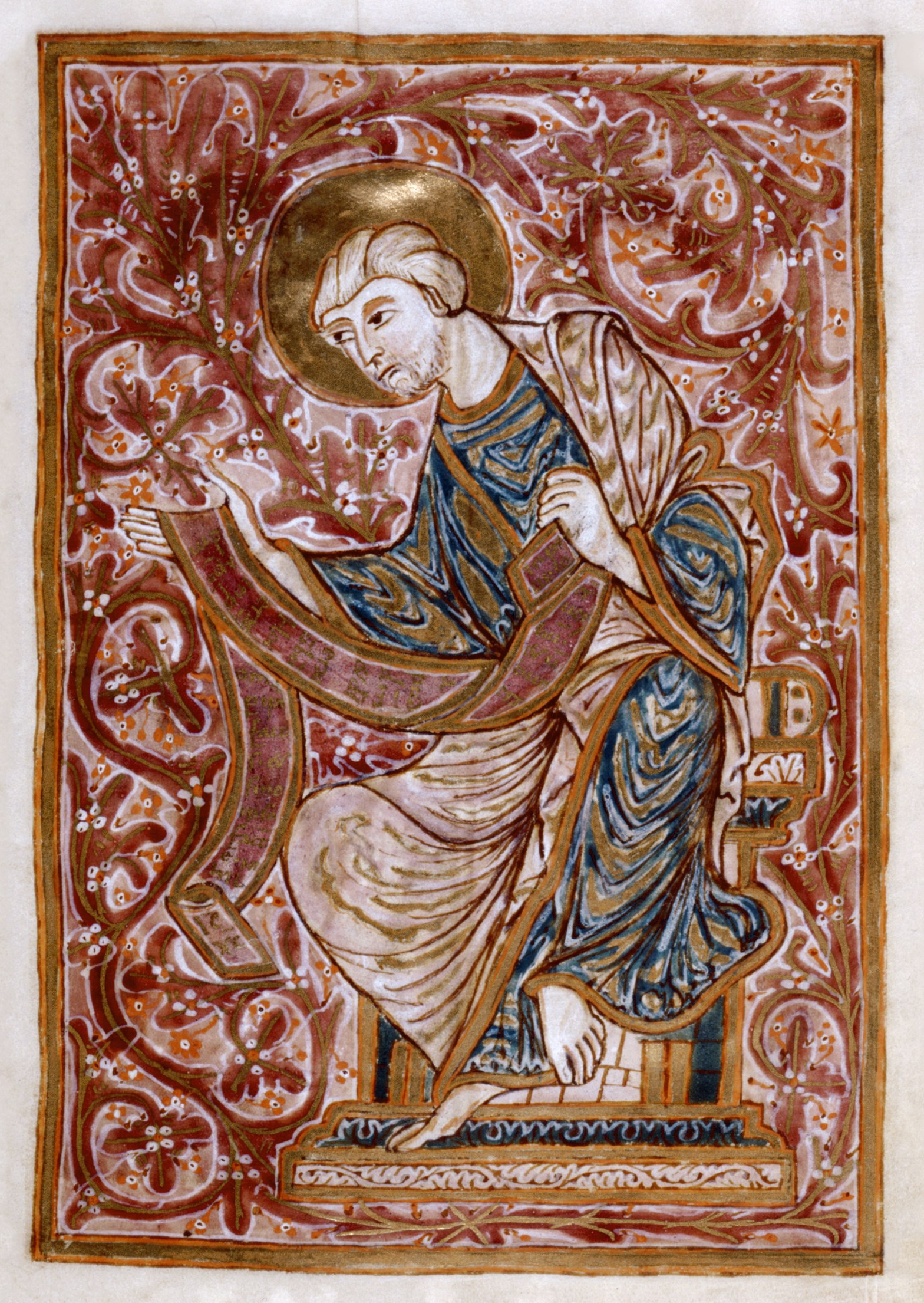
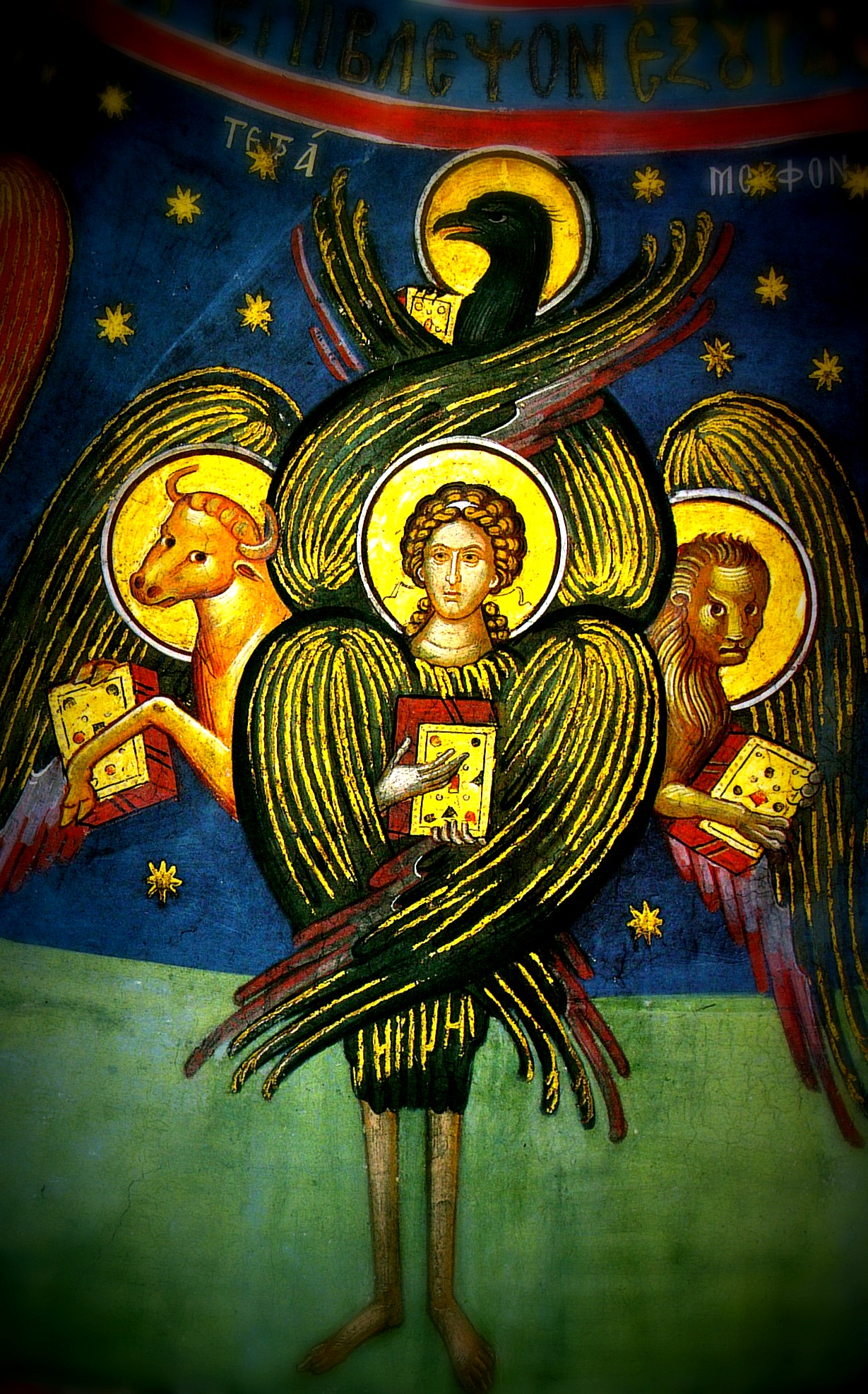


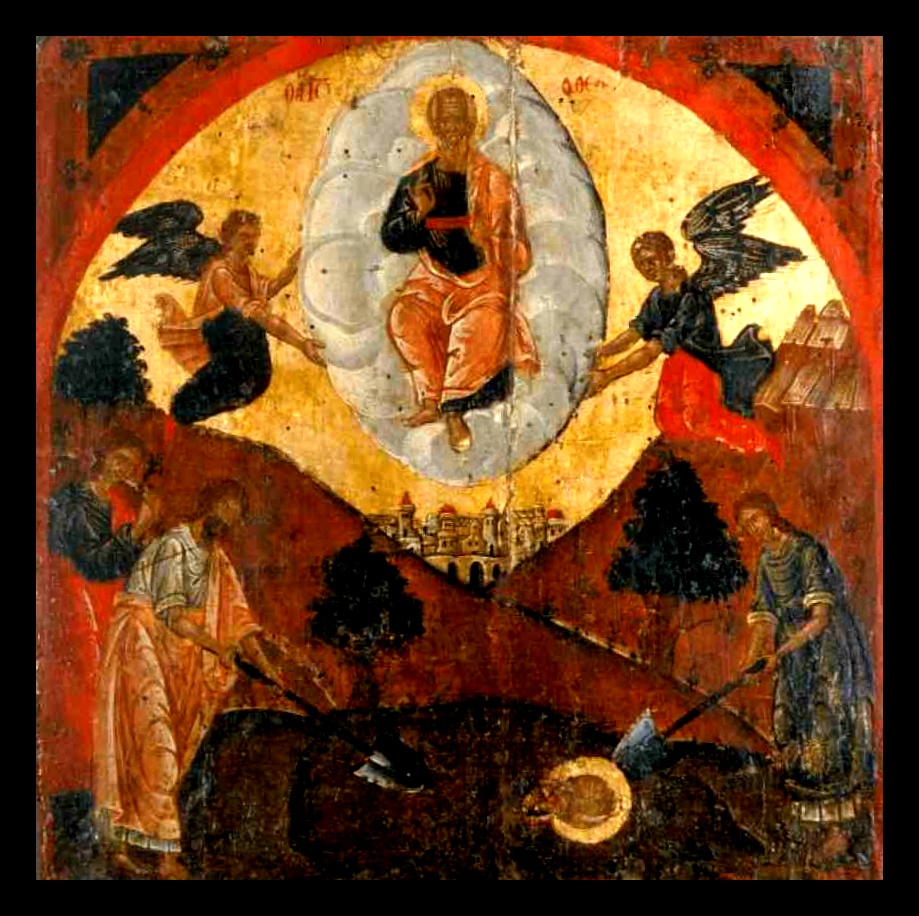
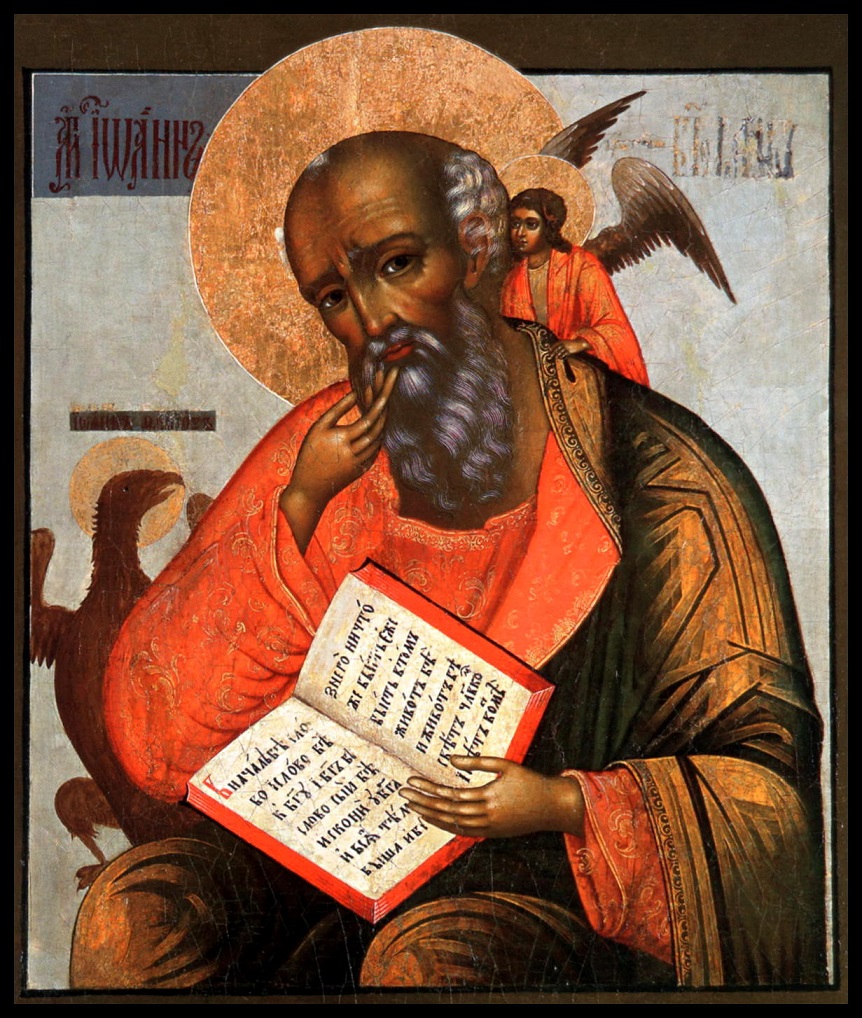


 Culmination of Wisdom