The Unknowable Monad

One of the questions I see in social media groups about Gnosticism regard “God” and what it is like.  Various Gnostic texts explain that the supreme “God” is unknowable.  Actually, they specifically describe what this supreme Monad is not, and usually in great deal.  I think it’s quite ridiculous that humans think they can describe what “God” is.  We may think we have an idea and like to attribute some characteristics to this entity, but really, we have no idea.  Is it just a collective consciousness?  Is it a literal entity (with a beard? LOL).  Personally I like the collective consciousness theory but I will be the first to admit that I could be totally wrong.  I really have no idea.  So when a religious institute tells me what the supreme God is, I just shake my head.  Now we all are aspects of the divine Monad, so in that regard, we can experience the divine that way and sort of help us understand somewhat.  This also goes with the notion of knowing the Father is to know the Son, and through the Son, one knows the Father.  Yes, an aspect, but this still does not answer the question of what “God” is.  Some will say “Love”, and yes, that’s an aspect, but not All.  

I like to show some examples from various Gnostic texts regarding the Monad.  Some of these can be a bit lengthy.

This section is from the Tripartite Tractate:

2. The Father

He existed before anything other than himself came into being. The Father is a single one, like a number, for he is the first one and the one who is only himself. Yet he is not like a solitary individual. Otherwise, how could he be a father? For whenever there is a "father," the name "son" follows. But the single one, who alone is the Father, is like a root, with tree, branches and fruit. It is said of him that he is a father in the proper sense, since he is inimitable and immutable. Because of this, he is single in the proper sense, and is a god, because no one is a god for him nor is anyone a father to him. For he is unbegotten, and there is no other who begot him, nor another who created him. For whoever is someone's father or his creator, he, too, has a father and creator. It is certainly possible for him to be father and creator of the one who came into being from him and the one whom he created, for he is not a father in the proper sense, nor a god, because he has someone who begot him and who created him. It is, then, only the Father and God in the proper sense that no one else begot. As for the Totalities, he is the one who begot them and created them. He is without beginning and without end.

Not only is he without end - He is immortal for this reason, that he is unbegotten - but he is also invariable in his eternal existence, in his identity, in that by which he is established, and in that by which he is great. Neither will he remove himself from that by which he is, nor will anyone else force him to produce an end which he has not ever desired. He has not had anyone who initiated his own existence. Thus, he is himself unchanged, and no one else can remove him from his existence and his identity, that in which he is, and his greatness, so that he cannot be grasped; nor is it possible for anyone else to change him into a different form, or to reduce him, or alter him or diminish him, - since this is so in the fullest sense of the truth - who is the unalterable, immutable one, with immutability clothing him.

Not only is he the one called "without a beginning" and "without an end," because he is unbegotten and immortal; but just as he has no beginning and no end as he is, he is unattainable in his greatness, inscrutable in his wisdom, incomprehensible in his power, and unfathomable in his sweetness.

In the proper sense, he alone - the good, the unbegotten Father, and the complete perfect one - is the one filled with all his offspring, and with every virtue, and with everything of value. And he has more, that is, lack of any malice, in order that it may be discovered that whoever has anything is indebted to him, because he gives it, being himself unreachable and unwearied by that which he gives, since he is wealthy in the gifts which he bestows, and at rest in the favors which he grants.

He is of such a kind and form and great magnitude that no one else has been with him from the beginning; nor is there a place in which he is, or from which he has come forth, or into which he will go; nor is there a primordial form, which he uses as a model as he works; nor is there any difficulty which accompanies him in what he does; nor is there any material which is at his disposal, from which <he> creates what he creates; nor any substance within him from which he begets what he begets; nor a co-worker with him, working with him on the things at which he works. To say anything of this sort is ignorant. Rather, (one should speak of him) as good, faultless, perfect, complete, being himself the Totality.

Not one of the names which are conceived or spoken, seen or grasped - not one of them applies to him, even though they are exceedingly glorious, magnifying and honored. However, it is possible to utter these names for his glory and honor, in accordance with the capacity of each of those who give him glory. Yet as for him, in his own existence, being and form, it is impossible for mind to conceive him, nor can any speech convey him, nor can any eye see him, nor can any body grasp him, because of his inscrutable greatness, and his incomprehensible depth, and his immeasurable height, and his illimitable will. This is the nature of the unbegotten one, which does not touch anything else; nor is it joined (to anything) in the manner of something which is limited. Rather, he possesses this constitution, without having a face or a form, things which are understood through perception, whence also comes (the epithet) "the incomprehensible. If he is incomprehensible, then it follows that he is unknowable, that he is the one who is inconceivable by any thought, invisible by any thing, ineffable by any word, untouchable by any hand. He alone is the one who knows himself as he is, along with his form and his greatness and his magnitude. And since he has the ability to conceive of himself, to see himself, to name himself, to comprehend himself, he alone is the one who is his own mind, his own eye, his own mouth, his own form, and he is what he thinks, what he sees, what he speaks, what he grasps, himself, the one who is inconceivable, ineffable, incomprehensible, immutable, while sustaining, joyous, true, delightful, and restful is that which he conceives, that which he sees, that about which he speaks, that which he has as thought. He transcends all wisdom, and is above all intellect, and is above all glory, and is above all beauty, and all sweetness, and all greatness, and any depth and any height.

If this one, who is unknowable in his nature, to whom pertain all the greatnesses which I already mentioned - if, out of the abundance of his sweetness, he wishes to grant knowledge, so that he might be known, he has the ability to do so. He has his Power, which is his will. Now, however, in silence he himself holds back, he who is the great one, who is the cause of bringing the Totalities into their eternal being.

It is in the proper sense that he begets himself as ineffable, since he alone is self-begotten, since he conceives of himself, and since he knows himself as he is. What is worthy of his admiration and glory and honor and praise, he produces because of the boundlessness of his greatness, and the unsearchability of his wisdom, and the immeasurability of his power, and his untasteable sweetness. He is the one who projects himself thus, as generation, having glory and honor marvelous and lovely; the one who glorifies himself, who marvels, <who> honors, who also loves; the one who has a Son, who subsists in him, who is silent concerning him, who is the ineffable one in the ineffable one, the invisible one, the incomprehensible one, the inconceivable one in the inconceivable one. Thus, he exists in him forever. The Father, in the way we mentioned earlier, in an unbegotten way, is the one in whom he knows himself, who begot him having a thought, which is the thought of him, that is, the perception of him, which is the [...] of his constitution forever. That is, however, in the proper sense, the silence and the wisdom and the grace, if it is designated properly in this way.

http://gnosis.org/naghamm/tripart.htm

This section is from Eugnostos the Blessed:

He-Who-Is is ineffable. No principle knew him, no authority, no subjection, nor any creature from the foundation of the world, except he alone. For he is immortal and eternal, having no birth; for everyone who has birth will perish. He is unbegotten, having no beginning; for everyone who has a beginning has an end. No one rules over him. He has no name; for whoever has a name is the creation of another. He is unnameable. He has no human form; for whoever has human form is the creation of another. He has his own semblance - not like the semblance we have received and seen, but a strange semblance that surpasses all things and is better than the totalities. It looks to every side and sees itself from itself. He is infinite; he is incomprehensible. He is ever imperishable (and) has no likeness (to anything). He is unchanging good. He is faultless. He is everlasting. He is blessed. He is unknowable, while he (nonetheless) knows himself. He is immeasurable. He is untraceable. He is perfect, having no defect. He is imperishably blessed. He is called 'Father of the Universe'.

http://www.gnosis.org/naghamm/eugn.html 

This section is from Allogenes: The Foreigner:

The Triple Powered One

He [exists] as an invisible One, unattainable for them all.
He contains them all within [himself], for [they] all exist because [of] [him].
He is perfect and [greater] than perfect.
And he is blessed, since he [is] always one.
And [he] exists [in] them all,
being ineffable, unnamable,
being [one] who exists through them all

--he whom, [should] one intelligize him, one [would not desire] anything that
[exists] before him among those [that possess] existence--

for [he] is the  [from which they were all emitted].

[He is prior to Perfection];
[he was prior] [to every] Divinity, [and]
he is prior [to] every Blessedness,
since he provides for every power.

And he is an insubstantial substance,
a God over whom there is no Divinity,
the surpasser of his own greatness and <beauty>.

http://www.gnosis.org/naghamm/allogenes-jdt.html 

This section is from the Gospel of the Egyptians:

The holy book of the Egyptians about the great invisible Spirit, the Father whose name cannot be uttered, he who came forth from the heights of the perfection, the light of the light of the aeons of light, the light of the silence of the providence <and> the Father of the silence, the light of the word and the truth, the light of the incorruptions, the infinite light, the radiance from the aeons of light of the unrevealable, unmarked, ageless, unproclaimable Father, the aeon of the aeons, Autogenes, self-begotten, self-producing, alien, the really true aeon.

http://gnosis.org/naghamm/goseqypt.html

This section is from Mansanes:

But after all of these things, I am seeking the kingdom of the Three-Powered One, which has no beginning. Whence did he appear and act to fill the entire place with his power? And in what way did the unbegotten ones come into existence, since they were not begotten? And what are the differences among the aeons? And as for those who are unbegotten, how many are they? And in what respect do they differ from each other?

When I had inquired about these things, I perceived that he had worked from silence. He exists from the beginning among those that truly exist, that belong to the One who exists. There is another, existing from the beginning, belonging to the One who works within the Silent One. And the silence [...] him works. For as much as this one [...], that one works from the silence which belongs to the Unbegotten One among the aeons, and from the beginning he does not have being. But the energy of that One <is> the Three-Powered One, the One unbegotten before the Aeon, not having being. And it is possible to behold the supremacy of the silence of the Silent One, i.e., the supremacy of the energy of the Three-Powered. And the One who exists, who is silent, who is above the heaven [...], revealed the Three-Powered, First-Perfect One.

http://gnosis.org/naghamm/marsanes.html

From the Untitled Text (from the Bruce Codex):

He set him up so that they should strive against the city in which was their image. And it is in that they move, and in it that they live. And it is the house of the Father, and the garment of the Son, and the power of the Mother, and the image of the Pleroma. This is the First Father of the All. This is the first eternity. This is the king of unassailables. This is he in whom the All is unconscious. This is he who gave form to it within himself. This is the self-originated and self-begotten place. This is the deep of the All, this is the great abyss, in truth. This is he to whom the All reached. There was silence concerning him. He was not spoken of, for he is an ineffable one, he cannot be understood. This is the first source. This is he whose voice has penetrated everywhere. This is the first sound until the All perceived and understood. This is he whose members make a myriad myriad powers to each of them.

http://gnosis.org/library/untitl.htm

This section is from the First Apocalypse of James:

Nothing existed except Him-who-is. He is unnameable and ineffable. I myself am also unnameable, from Him-who-is, just as I have been given a number of names - two from Him-who-is. And I, I am before you.

http://www.gnosis.org/naghamm/1ja.html

There are more examples, but you get the idea!

A Gnostic Hymn

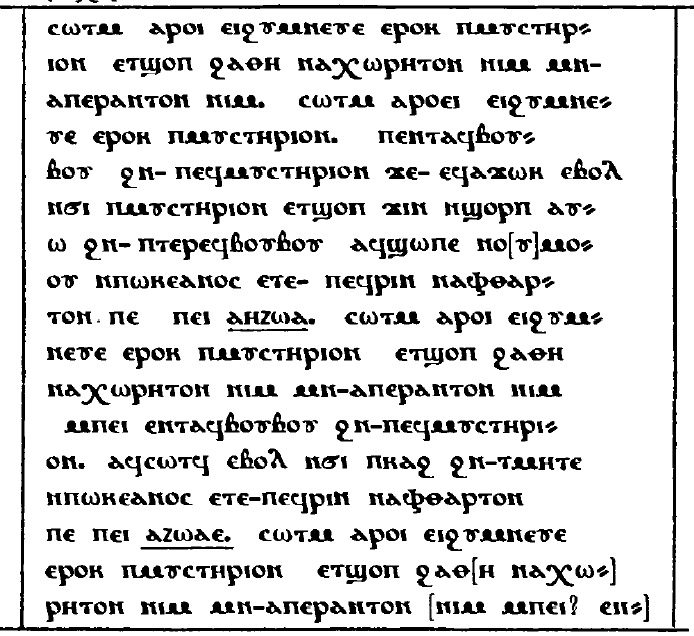
I want to highlight a fragment that is in the Bruce Codex. To me, the Bruce Codex features some of the best Gnostic material available but it seemingly gets over looked by most people. With this post, I want to highlight the segment titled “Fragment of a Gnostic Hymn”. This is fragmented but still, as it is, it’s quite the interesting hymn. I have also linked to a youtube video that does a reading as well as the vowel chant. Yes, this hymn features vowel chanting, which is a trait among some Gnostic texts.

From Gnosis.org:

Hear me as I sing praises to thee, O Mystery who existed before every incomprehensible one and every endless one. Hear me as I sing praise to thee, O Mystery, who hast shone in thy mystery, so that the mystery which exists from the beginning should be completed. And when thou didst shine, thou didst become water of the ocean whose imperishable name is this :

[AHZA]

Hear me as I sing praises to thee, O Mystery who existest before every incomprehensible one and every endless one, who hast shone in thy mystery. The earth in the middle of the ocean was purified, of which the incomprehensible name is this:

[AHZAE]

Hear me as I sing praises to thee, O Mystery who existest before every incomprehensible one and every endless one, who hast shone in thy mystery. All the powerful matter of the ocean which is the sea, with every kind within it, was purified, of which the incomprehensible name is this:

[AHZAHE]

Hear me as I sing praises to thee, O Mystery who existest before every incomprehensible one and every endless one, who hast shone in thy mystery. And as thou didst shine, thou didst seal the sea and all things in it, because of the power within them rebelled, of which the incomprehensible name is this:

[.......]

Hear me as I sing praises to thee, O Mystery who existest before every incomprehensible one . . .

Here is the youtube video link. If you enjoy that audio clip, I recommend checking out the entire video as the author of that clip did other Gnostic vowel chanting from various texts.

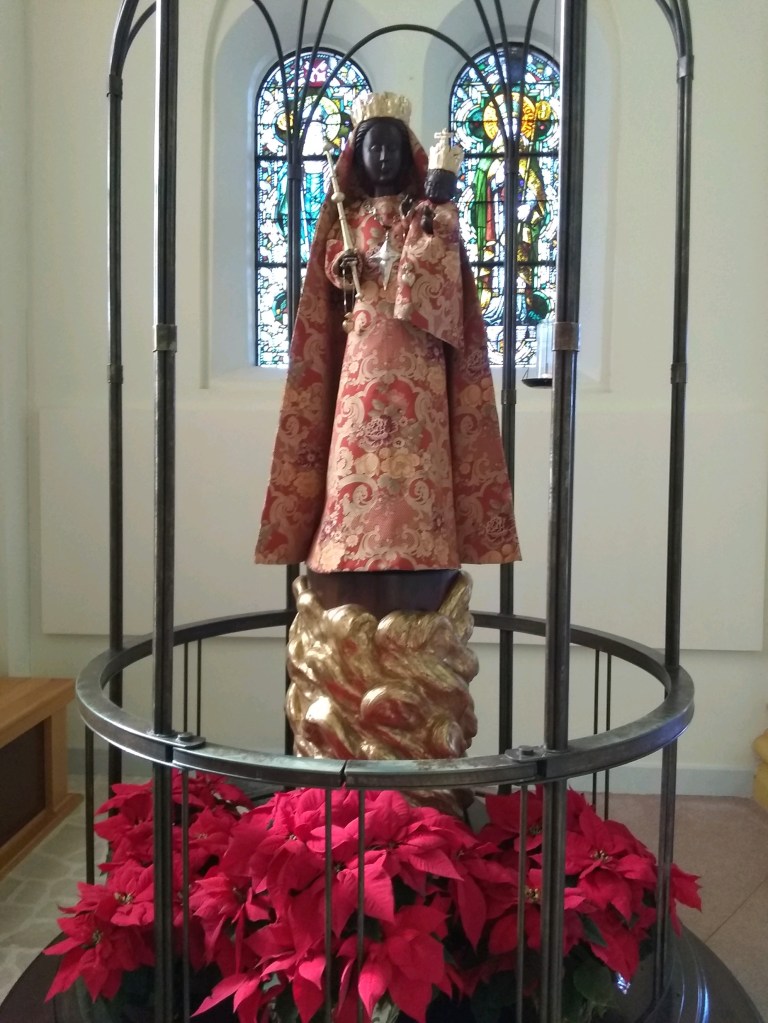
The Black Madonna of the St. Meinrad Archabbey

This entry is a bit different than ones I have done in the past. This is in regards to my experience with the Black Madonna that stands in the St. Meinrad, Indiana archabbey.

Inside the St. Meinrad archabbey

The summer of 2021, I had a pretty rough time with my job. I work in management and had to deal with a lot of stressful issues that had not appeared before in my 17 years of working at this place. It almost broke me. One day after work, I decided to just take a drive. To get away from everything. I have lived here in Southern Indiana for most of my life, minus a few years, and thought I knew the area pretty well, but there was a stretch of highway I never travelled before, or if I did, I did not take note. It’s one of those “lost highways” that no longer serves much of a purpose since the interstate runs parallel to it. But my sense of exploration took hold, so I went down this road. One of the first things I saw that caught my eye was the “Mary Help of Christians” Catholic Church in Mariah Hill, Indiana. I stopped by and admired it’s architecture and the grounds. I did not step inside at that time (I did at a later date and it’s a beautiful church), but this stop inspired me. Remembering there is a monastery in the area, I decided to keep driving and went to St. Meinrad, Indiana.

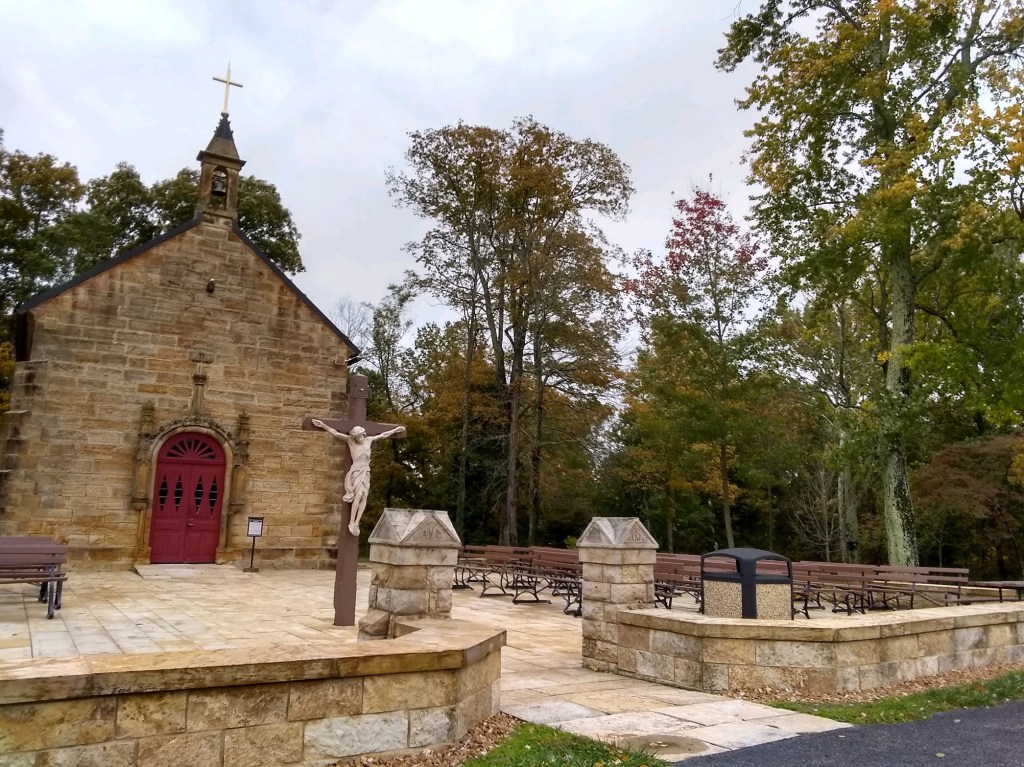
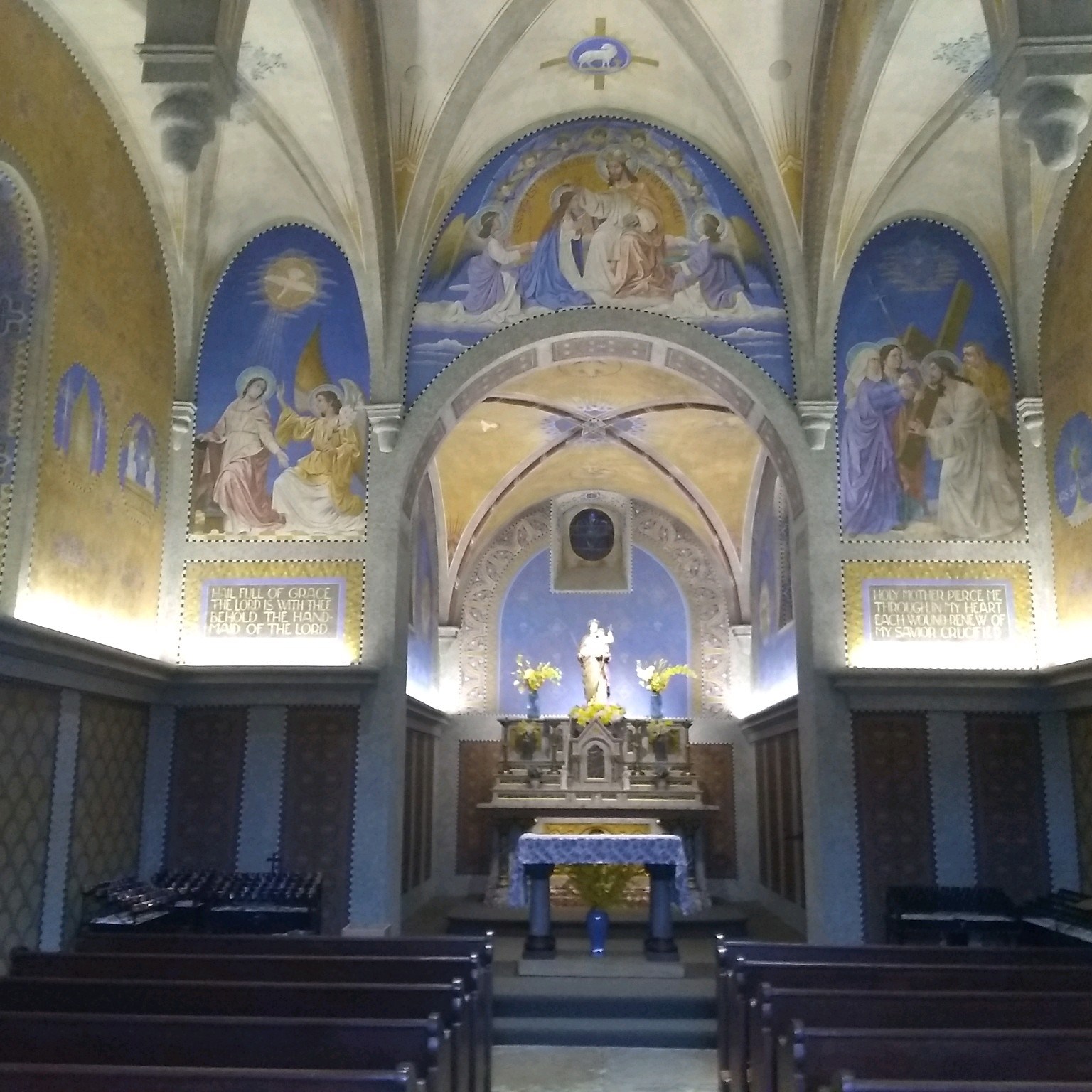
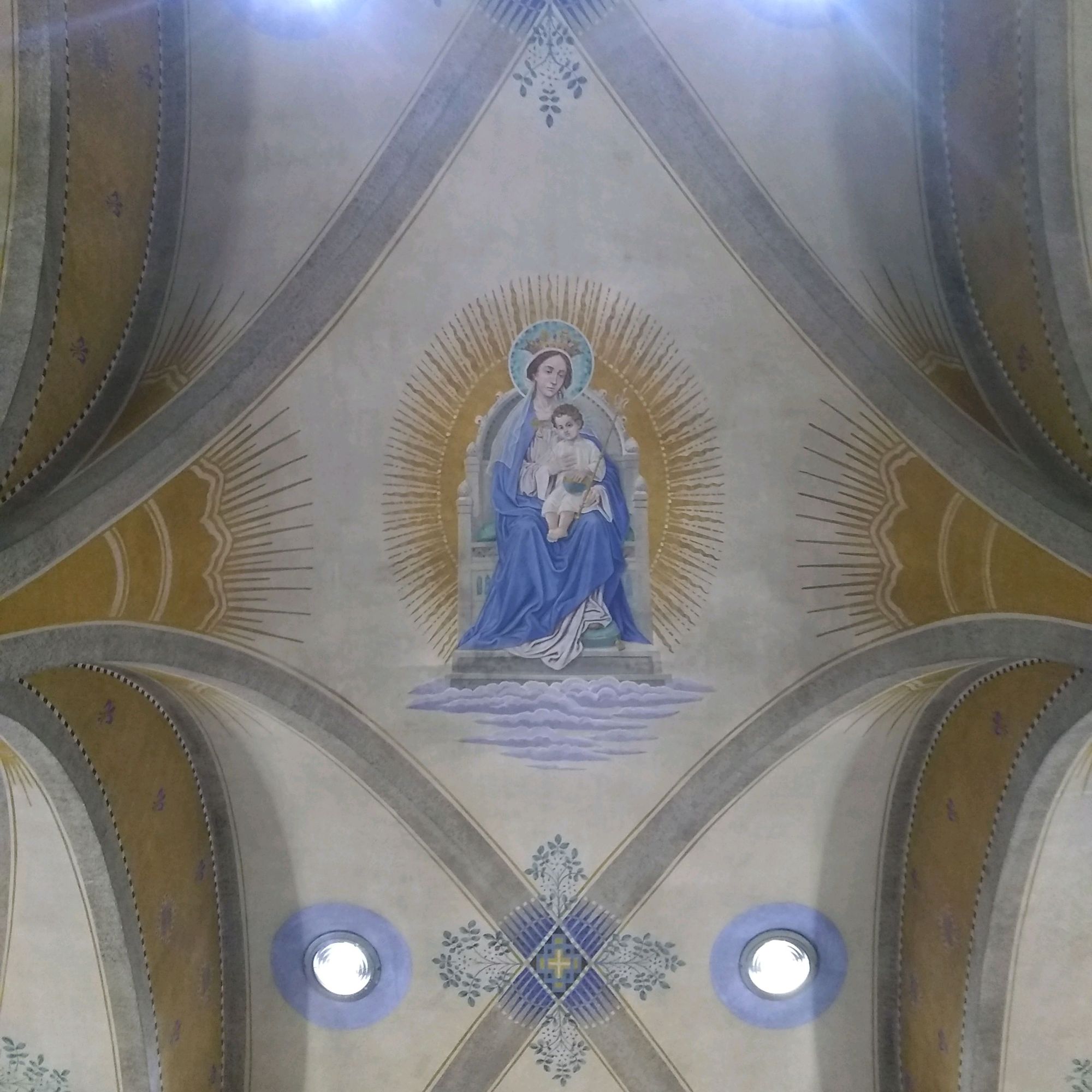
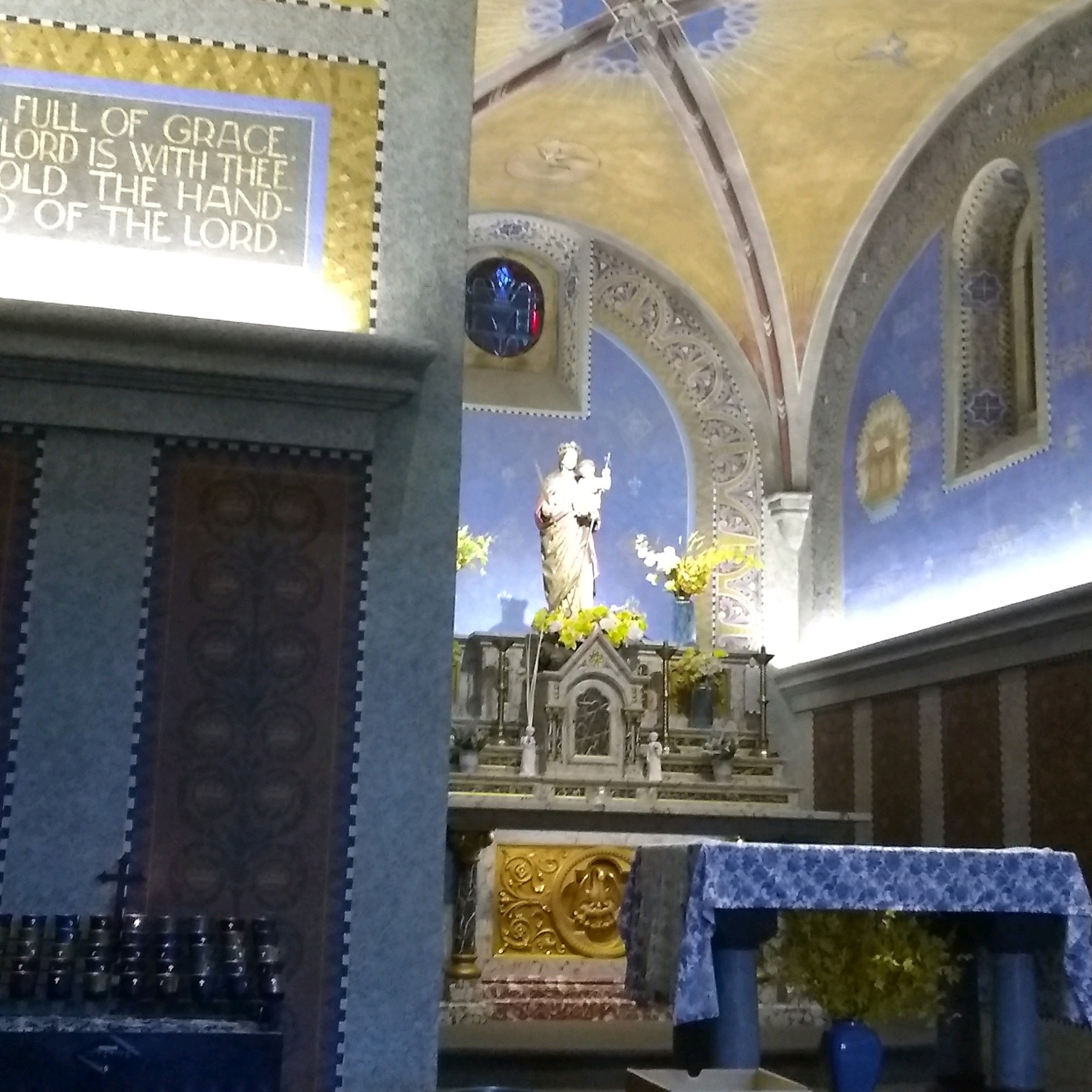
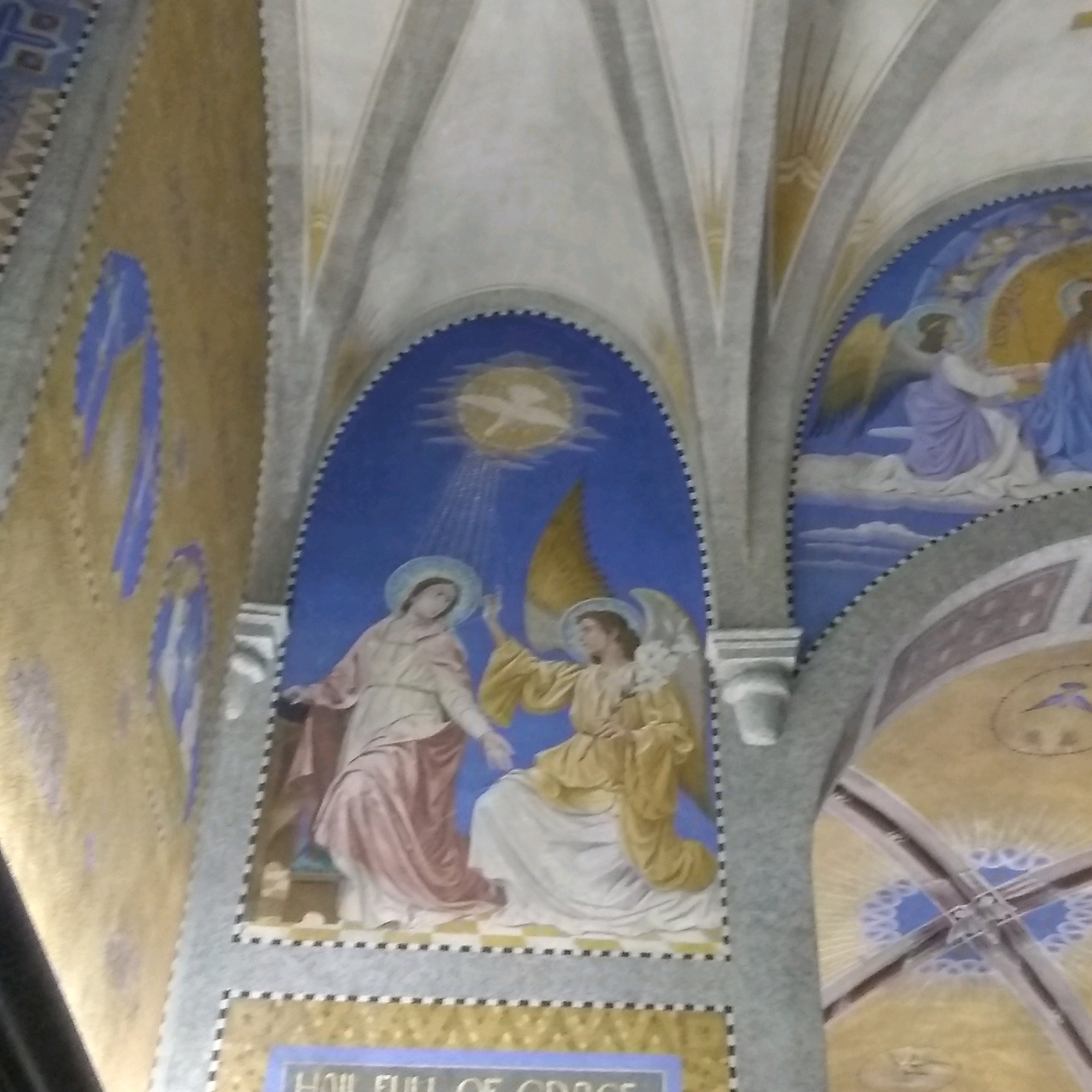
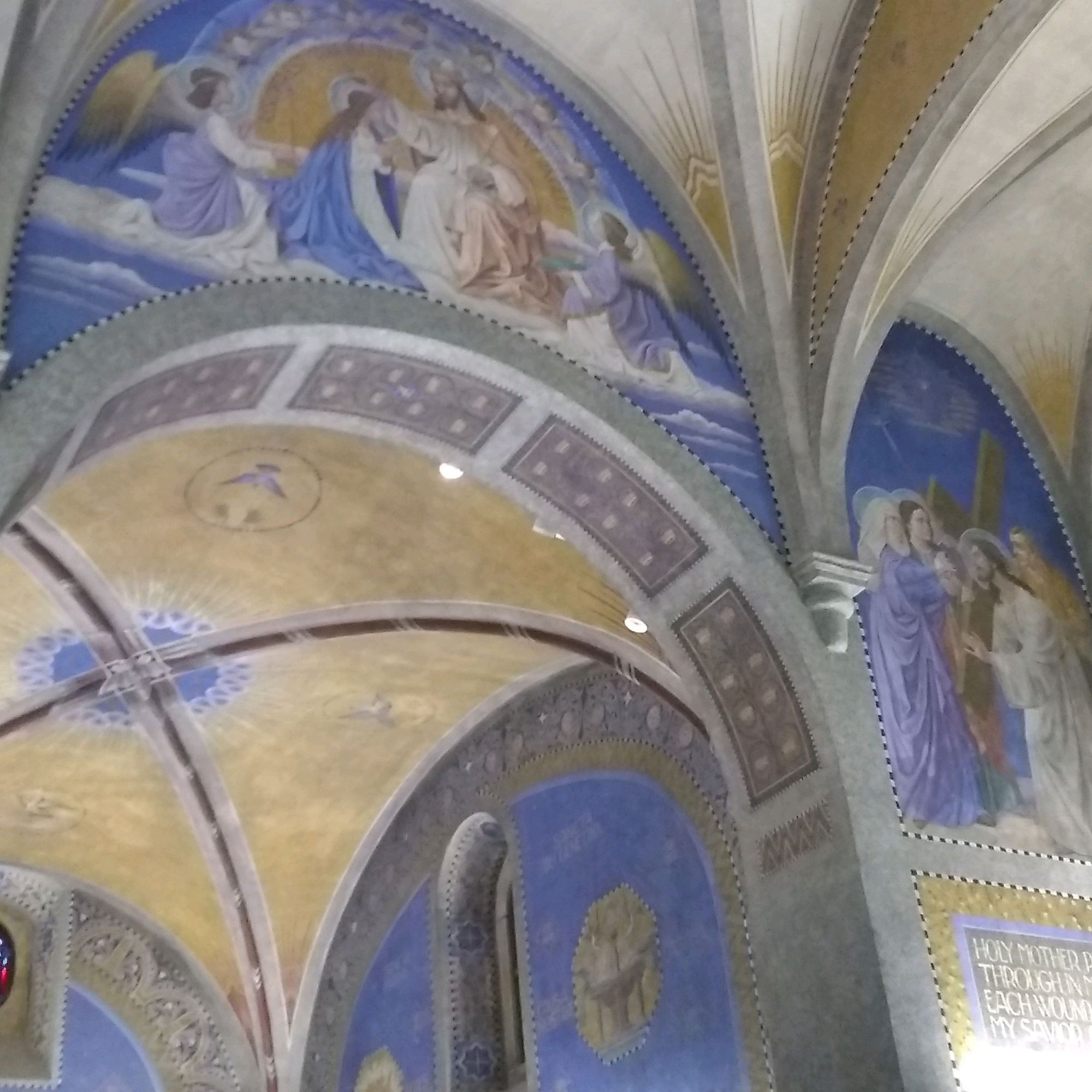
Saint Meinrad, Indiana is a small town with just a few hundred people living there but is home to one of a few Catholic archabbeys in the world. My first stop in town was to the Monte Cassino shrine Chapel that sits on the outskirts of town. It is such a beautiful chapel (see below).

Monte Cassino shrine Chapel

Built around 150 years ago, this chapel made of local sandstone, is dedicated to Mary and inside the chapel features artwork covering the walls and ceiling. It felt like I just stepped back in time to somewhere in Europe. Truly amazing and I could not believe it was here, in Southern Indiana, just 30 minutes away from my house.

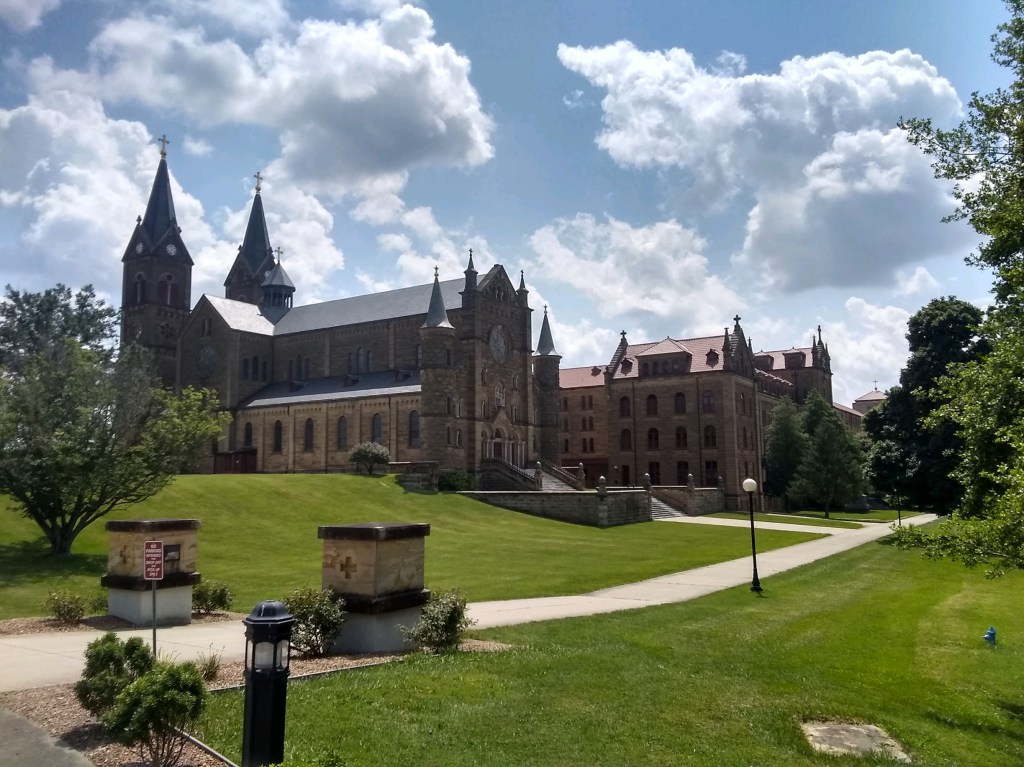
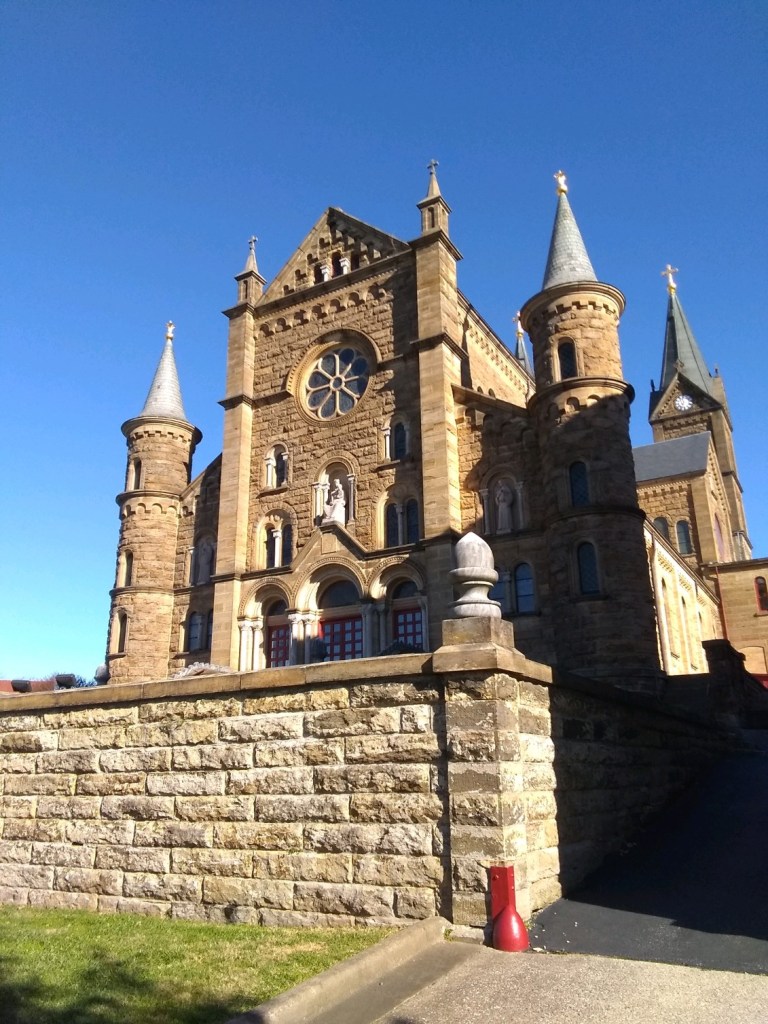
Now this was truly inspiring! Just a side note, ever since this visit, I come to this chapel every week for meditation, reading and prayer practice. It has become a weekly spiritual pilgrimage for me. Now I had to go see the monastery! So I went back into town and found the entrance to the monastery, and WOW, what a sight it was to behold!

St Meinrad Archabbey

Seeing this from the drive way to the grounds was breath taking. You simply do not see buildings like this in the area. I was in awe.

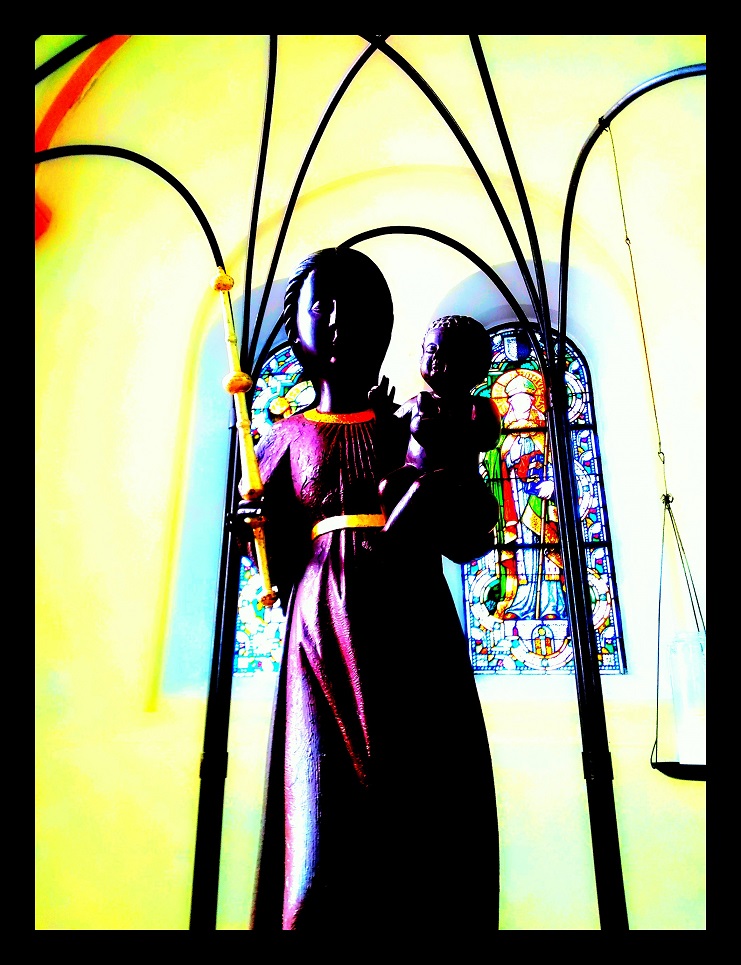
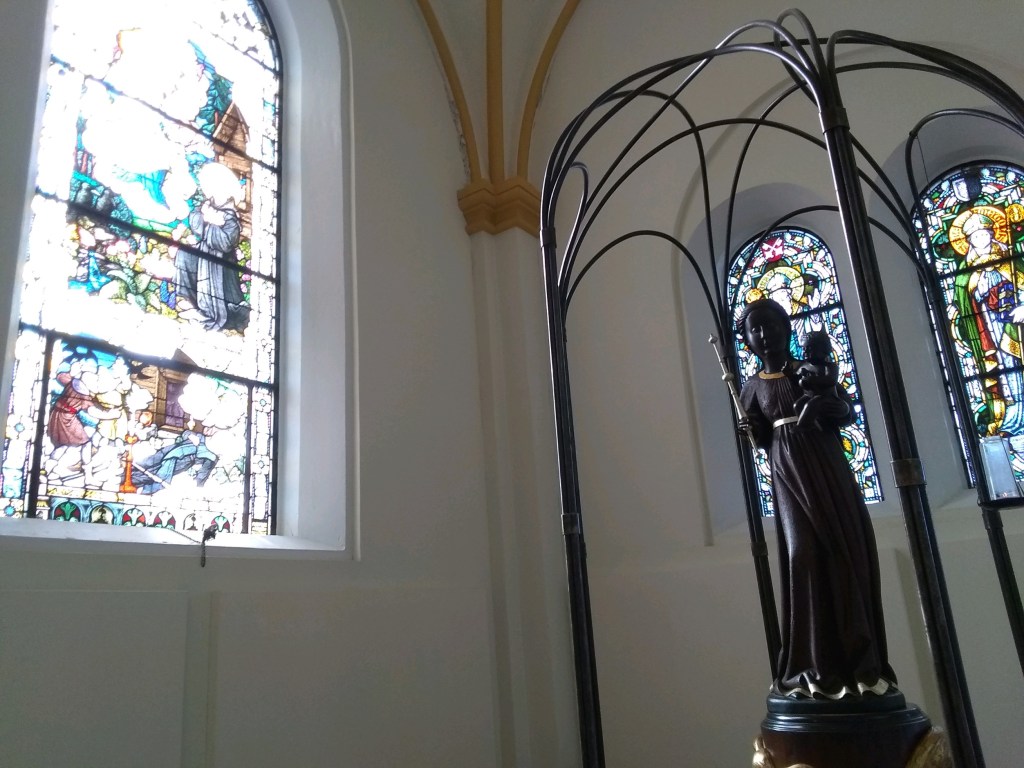
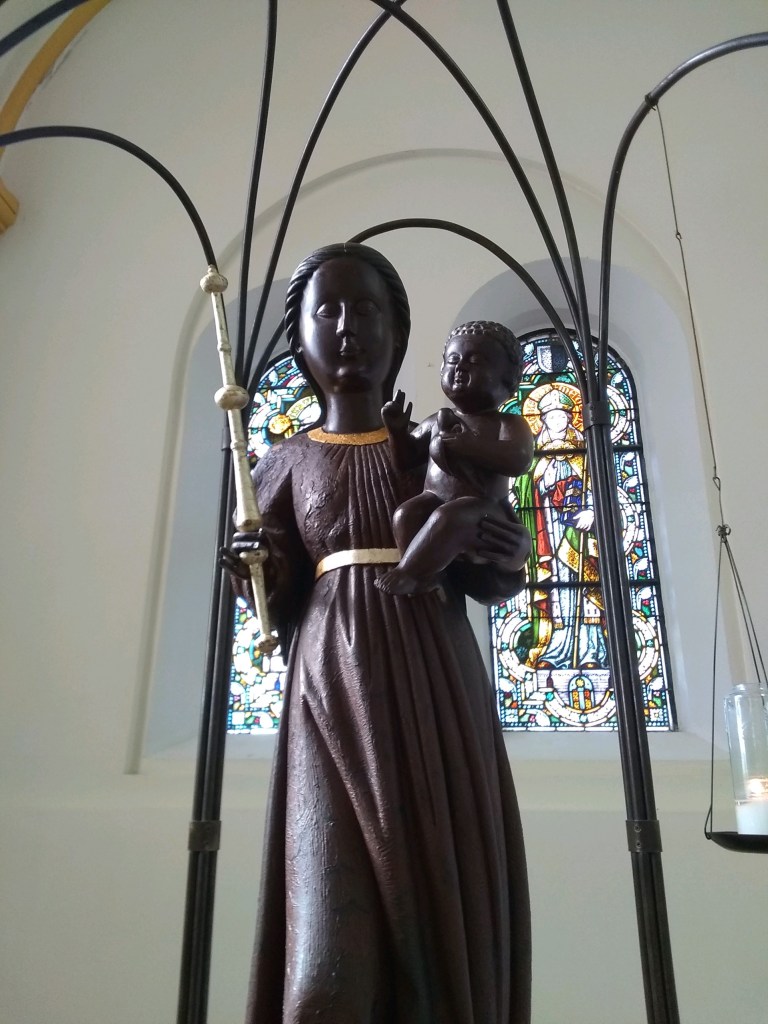
The archabbey serves as a monastery, an educational school as well as a spiritual retreat. I am not going to show pictures of the entire area, but a quick google search will give you a glimpse. On my first initial visit, I just checked out the cathedral that was there. I had quite the feeling walking up to this place. I am a huge fan of architecture, so this was quite the thrill. Once I went into the cathedral, there was a deafening silence. It was so, so quiet. Beautiful I tell you! The cathedral has stained glass everywhere and when the light comes in, it just lights up the place. Artwork is presented in different areas. I had never seen anything like this before. Talk about sensory overload! While walking around, I came upon her……The Black Madonna.

the Shrine of Our Lady of Einsiedeln

I have heard of Black Madonnas but never realized there was one just down the road from where I live. Now this particular statue is actually a reproduction of the Lady of Einsiedeln. The St. Meinrad archabbey is a sister monastery to the one where the original statue is. But still, what a sight to behold. I know there are a lot of theories and speculation on what the Black Madonna means, and this particular one has played a role in my spiritual path, but I’ll save that discussion for another time.

Dressed up for special times during the year

After this special visit in the summer of 2021, I now travel to the monastery grounds every week. I visit the chapel for sure, and the cathedral I visit every once in awhile (it’s a long walk up to it from the parking lot, and when there is ice and snow on the ground, that can be quite the venture, lol). The grounds also feature various other shrines (a few dedicated to Mary) as well as artwork on various walls in other places. There is also a gift shop that features quite a bit of nice stuff including icons, books, statues, prayer cards, artwork, baked goods, etc… I really recommend everyone stopping by if you are in the area. I have posted an url to their website for those interested:

https://www.saintmeinrad.org

This off the cuff trip to these places inspired me to do more and ever since then, I go around seeking other churches and temples (Buddhist) to visit. I even got the chance to tour an Eastern Orthodox church in Louisville which was just as inspiring as this original trip was (I didn’t take pictures on that visit, but my love of icons skyrocketed because of that church visit). I also view these trips as homework, as I hope to one day have such a place for those who follow the gnostic path such as myself.

-bP

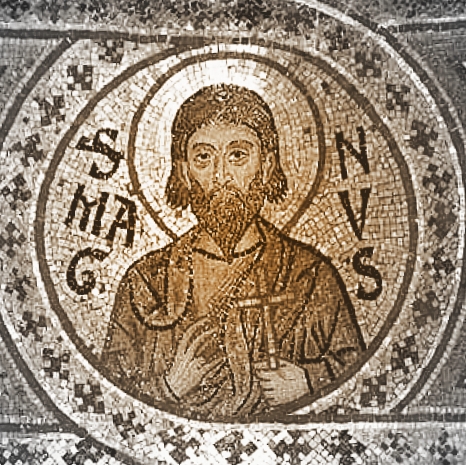
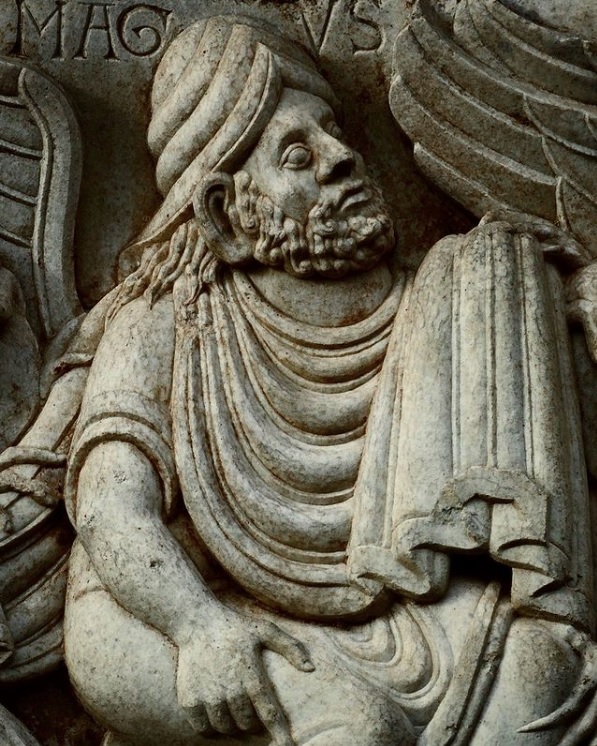
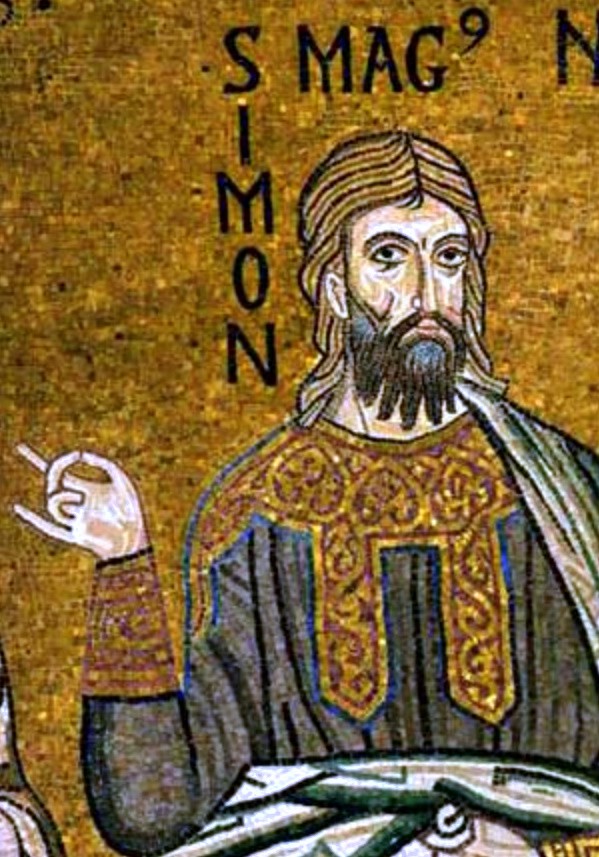
Simon Magus’ “The Great Announcement”

To continue on my Simon Magus postings, this particular entry includes the only writing attributed to Simon himself! It survives in fragmented form thanks to Hippolytus in the book “Philosophumena“, aka “Refutations of All Heresies.”

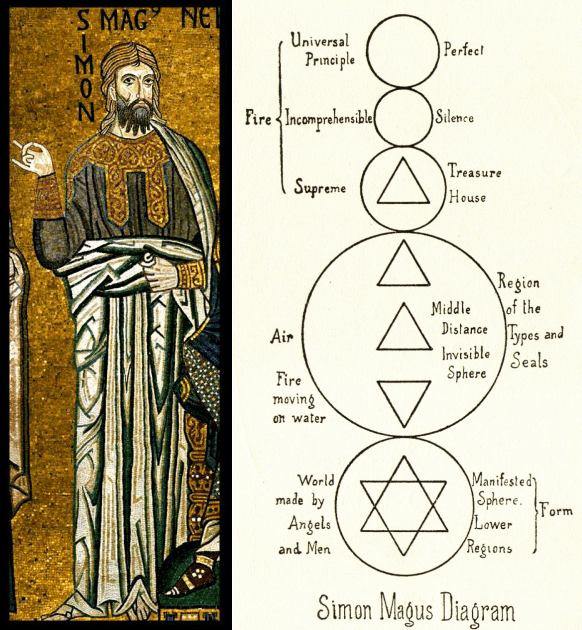
The following is the collection of sayings that G.R.S Mead put together for his book “Simon Magus: The Gnostic Magician.”

To you, therefore, I say what I say, and write what I write. And the writing is this.

Of the universal Aeons there are two shoots, without beginning or end, springing from one Root, which is the Power invisible, inapprehensible Silence. Of these shoots one is manifested from above, which is the Great Power, the Universal Mind ordering all things, male, and the other, (is manifested) from below, the Great Thought, female, producing all things.

Hence pairing with each other, they unite and manifest the Middle Distance, incomprehensible Air, without beginning or end. In this is the Father who sustains all things, and nourishes those things which have a beginning and end.

This is He who has stood, stands and will stand, a male-female power like the pre-existing Boundless Power, which has neither beginning nor end, existing in oneness. For it is from this that the Thought in the oneness proceeded and became two.

So he was one; for having her in himself, he was alone, not however first, although pre-existing, but being manifested from himself to himself, he became second. Nor was he called Father before (Thought) called him Father.

As, therefore, producing himself by himself, he manifested to himself his own Thought, so also the Thought that was manifested did not make the Father, but contemplating him hid him—that is to say the Power—in herself, and is male-female, Power and Thought.

Hence they pair with each other being one, for there is no difference between Power and Thought. From the things above is discovered Power, and from those below Thought.

In the same manner also that which was manifested from them although being one is yet found as two, the male-female having the female in itself. Thus Mind is in Thought—things inseparable from one another—which although being one are yet found as two.

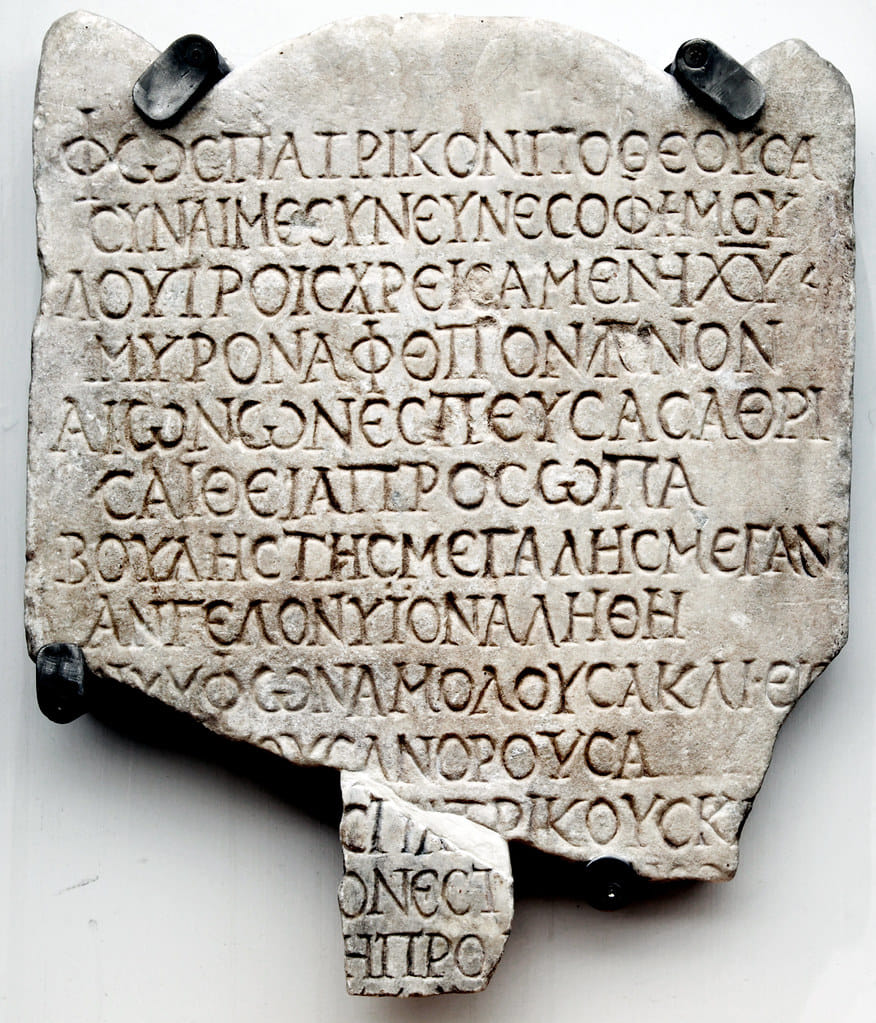
The tomb inscription of Flavia Sophe

This artifact is an interesting piece. It is a tomb inscription of a woman by the name of Flavia Sophe. This stone dates back to the third century and what is written by her husband, is quite beautiful. A really good example of Valentinian poetry. There is writing on the front and back of the stone (what is pictured is the front). This particular translation comes from the book Valentinian Christianity: Texts and Translations by Geoffrey S. Smith, which takes it from the Peter Lampe’s book From Paul to Valentinus: Christians at Rome in the First Two Centuries.

Front:
Yearning for the fatherly light, my sister and wife, Sophe,
Anointed in the baths of Christ with perfume unfading, pure,
You were eager to behold the divine countenances of the eternities,
The great angel of the mighty council, the true Son,
Processing [into] the bridal chamber and ascending into the fatherly chambers
Undefiled and [. . . you were crowned].

Back:
She experienced no common end of life, this woman who died;
She died, yet she lives, and sees the truly unfading light;
She lives among those who live, but she died to those who are in reality dead.
Earth, why are you amazed by a corpse of this sort? Are you afraid?

Andrew Phillip Smith did his own version of the front inscription, using a few translations and came up with this particular verse:

You were filled with longing for the father’s light,
My sister, my spouse, my Sophe.
Now, anointed with holy immortal chrism in the baths of Christ,
Be quick to view the divine faces of the aeons,
The great angel of the great council, the true Son.
You made your way into the bridal chamber and made an undying ascent
Into the breast of the Father.

You can visit his blog at: http://www.andrewphillipsmith.com/uncategorized/the-tomb-inscription-of-flavia-sophe/

More Sayings from Simon Magus

“I am the first power, who am always, and without beginning. But having entered the womb of Rachel, I was born of her as a man, that I might be visible to men. I have flown through the air; I have been mixed with fire, and been made one body with it; I have made statues to move; I have animated lifeless things; I have made stones bread; I have flown from mountain to mountain; I have moved from place to place, upheld by angels’ hands, and have lighted on the earth. Not only have I done these things; but even now I am able to do them, that by facts I may prove to all, that I am the Son of God, enduring to eternity, and that I can make those who believe on me endure in like manner for ever. But your words are all vain; nor can you perform any real works such as I have now mentioned, as he also who sent you is a magician, who yet could not deliver himself from the suffering of the cross.” Simon Magus, from book 3 of The Recognitions of Clement.

Now those are some claims that Simon is putting forth there! Below are some more book 3 quotes from Simon Magus:

"If the Creator is good, and the world is good, how shall He who is good ever destroy that which is good? But if He shall destroy that which is good, how shall He Himself be thought to be good? But if He shall dissolve and destroy it as evil, how shall He not appear to be evil, who has made that which is evil? "
"It does not seem to me that the heaven, which has been made by God, can be dissolved. For things made by the Eternal One are eternal, while things made by a corruptible one are temporary and decaying."

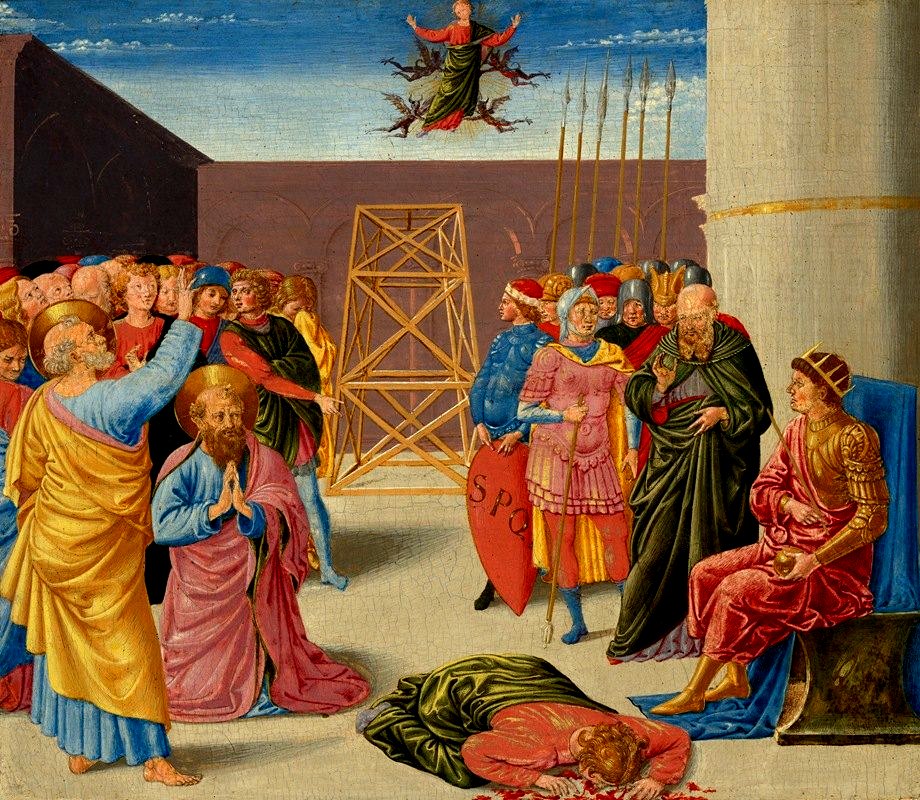
Below is an interesting story involving Simon flying. Yes, flying, which then leads to his death. This is an exchange between Simon, Paul, Peter and Emperor Nero. This comes from the text The Acts of Peter and Paul:

Simon said: "Listen, O Cæsar Nero, that you may know that these men are liars, and that I have been sent from the heavens: tomorrow I go up into the heavens, that I may make those who believe in me blessed, and show my wrath upon those who have denied me."

Peter and Paul said: "Us long ago God called to His own glory; but you, called by the devil, hasten to punishment." 

Simon said: "Cæsar Nero, listen to me. Separate these madmen from you, in order that when I go into heaven to my father, I may be very merciful to you." 

Nero said: "And whence shall we prove this, that you go away into heaven?"

Simon said: "Order a lofty tower to be made of wood, and of great beams, that I may go up upon it, and that my angels may find me in the air; for they cannot come to me upon earth among the sinners." 

Nero said: "I will see whether you will fulfil what you say."

Then Nero ordered a lofty tower to be made in the Campus Martius, and all the people and the dignities to be present at the spectacle. And on the following day, all the multitude having come together, Nero ordered Peter and Paul to be present, to whom also he said: Now the truth has to be made manifest. 

Peter and Paul said: "We do not expose him, but our Lord Jesus Christ, the Son of God, whom he has falsely declared himself to be."

And Paul, having turned to Peter, said: "It is my part to bend the knee, and to pray to God; and yours to produce the effect, if you should see him attempting anything, because you were first taken in hand by the Lord." 

And Paul, bending his knees, prayed. And Peter, looking steadfastly upon Simon, said: "Accomplish what you have begun; for both your exposure and our call is at hand: for I see my Christ calling both me and Paul." 

Nero said: "And where will you go to against my will?" 

Peter said: "Whithersoever our Lord has called us."

Nero said: "And who is your lord?" 

Peter said: "Jesus the Christ, whom I see calling us to Himself." 

Nero said: "Do you also then intend to go away to heaven?" 

Peter said: "If it shall seem good to Him that calls us." 

Simon said: "In order that you may know, O emperor, that these are deceivers, as soon as ever I ascend into heaven, I will send my angels to you, and will make you come to me." 

Nero said: "Do at once what you say."

Then Simon went up upon the tower in the face of all, and, crowned with laurels, he stretched forth his hands, and began to fly. And when Nero saw him flying, he said to Peter: "This Simon is true; but you and Paul are deceivers." 

To whom Peter said: "Immediately shall you know that we are true disciples of Christ; but that he is not Christ, but a magician, and a malefactor." 

Nero said: "Do you still persist? Behold, you see him going up into heaven." 

Then Peter, looking steadfastly upon Paul, said: "Paul, look up and see." 

And Paul, having looked up, full of tears, and seeing Simon flying, said: "Peter, why are you idle? Finish what you have begun; for already our Lord Jesus Christ is calling us." 

And Nero hearing them, smiled a little, and said: "These men see themselves worsted already, and are gone mad."

Peter said: "Now you shall know that we are not mad." 

Paul said to Peter: "Do at once what you do."

And Peter, looking steadfastly against Simon, said: "I adjure you, you angels of Satan, who are carrying him into the air, to deceive the hearts of the unbelievers, by the God that created all things, and by Jesus Christ, whom on the third day He raised from the dead, no longer from this hour to keep him up, but to let him go." 

And immediately, being let go, he fell into a place called Sacra Via, that is, Holy Way, and was divided into four parts, having perished by an evil fate.

A lot of the texts that involve Simon Magus are usually dialogues / debates between him and Peter. If twitter existed back then, they would be constantly trolling each other, lol. I’ve accumulated quite a bit of Simon from various sources and will post more about him in the future. He’s quite an interesting fella.

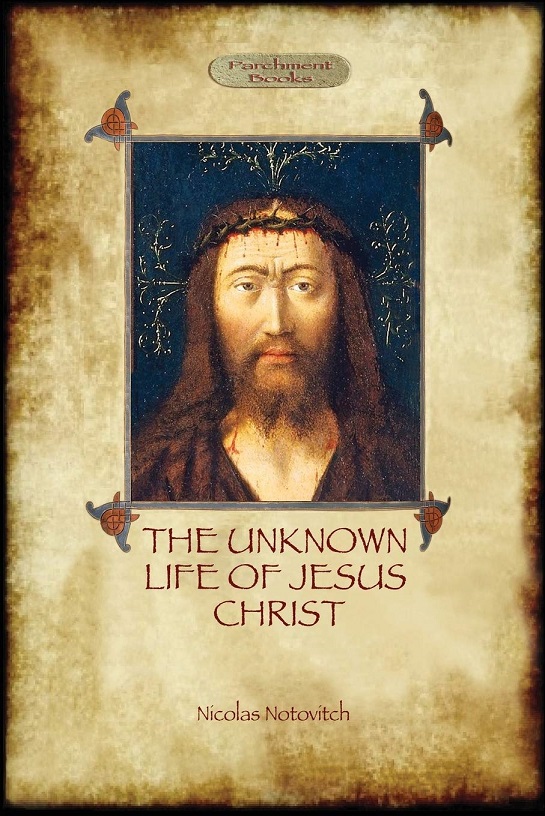
The Unknown Life of Jesus Christ

Recently I read the 1894 book, “The Unknown Life of Jesus Christ” by Nikolai Aleksandrovich Notovich, that was supposedly to contain a translation of a Buddhist text about Issa (Jesus) traveling to the East. Scholars believe this book to be complete BS. Supposedly this text existed at a monastery and the author claimed to have someone read it to him (since he couldn’t read it himself) and he wrote down what the texts said. Now there are some differences in what is presented and what is in the “canon”, most noticeably that in this version, it is Pilate who wants Issa killed, and even after the death of Issa, it was Pilate’s men who took the body after it was in the tomb that unintentionally made others to believe the body was resurrected. Whoops! Even if the story is all fabricated, is there any wisdom to be found? When I read these types of texts, I rarely take any of it literally and not too concerned about the “historical accuracy” of them. But if there is some kind of gnosis that can be found, an universal truth if you will, then that’s what I am after. Well, I did find such in this text, particularly chapter XII, verses 9 through 21. This section has Issa talking about women and their role in the universe. I really like what he says. See below:

9. Then said Issa: "It is not good for a son to push away his mother, then he may occupy the place which belongs to her.  Whoso doth not respect his mother - the most sacred being after his God - is unworthy of the name of son."

10. "Hearken to what I say to you: Respect woman; for in her we see the mother of the universe, and all the truth of divine creation is to come through her."

11. "She is the fount of everything good and beautiful, as she is also the germ of life and death.  Upon her man depends in all his existence, for she is his moral and natural support in his labors"

12. "In pain and suffering she brings you forth; in the sweat of her brow she watches over your growth, and until her death you cause her greatest anxieties.  Bless her and adore her, for she is your only friend and support on earth."

13.  "Respect her; defend her.  In so doing you will gain for yourself her love; you will find favor before God, and for her sake many sins will be remitted to you."

14. "Love your wives and respect them, for they will be the mothers of tomorrow and later the grandmothers of a whole nation."

15. "Be submissive to the wife; her love ennobles man, softens his hardened heart, tames the wild beast in him and changes it to a lamb."

16. "Wife and mother are the priceless treasures which God has given to you.  They are the most beautiful ornaments of the universe, and from them will be born all who will inhabit the world."

17. "Even as the Lord of Hosts separated the light from the darkness, and the dry land from the waters, so does woman possess the divine gift of calling forth out of man's evil nature all the good that is in him."

18. "Therefore I say unto you, after God, to woman must belong your best thoughts, for she is the divine temple where you will most easily obtain perfect happiness."

19. "Draw from this temple your moral force.  There you will forget your sorrows and your failures, and recover the love necessary to aid your fellow men."

20. "Suffer her not to be humiliated, for by humiliating her you humiliate yourselves, and lose the sentiment of love, without which nothing can exist here on earth."

21. "Protect your wife, that she may protect you - you and all your household.  All that you do for your mothers, your wives, for a widow, or for any other woman in distress, you will do for your God."

Some good stuff there!

If you are curious about the book, it’s not too big. A little over 100 pages and most of the book is about the author’s travels in the area, and I must say, that was really interesting. I found that more intriguing than the “lost scripture” aspect. The book is an easy read and I noticed on youtube there are several “audiobook” versions if you prefer that route. Amazon has copies of modern reprints for very cheap. I picked up the version that has the cover picture that I have featured on this post.

bP

Sayings of Simon Magus

Some Christians refer to Simon Magus as the first Gnostic, and/or the Father of All Heresies, but was he? I highly doubt that. But what did he say / teach that would be in the “Gnostic” school of thought? I decided to browse around on some texts that involve him and wanted to give some examples of his sayings. For this particular post, I am pulling these from The Recognitions of Clement: Book 2. In this volume, it has Simon and Peter going back and forth. I’m not going to include Peter’s responses as I just want to keep this post to Simon. As far as I know, there is not a book that collects Simon’s sayings (if there is, I’ll update this), so I wanted to make posts regarding them. Without further ado, here are some sayings of Simon Magus.

"I say that there are many gods; but that there is one incomprehensible and unknown to all, and that He is the God of all these gods."
"But that there are many gods, the law itself informs me. For, in the first place, it says this in the passage where one in the figure of a serpent speaks to Eve, the first woman, 'On the day ye eat of the tree of the knowledge of good and evil, ye shall be as gods, that is, as those who made man; and after they have tasted of the tree, God Himself testifies, saying to the rest of the gods, 'Behold, Adam is become as one of us; thus, therefore, it is manifest that there were many gods engaged in the making of man.  Also, whereas at the first God said to the other gods, 'Let us make man after our image and likeness; also His saying, 'Let us drive him out; and again, 'Come, let us go down, and confound their language; all these things indicate that there are many gods. But this also is written, 'Thou shalt not curse the gods, nor curse the chief of thy people; and again this writing, 'God alone led them, and there was no strange god with them, shows that there are many gods. There are also many other testimonies which might be adduced from the law, not only obscure, but plain, by which it is taught that there are many gods.  One of these was chosen by lot, that he might be the god of the Jews. But it is not of him that I speak, but of that God who is also his God, whom even the Jews themselves did not know. For he is not their God, but the God of those who know him."
"From the words of your master I shall refute you, because even he introduces to all men a certain God who was known. For although both Adam knew the God who was his creator, and the maker of the world; and Enoch knew him, inasmuch as he was translated by him; and Noah, since he was ordered by him to construct the ark; and although Abraham, and Isaac, and Jacob, and Moses, and all, even every people and all nations, know the maker of the world, and confess him to be a God, yet your Jesus, who appeared long after the patriarchs, says: 'No one knows the Son, but the Father; neither knoweth any one the Father, but the Son, and he to whom the Son has been pleased to reveal Him.  Thus, therefore, even your Jesus confesses that there is another God, incomprehensible and unknown to all."
"When, therefore, I had ascertained that the God who created the world, according to what the law teaches, is in many respects weak, whereas weakness is utterly incompatible with a perfect God, and I saw that he is not perfect, I necessarily concluded that there is another God who is perfect."
"For this God, as I have said, according to what the writing of the law teaches, is shown to be weak in many things. In the first place, because the man whom he formed was not able to remain such as be had intended him to be; and because he cannot be good who gave a law to the first man, that he should eat of all the trees of paradise, but that he should not touch the tree of knowledge; and if he should eat of it, he should die. For why should he forbid him to eat, and to know what is good and what evil, that, knowing, he might shun the evil and choose the good? But this he did not permit; and because he did eat in violation of the commandment, and discovered what is good, and learned for the sake of honour to cover his nakedness (for he perceived it to be unseemly to stand naked before his Creator), he condemns to death him who had learned to do honour to God, and curses the serpent who had shown him these things.  But truly, if man was to be injured by this means, why did he place the cause of injury in paradise at all? But if that which he placed in paradise was good, it is not the part of one that is good to restrain another from good."
"Thus then, since he who made man and the world is, according to what the law relates, imperfect, we are given to understand, without doubt, that there is another who is perfect. For it is of necessity that there be one most excellent of all, on whose account also every creature keeps its rank.  Whence also I, knowing that it is every way necessary that there be some one more benignant and more powerful than that imperfect God who gave the law, understanding what is perfect from comparison of the imperfect, understood even from the Scripture that God who is not mentioned there. And in this way I was able, O Peter, to learn from the law what the law did not know.  But even if the law had not given indications from which it might be gathered that the God who made the world is imperfect, it was still possible for me to infer from those evils which are done in this world, and are not corrected, either that its creator is powerless, if he cannot correct what is done amiss; or else, if he does not wish to remove the evils, that he is himself evil; but if he neither can nor will, that he is neither powerful nor good. And from this it cannot but be concluded that there is another God more excellent and more powerful than all. If you have aught to say to this, say on."
"Do you not then think it better that we should follow our Creator God, as a Father who trains us and endows us as He knows how? But if, as you say, there be some God more benignant than all, it is certain that he will not be angry with us; or if he be angry, he is evil. For if our God is angry and punishes, He is not evil, but righteous, for He corrects and amends His own sons. But he who has no concern with us, if he shall punish us, how should he be good? Inflicting punishments upon us because we have not been drawn by vain imaginations to forsake our own Father and follow him, how can you assert that he is so good, when he cannot be regarded as even just?"
"Apply your mind to those things which I am going to say, and cause it, walking in peaceable paths, to attain to those things which I shall demonstrate. Listen now, therefore. Did you never in thought reach forth your mind into regions or islands situated far away, and remain so fixed in them, that you could not even see the people that were before you, or know where yourself were sitting, by reason of the delightfulness of those things on which you were gazing?  In this way now reach forth your sense into heaven, yea above the heaven, and behold that there must be some place beyond the world, or outside the world, in which there is neither heaven nor earth, and where no shadow of these things produces darkness; and consequently, since there are neither bodies in it, nor darkness occasioned by bodies, there must of necessity be immense light; and consider of what sort that light must be, which is never succeeded by darkness. For if the light of this sun fills this whole world, how great do you suppose that bodiless and infinite light to be? So great, doubtless, that this light of the sun would seem to be darkness and not light, in comparison."
"It seems to me to be better to believe simply that God is, and that that heaven which we see is the only heaven in the whole universe.  That these things are so, as you say, may appear to those who believe them; but to him who seeks for reasons of these things, it is impossible that they can be produced from the law, and especially concerning the immensity of light."

Sometime in the future, I’ll do more posts like this.

The “Tenchi” – sacred text of the Kakure Kirishitan (3 of 3)

Here is my final post about the “Tenchi.” I hope you all have enjoyed these posts relating to this interesting text. I do recommend everyone grabbing the book, The Beginning of Heaven and Earth by Christal Whelan and doing a full read of the Tenchi for yourself. Well worth it!

Book 9, Up Karuwaryu Hill, is about the Holy One’s (Jesus) lead up to the crucifixion. This story has two important elements. The first would be the appearance of the “Veil of Veronica”, which is the face of Jesus appearing on a towel. How it is explained in the Tenchi is as follows:

On the way up the hill the Holy One met a woman named Beronica who was carrying a jug of water.  She felt compassion when she saw him.  "How pitiful," she thought, and wiped the beads of blood dripping from his face with her cloth, and offered him a drink of water.  The Holy One received it with gratitude and drank, thinking, "I don't know who you are but one day I will save you."  Then because the image of the Holy One remained on Beronica's cloth she thought, "Keeping this for myself would be a sacrilege."  So she made an offering of the cloth at the temple of Santa Ekirenja. 

Veronica, Beronica, close enough. The other important aspect of this book is when the Holy One is nailed upon the cross, the two criminals that surround him. This references the story in book 5 about the bath water and the diseased child that bathed in the water. Well, that child has resurfaced and is one of the criminals that is being crucified as well! The Tenchi states:

Although he was nearly dead from disease, after bathing in that water he recovered miraculously in an instant.  Nevertheless, when he grew up he became a wicked person, and in the end wound up a condemned criminal.  Yet now he was together again with the Lord for his last moments on a cross.  It was his fate that they should meet again.

Book 10, Money Bedazzled, is about the final death blow of the Holy One. Death was taking too long but none of the soldiers could pierce him as they were unable to move due to an unforeseen force. A blind man walked by and one of the soldiers offered him a monetary reward if he used the spear to stab the Holy One. Since he was unable to see, he did not face the “unmoveableness” that the soldiers did, and dealt the death blow. An interesting miracle happened:

Blood spurted out and poured down over the blind man.  When it ran into his eyes, in an instant both eyes were miraculously opened.

Unfortunately for the blind man, he would be cursed by the Holy One, as once the man received his money, he returned to blindness. The text claims this is the origin for the saying “Eyes darkened by money.” The book ends with Maruya (Mary) weeping at the feet of the Holy One, who is taken down and placed into a stone coffin, which is lowered into the ground.

The Kirinto, book 11, deals with the resurrection. It has the Holy One returning to earth for a day before returning to heaven to sit at the side of Deusu. The Holy One then descends to the temple of Santa Ekirenja. There he teaches his head disciple, Pappa, for forty days about salvation and the afterlife. He then gave sermons for 10 days before returning to heaven on the fiftieth day. Maruya also ascends into heaven. The text describes it’s own version of the trinity:

In heaven, however, the Holy Mother is the Mediator, and the Holy One is the Savior.  Deusu is the Father or Paateru, the Holy One is the Son or Hiiriyo, and the Holy Mother is the Suheruto Santo.  Deusu became three bodies although they were originally One.

Book 12 (The Holy One’s Selection) is rather short and mentions all the massacred children (from book 7) go to Paradise, as well as the three Kings, and other select characters that were mentioned in previous books.

Book 13 (Establishment of the Officials) has an explanation of the roles of certain officials who await those entering into the after life.

Book 14 (The Destruction of Our World) is the “end times” type of story for the Tenchi. It states various time frames and what happens during each. All leading to a final judgment by Deusu. Those who do not receive baptism goes to hell, those who did will go to Paradise. The text does mention the people becoming buddhas:

Those people on the right who received baptism will accompany Deusu to Paraiso where, once judged, their good works will be the basis of the ranks they will receive.  It is guaranteed that they will all become buddhas and know unlimited fulfillment for eternity.

The final book, which has no name, is a story attached to the Tenchi at some point during it’s circulation. It tells the story of two friends who make a pact with each other that the first one among them who dies will report back to the other within three days of their death to describe the hereafter. Well, one of them dies and while it takes longer than three days, he does show up and has an interaction with the friend. The story doesn’t really fit with the rest of the narrative of the Tenchi and it’s kind of odd that it is here.

If you are curious about Japan’s hidden Christians, there are several books out there. However, there is a movie that came out in 2016 that I HIGHLY recommend. It is directed by Martin Scorsese titled Silence, based on the Japanese novel of the same name. While not a true story, it does take place during that period in Japan and shows in great detail what went on. The movie is great and is one that will have you thinking about it long after you watch it. I have linked the trailer below:

The “Tenchi” – sacred text of the Kakure Kirishitan (2 of 3)

Part 2 (of 3) of my posts regarding the “Tenchi”, the sacred book of the hidden Christians of Japan, aka, the Kakure Kirishitan.

Book 5, The Tribulations of Santa Maruya, is quite long and begins with Maruya (Mary) arriving home to her parents and they find her pregnant. Being unmarried and pregnant, they are angry at her and cast her from the house. She leaves and stays at various homes of strangers until she wanders into Beren (Bethlehem) and gives birth to “The Holy One (Jesus).” An interesting part involving that cold night goes as follows:

On account of the intense cold in the stable, the Holy One's body was in danger of freezing.  But the cows and horses that surrounded the mother and child breathed their warm breath on the newborn.  Thanks to them the holy body was warmed and endured the winter cold.  In a manger in that stable the new born also took his first bath.  Because of the great compassion that the horses and cattle showed, we are not allowed to eat meat or poultry on Wednesdays.

This saying shares a little bit with the apocrypha text “the Gospel of Pseudo-Matthew.” The next morning, the stable owners find Maruya and child in the stable and takes them in. This next part of the text is interesting because this will come back into play later on in the tenchi.

After three days had passed, Maruya requested a bath.  When the bath was over she said to the lady of the house, "Please, let your son bathe in the same water."  But the woman answered, "I am grateful for your thoughtfulness, but my son is diseased and his life is hanging by a thread.  Excuse my rudeness if I refuse."  But Maruya encouraged her, saying, "Please, let him get in."  So the boy's mother put her sickly son in the bath and his disease vanished and he was cured instantly.  The power of that water had restored his very life.

Another part of this book involves the three kings visit to the child. Interestingly enough, the book names the kings as: Menteo the King of Turkey, Gasuparu the King of Mexico and Bautozaru the king of France. After the kings leave, the king of Beren sends his two retainers Ponsha and Piroto to search and kill this child. Ponsha and Piroto is Pontius Pilate but split into two people. Maruya and the child escape this pursuit, which involves the “grain miracle” that pops up in medieval apocrypha. Following this incident, the Holy One receives his baptism in a river by San Jiwan, who was born just seven months prior. The text does not suggest San Jiwan is John the Baptist. At the fortieth day following the Holy One’s birth, he is summoned to heaven by Deusu and has a face-to-face chat and is giving a rank and crown. The fiftieth day involves the Holy One entering a sanctuary where he is taught by Sagaramento (who is from the heavenly realm) for seven days and nights. The fortieth and fiftieth days are special days that are celebrated among the KK.

Book 6 is rather short and titled The Five Mysteries of the Morning. This text really goes in on the combining of Christian and Buddhist mythologies. There is a re-telling of a pre-teen Jesus missing for three days and nights but rather in a temple, he was studying Buddhist scriptures with a teacher by the name of Gakujuran. During one of the lessons, Gakujuran speaks about what happens after death and the Holy One starts asking questions. This leads to Gakujuran stating that he (The Holy One) speaks quite a bit and would like him to explain his reasoning. Below is what the Holy One said:

The Holy One thus gave his sermon: "From the depth of the earth to the height of heaven measures more than 80,000 jo (jo = ~3 yards).  As for the one you worship as Buddha, he is called Deusu, Lord of Heaven.  He is the Buddha who introduced the salvation to help humankind in the world yet to come.  This Buddha made heaven and earth, the sun and the moon, the heaven called Paraiso, the human creation, and everything else that exists.  Indeed, there is nothing that this Buddha cannot make.  What's more, at the time he made man he blew in his own breath and created humankind.  But later people sighed so much that these sighs became an evil wind and these winds gathered together on the island into a typhoon that wrought destruction.  Trees and plants were blown down and the human seed was near to extinction.  But from heaven Buddha stopped it, althought its destruction had already covered an expanse of 75 ri (ri = 2.44 miles)." 

From this sermon, the students at the sanctuary decided to follow the Holy One instead of Gakujuran, and thus we have the twelve disciples. Gakujuran would eventually turn to the disciple role and follow the Holy One to Roma (Rome).

A Nationwide Search is the seventh book and starts with King Yorotetsu of Beren commanding an infanticide of all children from newborns up to seven years of age. The number killed reached a total of 44,444. Once the Holy One received this news, he withdrew into the forest of Zeze-Maruya and there he received an oracle from Deusu that states:

Thousands of infants lost their lives on your account.  I fear they may now forfeit the pleasure of Paraiso.  For their sake in the next world, you must be tortured and trodden upon, suffer and give up your body.

Thus the reasoning for the Holy One’s eventual crucifixion. The story introduces Judatsu (Judas) who is suddenly possessed by an evil idea of turning in the Holy One for a reward. The way the Holy One announces who will betray him is quite…interesting:

"The person who eats his rice with soup every morning is the one who will betray me."

After Judatsu informs the King of the Holy One’s whereabouts, he is transformed by having his nose grow huge and his tongue long. He returns to the disciples and they scold him, even stating he is a “treacherous bastard.” This leads to Judatsu’s suicide by hanging.

Book 8, titled Yorotetsu Captures the Holy One, has the king sending Ponsha and Piroto, along with an army, to Rome to apprehend the Holy One. After the army surrounded the temple where the Holy One was at, the Holy One asked of Judatsu and was informed of his betrayal. He said:

As it was preordained that I suffer and give up my life tortured, how I regret Judatsu's end.  Even though he betrayed me, I would have helped him if he had not killed himself first."

The army captures the Holy One with a rope around his neck and bounded his arms behind his back. They dragged him back to Beren. Once in front of the King, the Holy One was beaten by a bamboo stick that broke his bones. Bitter and spicy things were rammed down his throat and then a metal crown placed on his head that caused blood to run down his face. King Yorotetsu ordered the crucifixion of the Holy One upon Karuwaryu Hill.

Part 2 ends here. I really like the inclusion of some apocrypha mythology as well as Buddhist ideas. Fascinating stuff!