An Index to Barbelo

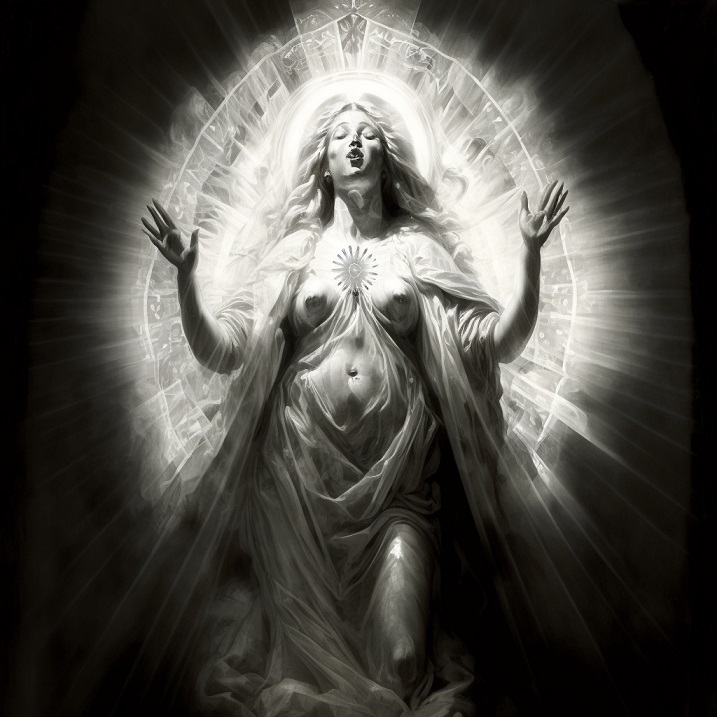
...who am I, the Thought of the Father, Protennoia, that is, Barbelo, the perfect Glory, and the immeasurable Invisible One who is hidden. I am the Image of the Invisible Spirit, and it is through me that the All took shape, and (I am) the Mother (as well as) the Light which she appointed as Virgin…

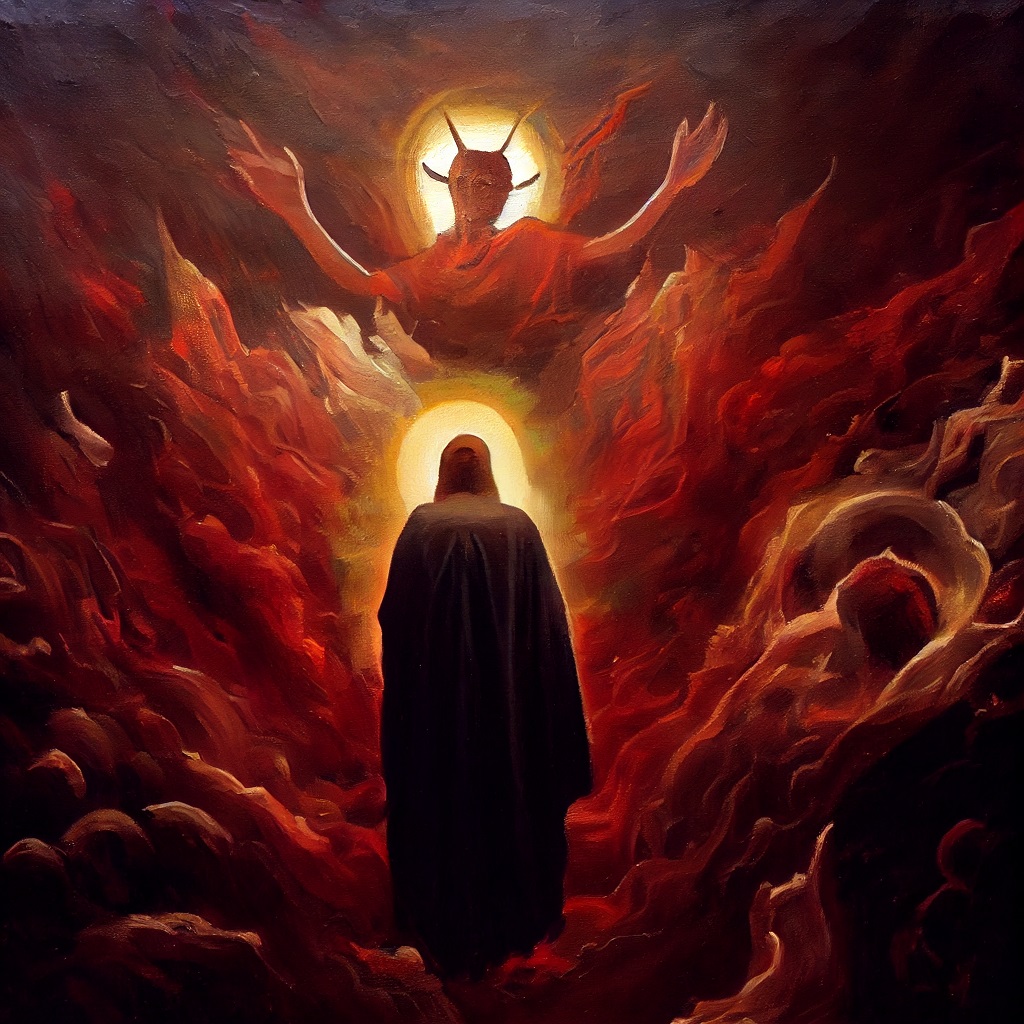
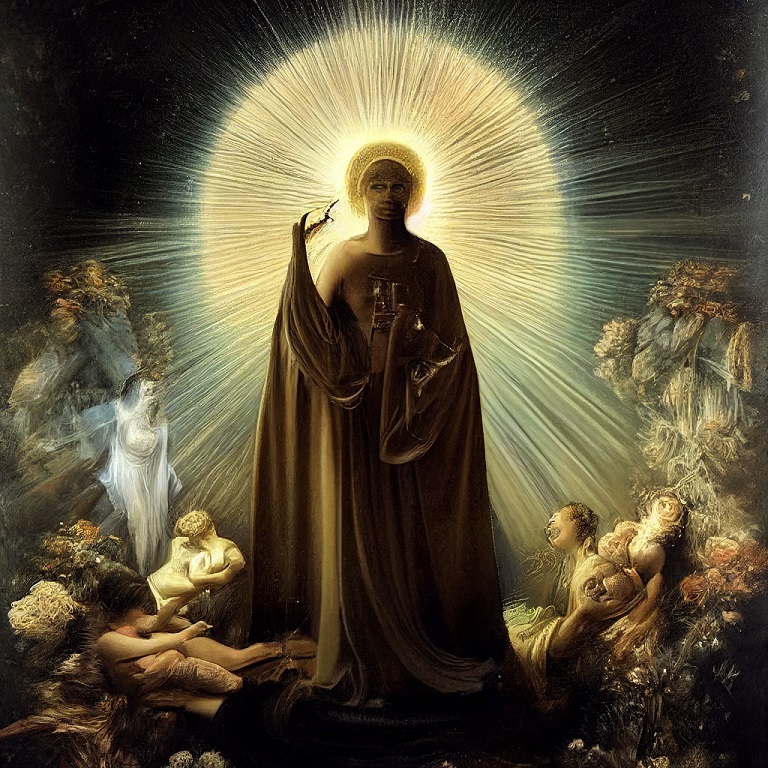
from the “Trimorphic Protennoia” (Midjourney AI artwork above is taken from this phrase)

I have been wanting to assemble such a post for awhile now. This post is to serve as an index to the various texts relating to Mother-Father Aeon, Barbelo. I will update the post as needed when I come across more texts (Gnostic aspects like to pop up in other non-canonical Christian texts from time to time). If you are unfamiliar with Barbelo, the main consensus is that she is the reflection of the Father, so while not as powerful as the source, she is the next best thing and thus is the Mother to all of creation. In a Christian sense, she gets identified with the Holy Spirit and in the Gospel of Philip, it is even mentioned that the Holy Spirit is female. In the traditional family structure, that would mean the Father – Mother – Son aspect, with the Monad/source as Father, Barbelo as Mother, and the Allogenes / Christ as Son. Though unlike traditional Christianity, the Monad / Barbelo / Allogenes are not the same or on equal terms.

This post will not directly cite all the Barbelo quotes. You really need to read the texts to get the full context. Also some texts do not directly refer to the Mother Aeon as Barbelo, but does describe her in detail. I’m not fully conversed in ALL of the known Gnostic texts to the extent I would like to be, but I am getting there, so there is a chance I missed some links. Like I mentioned before, I will update the page as I go along.

“And his thought performed a deed and she came forth, namely she who had appeared before him in the shine of his light. This is the first power which was before all of them (and) which came forth from his mind, She is the forethought of the All – her light shines like his light – the perfect power which is the image of the invisible, virginal Spirit who is perfect. The first power, the glory of Barbelo, the perfect glory in the aeons, the glory of the revelation, she glorified the virginal Spirit and it was she who praised him, because thanks to him she had come forth. This is the first thought, his image; she became the womb of everything, for it is she who is prior to them all, the Mother-Father, the first man, the holy Spirit, the thrice-male, the thrice-powerful, the thrice-named androgynous one, and the eternal aeon among the invisible ones, and the first to come forth.”

from the “Secret Book of John”

Below is a list of texts (last updated 3/14/23) involving / mentioning Barbelo:

Allogenes, The Stranger: LINK

The Apocryphon (Secret Book) of John: LINK

Gospel of Judas: LINK

Gospel of the Egyptians: LINK

Marsanes: LINK

Melchizedek: LINK

Noria LINK

Pistis Sophia: LINK

The Three Steles of Seth: LINK

Trimorphic Protennoia: LINK

The Untitled Text (from the Bruce codex): LINK

Zostrianos: LINK

An Ode to Sophia

The Acts of Thomas features the popular poem “Hymn of the Pearl”, but also features another poem that does not get enough recognition and that is the “Hymn to Wisdom” aka “An Ode to Sophia”. I am going to present two different translations of this poem. The first one will be the one I like the most and that is done by G.R.S. Mead and is featured in his book “Fragments of a Faith Forgotten”.

The Maiden is Light's daughter; in her the King's radiance is treasured. Majestic her look, and delightsome; in radiant beauty she shineth.

"Like to spring flowers are her garments; from them streameth scent of sweet odours. Throned o’er her head the King sitteth, with food free from death feeding them at His table.

"Truth crowneth her head; Joy sports at her feet. She openeth her mouth as becomes her; all songs of praise she lets stream forth.

"Two and thirty are they who sing praises; . . . Her tongue is like the entrance veil, moved by them who enter in only.

"Her neck towereth step-like; the first world-builder did build it. Her hands suggest the band of blessed Æons, proclaiming them (?); her fingers point toward the City's Gates.

"Her bridal chamber (παστός) doth stream with light, and pour forth scent of balsam and sweet herbs, delicious scents of myrrh and savoury plants; with myrtle wreaths and masses of sweet flowers ’tis strewn within. Her bridal couch is decked with reeds (?).

"Her bridesmen are grouped round her; seven are they in number; she hath picked them herself. Seven, too, are her bridesmaids dancing before her.

"Twelve are they who serve and attend her; their eyes ever look for the Bridegroom, that He may fill them with light.

"For ever with Him will they be in joy everlasting; and will take their seats at that feast where the Great Ones assemble, and remain at that banquet of which the Eternal (αἰώνιοι) alone are deemed worthy.

"In kingly dress shall they be clad, and put on robes of light, and both shall joy in bliss and exultation, singing praise to the Father.

"For of His glorious radiance they've received; and at the sight of Him, their Lord, they have been filled with light. They have received from Him immortal food that knows no waste.

"They've drunk of wine that makes men thirst no more, nor suffer fleshly lust. So with the Living Spirit they glorify Truth's Father, and sing their praise to Wisdom's Mother."

The “Acts of Thomas” survives in a few different manuscripts / languages, so I’m not entirely sure which one Mead pulled from. The next translation is by M. R. James and appears in the book “The Apocryphal New Testament”. His translation is based mostly on a Greek manuscript with references to a Syriac version.

The damsel is the daughter of light, in whom consisteth and dwelleth the proud brightness of kings, and the sight of her is delightful, she shineth with beauty and cheer. 

Her garments are like the flowers of spring, and from them a waft of fragrance is borne; and in the crown of her head the king is established which with his immortal food (ambrosia) nourisheth them that are founded upon him; 

and in her head is set truth, and with her feet she showeth forth joy. And her mouth is opened, and it becometh her well: 

thirty and two are they that sing praises to her. Her tongue is like the curtain of the door, which waveth to and fro for them that enter in: 

her neck is set in the fashion of steps which the first maker hath wrought, and her two hands signify and show, proclaiming the dance of the happy ages, and her fingers point out the gates of the city. 

Her chamber is bright with light and breatheth forth the odour of balsam and all spices, and giveth out a sweet smell of myrrh and Indian leaf, and within are myrtles strown on the floor, and [GARLANDS] of all manner of odorous flowers, and the door-posts(?) are adorned with freedst. 

And surrounding her, her groomsmen keep her, the number of whom is seven, whom she herself hath chosen. And her bridesmaids are seven, and they dance before her. 

And twelve in number are they that serve before her and are subject unto her, which have their aim and their look toward the bridegroom, that by the sight of him they may be enlightened; 

and for ever shall they be with her in that eternal joy, and shall be at that marriage whereto the princes are gathered together and shall attend at that banquet whereof the eternal ones are accounted worthy, 

and shall put on royal raiment and be clad in bright robes; and in joy and exultation shall they both be and shall glorify the Father of all, 

whose proud light they have received, and are enlightened by the sight of their lord; whose immortal food they have received, that hath no failing (excrementum, Syr.), 

and have drunk of the wine that giveth then neither thirst nor desire. And they have glorified and praised with the living spirit, the Father of truth and the mother of wisdom.

If you are viewing this via a desktop, I am going to put them side by side (similar to my Repentances of Pistis Sophia blog entries from a few years back). If you are not reading this via desktop, then it will not display the two side by side.

This will give you a good example on how translations are very important.

G.R.S. Mead translation:

The Maiden is Light's daughter; in her the King's radiance is treasured. Majestic her look, and delightsome; in radiant beauty she shineth.


"Like to spring flowers are her garments; from them streameth scent of sweet odours. Throned o’er her head the King sitteth, with food free from death feeding them at His table.


Truth crowneth her head; Joy sports at her feet. She openeth her mouth as becomes her; all songs of praise she lets stream forth.


"Two and thirty are they who sing praises; . . . Her tongue is like the entrance veil, moved by them who enter in only.


"Her neck towereth step-like; the first world-builder did build it. Her hands suggest the band of blessed Æons, proclaiming them (?); her fingers point toward the City's Gates.


"Her bridal chamber (παστός) doth stream with light, and pour forth scent of balsam and sweet herbs, delicious scents of myrrh and savoury plants; with myrtle wreaths and masses of sweet flowers ’tis strewn within. Her bridal couch is decked with reeds (?).


"Her bridesmen are grouped round her; seven are they in number; she hath picked them herself. Seven, too, are her bridesmaids dancing before her.


"Twelve are they who serve and attend her; their eyes ever look for the Bridegroom, that He may fill them with light.


"For ever with Him will they be in joy everlasting; and will take their seats at that feast where the Great Ones assemble, and remain at that banquet of which the Eternal (αἰώνιοι) alone are deemed worthy.


"In kingly dress shall they be clad, and put on robes of light, and both shall joy in bliss and exultation, singing praise to the Father.

"For of His glorious radiance they've received; and at the sight of Him, their Lord, they have been filled with light. They have received from Him immortal food that knows no waste.

"They've drunk of wine that makes men thirst no more, nor suffer fleshly lust. So with the Living Spirit they glorify Truth's Father, and sing their praise to Wisdom's Mother."
M.R. James translation:

The damsel is the daughter of light, in whom consisteth and dwelleth the proud brightness of kings, and the sight of her is delightful, she shineth with beauty and cheer. 

Her garments are like the flowers of spring, and from them a waft of fragrance is borne; and in the crown of her head the king is established which with his immortal food (ambrosia) nourisheth them that are founded upon him; 

and in her head is set truth, and with her feet she showeth forth joy. And her mouth is opened, and it becometh her well: 


thirty and two are they that sing praises to her. Her tongue is like the curtain of the door, which waveth to and fro for them that enter in: 

her neck is set in the fashion of steps which the first maker hath wrought, and her two hands signify and show, proclaiming the dance of the happy ages, and her fingers point out the gates of the city. 

Her chamber is bright with light and breatheth forth the odour of balsam and all spices, and giveth out a sweet smell of myrrh and Indian leaf, and within are myrtles strown on the floor, and [GARLANDS] of all manner of odorous flowers, and the door-posts(?) are adorned with freedst. 


And surrounding her, her groomsmen keep her, the number of whom is seven, whom she herself hath chosen. And her bridesmaids are seven, and they dance before her. 

And twelve in number are they that serve before her and are subject unto her, which have their aim and their look toward the bridegroom, that by the sight of him they may be enlightened; 

and for ever shall they be with her in that eternal joy, and shall be at that marriage whereto the princes are gathered together and shall attend at that banquet whereof the eternal ones are accounted worthy, 


and shall put on royal raiment and be clad in bright robes; and in joy and exultation shall they both be and shall glorify the Father of all, 

whose proud light they have received, and are enlightened by the sight of their lord; whose immortal food they have received, that hath no failing (excrementum, Syr.), 

and have drunk of the wine that giveth then neither thirst nor desire. And they have glorified and praised with the living spirit, the Father of truth and the mother of wisdom.

The “Fragments of a Faith Forgotten” book does give a commentary on the poem if you are curious to Mead’s thoughts. I will link it below:

http://www.gnosis.org/library/grs-mead/fragments_faith_forgotten/fff60.htm

http://gnosis.org/library/actthom.htm

-bP

The Nativity of Jesus – Expanded Edition

With it being near the time of Christmas, I thought it’d be interesting to see how the story of the Nativity of Jesus plays out in apocrypha texts versus the canonical storyline.

Below are the two canonical sources, the first being from the Gospel of Matthew (ESV translation):

The Birth of Jesus Christ
Now the birth of Jesus Christ took place in this way. When his mother Mary had been betrothed to Joseph, before they came together she was found to be with child from the Holy Spirit.  And her husband Joseph, being a just man and unwilling to put her to shame, resolved to divorce her quietly.  But as he considered these things, behold, an angel of the Lord appeared to him in a dream, saying, “Joseph, son of David, do not fear to take Mary as your wife, for that which is conceived in her is from the Holy Spirit.  She will bear a son, and you shall call his name Jesus, for he will save his people from their sins.”  All this took place to fulfill what the Lord had spoken by the prophet:

 “Behold, the virgin shall conceive and bear a son,
    and they shall call his name Immanuel”

(which means, God with us).  When Joseph woke from sleep, he did as the angel of the Lord commanded him: he took his wife,  but knew her not until she had given birth to a son. And he called his name Jesus.

The Visit of the Wise Men
Now after Jesus was born in Bethlehem of Judea in the days of Herod the king, behold, wise men from the east came to Jerusalem,  saying, “Where is he who has been born king of the Jews? For we saw his star when it rose and have come to worship him.”  When Herod the king heard this, he was troubled, and all Jerusalem with him;  and assembling all the chief priests and scribes of the people, he inquired of them where the Christ was to be born.  They told him, “In Bethlehem of Judea, for so it is written by the prophet:

 “‘And you, O Bethlehem, in the land of Judah,
    are by no means least among the rulers of Judah;
for from you shall come a ruler
    who will shepherd my people Israel.’”

Then Herod summoned the wise men secretly and ascertained from them what time the star had appeared.  And he sent them to Bethlehem, saying, “Go and search diligently for the child, and when you have found him, bring me word, that I too may come and worship him.”  After listening to the king, they went on their way. And behold, the star that they had seen when it rose went before them until it came to rest over the place where the child was.  When they saw the star, they rejoiced exceedingly with great joy.  And going into the house, they saw the child with Mary his mother, and they fell down and worshiped him. Then, opening their treasures, they offered him gifts, gold and frankincense and myrrh.  And being warned in a dream not to return to Herod, they departed to their own country by another way.

The next source is from the Gospel of Luke (ESV translation):

The Birth of Jesus Christ
In those days a decree went out from Caesar Augustus that all the world should be registered.  This was the first registration when Quirinius was governor of Syria.  And all went to be registered, each to his own town.  And Joseph also went up from Galilee, from the town of Nazareth, to Judea, to the city of David, which is called Bethlehem, because he was of the house and lineage of David, to be registered with Mary, his betrothed, who was with child.  And while they were there, the time came for her to give birth.  And she gave birth to her firstborn son and wrapped him in swaddling cloths and laid him in a manger, because there was no place for them in the inn.

The Shepherds and the Angels
And in the same region there were shepherds out in the field, keeping watch over their flock by night.  And an angel of the Lord appeared to them, and the glory of the Lord shone around them, and they were filled with great fear.  And the angel said to them, “Fear not, for behold, I bring you good news of great joy that will be for all the people.  For unto you is born this day in the city of David a Savior, who is Christ the Lord.  And this will be a sign for you: you will find a baby wrapped in swaddling cloths and lying in a manger.”  And suddenly there was with the angel a multitude of the heavenly host praising God and saying,

 “Glory to God in the highest,
    and on earth peace among those with whom he is pleased!”

When the angels went away from them into heaven, the shepherds said to one another, “Let us go over to Bethlehem and see this thing that has happened, which the Lord has made known to us.”  And they went with haste and found Mary and Joseph, and the baby lying in a manger.  And when they saw it, they made known the saying that had been told them concerning this child.  And all who heard it wondered at what the shepherds told them.  But Mary treasured up all these things, pondering them in her heart.  And the shepherds returned, glorifying and praising God for all they had heard and seen, as it had been told them.

And at the end of eight days, when he was circumcised, he was called Jesus, the name given by the angel before he was conceived in the womb.

Not much detail given in either gospel accounts, Matthew having more information. The apocrypha texts I will be quoting are The Infancy Gospel of James, The Gospel of Pseudo-Matthew, and The Arabic Infancy Gospel of the Savior.

Up first, James:

18. And he found a cave there, and led her into it; and leaving his two sons beside her, he went out to seek a midwife in the district of Bethlehem. And I Joseph was walking, and was not walking; and I looked up into the sky, and saw the sky astonished; and I looked up to the pole of the heavens, and saw it standing, and the birds of the air keeping still. And I looked down upon the earth, and saw a trough lying, and work-people reclining: and their hands were in the trough. And those that were eating did not eat, and those that were rising did not carry it up, and those that were conveying anything to their mouths did not convey it; but the faces of all were looking upwards. And I saw the sheep walking, and the sheep stood still; and the shepherd raised his hand to strike them, and his hand remained up. And I looked upon the current of the river, and I saw the mouths of the kids resting on the water and not drinking, and all things in a moment were driven from their course.

19. And I saw a woman coming down from the hill-country, and she said to me: O man, whither art thou going? And I said: I am seeking an Hebrew midwife. And she answered and said unto me: Art thou of Israel? And I said to her: Yes. And she said: And who is it that is bringing forth in the cave? And I said: A woman betrothed to me. And she said to me: Is she not thy wife? And I said to her: It is Mary that was reared in the temple of the Lord, and I obtained her by lot as my wife. And yet she is not my wife, but has conceived of the Holy Spirit. And the midwife said to him: Is this true? And Joseph said to her: Come and see. And the midwife went away with him. And they stood in the place of the cave, and behold a luminous cloud overshadowed the cave. And the midwife said: My soul has been magnified this day, because mine eyes have seen strange things -- because salvation has been brought forth to Israel. And immediately the cloud disappeared out of the cave, and a great light shone in the cave, so that the eyes could not bear it. And in a little that light gradually decreased, until the infant appeared, and went and took the breast from His mother Mary. And the midwife cried out, and said: This is a great day to me, because I have seen this strange sight. And the midwife went forth out of the cave, and Salome met her. And she said to her: Salome, Salome, I have a strange sight to relate to thee: a virgin has brought forth -- a thing which her nature admits not of. Then said Salome: As the Lord my God liveth, unless I thrust in my finger, and search the parts, I will not believe that a virgin has brought forth.

20. And the midwife went in, and said to Mary: Show thyself; for no small controversy has arisen about thee. And Salome put in her finger, and cried out, and said: Woe is me for mine iniquity and mine unbelief, because I have tempted the living God; and, behold, my hand is dropping off as if burned with fire. And she bent her knees before the Lord, saying: O God of my fathers, remember that I am the seed of Abraham, and Isaac, and Jacob; do not make a show of me to the sons of Israel, but restore me to the poor; for Thou knowest, O Lord, that in Thy name I have performed my services, and that I have received my reward at Thy hand. And, behold, an angel of the Lord stood by her, saying to her: Salome, Salome, the Lord hath heard thee. Put thy hand to the infant, and carry it, and thou wilt have safety and joy. And Salome went and carried it, saying: I will worship Him, because a great King has been born to Israel. And, behold, Salome was immediately cured, and she went forth out of the cave justified. And behold a voice saying: Salome, Salome, tell not the strange things thou hast seen, until the child has come into Jerusalem.

21. And, behold, Joseph was ready to go into Judaea. And there was a great commotion in Bethlehem of Judaea, for Magi came, saying: Where is he that is born king of the Jews? for we have seen his star in the east, and have come to worship him. And when Herod heard, he was much disturbed, and sent officers to the Magi. And he sent for the priests, and examined them, saying: How is it written about the Christ? where is He to be born? And they said: In Bethlehem of Judaea, for so it is written. And he sent them away. And he examined the Magi, saying to them: What sign have you seen in reference to the king that has been born? And the Magi said: We have seen a star of great size shining among these stars, and obscuring their light, so that the stars did not appear; and we thus knew that a king has been born to Israel, and we have come to worship him. And Herod said: Go and seek him; and if you find him, let me know, in order that I also may go and worship him. And the Magi went out. And, behold, the star which they had seen in the east went before them until they came to the cave, and it stood over the top of the cave. And the Magi saw the infant with His mother Mary; and they brought forth from their bag gold, and frankincense, and myrrh. And having been warned by the angel not to go into Judaea, they went into their own country by another road.

And from Pseudo-Matthew:

CHAP. 13.--And it came to pass some little time after, that an enrolment was made according to the edict of Caesar Augustus, that all the world was to be enrolled, each man in his native place. This enrolment was made by Cyrinus, the governor of Syria, It was necessary, therefore, that Joseph should enroll with the blessed Mary in Bethlehem, because to it they belonged, being of the tribe of Judah, and of the house and family of David. When, therefore, Joseph and the blessed Mary were going along the road which leads to Bethlehem, Mary said to Joseph: I see two peoples before me, the one weeping, and the other rejoicing. And Joseph answered: Sit still on thy beast, and do not speak superfluous words. Then there appeared before them a beautiful boy, clothed in white raiment, who-said to Joseph: Why didst thou say that the words which Mary spoke about the two peoples were superfluous? For she saw the people of the Jews weeping, because they have departed from their God; and the people of the Gentiles rejoicing, because they have now been added and made near to the Lord, according to that which He promised to our fathers Abraham, Isaac, and Jacob: for the time is at hand when in the seed of Abraham all nations shall be blessed. 

And when he had thus said, the angel ordered the beast to stand, for the time when she should bring forth was at hand; and he commanded the blessed Mary to come down off the animal, and go into a recess under a cavern, in which there never was light, but always darkness, because the light of day could not reach it. And when the blessed Mary had gone into it, it began to shine with as much brightness as if it were the sixth hour of the day. The light from God so shone in the cave, that neither by day nor night was light wanting as long as the blessed Mary was there. And there she brought forth a son, and the angels surrounded Him when He was being born. And as soon as He was born, He stood upon His feet, and the angels adored Him, saying: Glory to God in the highest, and on earth peace to men of good pleasure.  Now, when the birth of the Lord was at hand, Joseph had gone away to seek midwives. And when he had found them, he returned to the cave, and found with Mary the infant which she had brought forth. And Joseph said to the blessed Mary: I have brought thee two midwives--Zelomi and Salome; and they are standing
 outside before the entrance to the cave, not daring to come in hither, because of the exceeding brightness. And when the blessed Mary heard this, she smiled; and Joseph said to her: Do not smile; but prudently allow them to visit thee, in case thou shouldst require them for thy cure. Then she ordered them to enter. And when Zelomi had come in, Salome having stayed without, Zelomi said to Mary: Allow me to touch thee. And when she had permitted her to make an examination, the midwife cried out with a loud voice, and said: Lord, Lord Almighty, mercy on us! It has never been heard or thought of, that any one should have her breasts full of milk, and that the birth of a son should show his mother to be a virgin. But there has been no spilling of blood in his birth, no pain in bringing him forth. A virgin has conceived, a virgin has brought forth, and a virgin she remains. And hearing these words, Salome said: Allow me to handle thee, and prove whether Zelomi have spoken the truth. And the blessed Mary allowed her to handle her. And when she had withdrawn her hand from handling her, it dried up, and through excess of pain she began to weep bitterly, and to be in great distress, crying out, and saying: O Lord God, Thou knowest that I have always feared Thee, and that without recompense I have cared for all the poor; I have taken nothing from the widow and the orphan, and the needy have I not sent empty away. And, behold, I am made wretched because of mine unbelief, since without a cause I wished to try Thy virgin.

And while she was thus speaking, there stood by her a young man in shining garments, saying: Go to the child, and adore Him, and touch Him with thy hand, and He will heal thee, because He is the Saviour of the world, and of all that hope in Him. And she went to the child with haste, and adored Him, and touched the fringe of the cloths in which He was wrapped, and instantly her hand was cured. And going forth, she began to cry aloud, and to tell the wonderful things which she had seen, and which she had suffered, and how she had been cured; so that many through her statements believed.

And some shepherds also affirmed that they had seen angels singing a hymn at midnight, praising and blessing the God of heaven, and saying: There has been born the Saviour of all, who is Christ the Lord, in whom salvation shall be brought back to Israel. 

Moreover, a great star, larger than any that had been seen since the beginning of the world, shone over the cave from the evening till the morning. And the prophets who were in Jerusalem said that this star pointed out the birth of Christ, who should restore the promise not only to Israel, but to all nations.

CHAP. 14.--And on the third day after the birth of our Lord Jesus Christ, the most blessed Mary went forth out of the cave, and entering a stable, placed the child in the stall, and the ox and the ass adored Him. Then was fulfilled that which was said by Isaiah the prophet, saying: The ox knoweth his owner, and the ass his master's crib.  The very animals, therefore, the ox and the ass, having Him in their midst, incessantly adored Him. Then was fulfilled that which was said by Abacuc the prophet, saying: Between two animals thou art made manifest. In the same place Joseph remained with Mary three days.

The ox and the donkey, typically used in nativity set ups, are present in these non-canonical texts but not in the canon. One of those instances where non-canonical aspects make their way into tradition.

Up next is the Arabic Infancy Gospel of the Savior:

2. In the three hundred and ninth year of the era of Alexander, Augustus put forth an edict, that every man should be enrolled in his native place. Joseph therefore arose, and taking Mary his spouse, went away to Jerusalem, and came to Bethlehem, to be enrolled along with his family in his native city. And having come to a cave, Mary told Joseph that the time of the birth was at hand, and that she could not go into the city; but, said she, let us go into this cave. This took place at sunset. And Joseph went out in haste to go for a woman to be near her. When, therefore, he was busy about that, he saw an Hebrew old woman belonging to Jerusalem, and said: Come hither, my good woman, and go into this cave, in which there is a woman near her time.

3. Wherefore, after sunset, the old woman, and Joseph with her, came to the cave, and they both went in. And, behold, it was filled with lights more beautiful than the gleaming of lamps and candles, and more splendid than the light of the sun. The child, enwrapped in swaddling clothes, was sucking the breast of the Lady Mary His mother, being placed in a stall. And when both were wondering at this light, the old woman asks the Lady Mary: Art thou the mother of this Child? And when the Lady Mary gave her assent, she says: Thou art not at all like the daughters of Eve. The Lady Mary said: As my son has no equal among children, so his mother has no equal among women. The old woman replied: My mistress, I came to get payment; I have been for a long time affected with palsy. Our mistress the Lady Mary said to her: Place thy hands upon the child. And the old woman did so, and was immediately cured. Then she went forth, saying: Henceforth I will be the attendant and servant of this child all the days of my life.

4. Then came shepherds; and when they had lighted a fire, and were rejoicing greatly, there appeared to them the hosts of heaven praising and celebrating God Most High. And while the shepherds were doing the same, the cave was at that time made like a temple of the upper world, since both heavenly and earthly voices glorified and magnified God on account of the birth of the Lord Christ. And when that old Hebrew woman saw the manifestation of those miracles, she thanked God, saying: I give Thee thanks, O God, the God of Israel, because mine eyes have seen the birth of the Saviour of the world.

If you haven’t read these non-canonical texts, I highly recommend them. I am particularly fond of the back story given to Mary in the texts about her child hood and parents. Perhaps a future blog post detailing those events.

Check out the sources for links to the full texts:

https://www.earlychristianwritings.com/text/infancyjames-roberts.html

http://www.gnosis.org/library/psudomat.htm

http://gnosis.org/library/infarab.htm

-bP

Crucifixion body swapping

Recently I finished reading “The Gospel of Barnabas” which is an Islamic leaning text about the life and ministry of Jesus. If you are not familiar with the Islamic tradition, the Jesus of Islam is not exactly the same as the Jesus in Christianity. While there are a lot of similarities, the main difference is that Jesus (Isa) in Islam is a prophet, and even messiah, but is not Son of God like he is portrayed in Christianity. This Gospel has a storied past and most scholars pass it off as a medieval forgery. Personally, any text that bestows some wisdom, I’m all for regardless of any historical authenticity. That being said, this post is not covering the Gospel of Barnabas. I wanted to make mention of it’s ending and how it compares to various Gnostic texts. Yes, Gnosticism has some influences in the Muslim faith (a quick google search will bring up quite a few parallels and it’s a fascinating rabbit hole to go down). Various Gnostic texts talk of how Jesus did not die on the cross but another was in his place. The Quran mentions Jesus not dying on the cross but rather Allah raised him into the heavens and another took his place. From the Surah An-Nisa 157 & 158:

and for boasting, “We killed the Messiah, Jesus, son of Mary, the messenger of Allah.” But they neither killed nor crucified him—it was only made to appear so.  Even those who argue for this ˹crucifixion˺ are in doubt. They have no knowledge whatsoever—only making assumptions. They certainly did not kill him.  Rather, Allah raised him up to Himself. And Allah is Almighty, All-Wise.

The “Gospel of Barnabas” takes it a step further and even mentions who took Jesus’s place…..Judas Iscariot! This is quite the story and I will present it in full.

215.
When the soldiers with Judas drew near to the place where Jesus was, Jesus heard the approach of many people, wherefore in fear he withdrew into the house. And the eleven were sleeping.

Then God, seeing the danger of his servant, commanded Gabriel, Michael, Rafael, and Uriel, his ministers, to take Jesus out of the world.

The holy angels came and took Jesus out by the window that looketh toward the South. They bare him and placed him in the third heaven in the company of angels blessing God for evermore.


216.
Judas entered impetuously before all into the chamber whence Jesus had been taken up. And the disciples were sleeping. Whereupon the wonderful God acted wonderfully, insomuch that Judas was so changed in speech and in face to be like Jesus that we believed him to be Jesus. And he, having awakened us, was seeking where the Master was. Whereupon we marvelled, and answered: 'Thou, Lord, art our master; hast thou now forgotten us?'

And he, smiling, said: 'Now are ye foolish, that know not me to be Judas Iscariot!'

And as he was saying this the soldiery entered, and laid their hands upon Judas, because he was in every way like to Jesus.

We having heard Judas' saying, and seeing the multitude of soldiers, fled as beside ourselves.

And John, who was wrapped in a linen cloth, awoke and fled, and when a soldier seized him by the linen cloth he left the linen cloth and fled naked. For God heard the prayer of Jesus, and saved the eleven from evil.


217.
The soldiers took Judas and bound him, not without derision. For he truthfully denied that he was Jesus; and the soldiers, mocking him, said: 'Sir, fear not, for we are come to make thee king of Israel, and we have bound thee because we know that thou dost refuse the kingdom.'

Judas answered: 'Now have ye lost your senses! Ye are come to take Jesus of Nazareth, with arms and lanterns as [against] a robber; and ye have bound me that have guided you, to make me king!'

Then the soldiers lost their patience, and with blows and kicks they began to flout Judas, and they led him with fury into Jerusalem.

John and Peter followed the soldiers afar off; and they affirmed to him who writeth that they saw all the examination that was made of Judas by the high priest, and by the council of the Pharisees, who were assembled to put Jesus to death. Whereupon Judas spake many words of madness, insomuch that every one was filled with laughter, believing that he was really Jesus, and that for fear of death he was feigning madness. Whereupon the scribes bound his eyes with a bandage, and mocking him said: 'Jesus, prophet of the Nazarenes,' (for so they called them who believed in Jesus), 'tell us, who was it that smote thee?' And they buffeted him and spat in his face.

When it was morning there assembled the great council of scribes and elders of the people; and the high priest with the Pharisees sought false witness against Judas, believing him to be Jesus: and they found not that which they sought. And why say I that the chief priests believed Judas to be Jesus? Nay, all the disciples, with him who writeth, believed it; and more, the poor virgin mother of Jesus, with his kinsfolk and friends, believed it, insomuch that the sorrow of every one was incredible. As God liveth, he who writeth forgot all that Jesus had said: how that he should be taken up from the world, and that he should suffer in a third person, and bthat he should not die until near the end of the world. Wherefore he went with the mother of Jesus and with John to the cross.

The high priest caused Judas to be brought before him bound, and asked him of his disciples and his doctrine.

Whereupon Judas, as though beside himself, answered nothing to the point. The high priest then adjured him by the living God of Israel that he would tell him the truth.

Judas answered: 'I have told you that I am Judas Iscariot, who promised to give into your hands Jesus the Nazarene; and ye, by what art I know not, are beside yourselves, for ye will have it by every means that I am Jesus.'

The high priest answered: 'O perverse seducer, thou hast deceived all Israel, beginning from Galilee even unto Jerusalem here, with thy doctrine and false miracles: and now thinkest thou to flee the merited punishment that befitteth thee by feigning to be mad? As God liveth, thou shalt not escape it!' And having said this he commanded his servants to smite him with buffetings and kicks, so that his understanding might come back into his head. The derision which he then suffered at the hands of the high priest's servants is past belief. For they zealously devised new inventions to give pleasure to the council. So they attired him as a juggler, and so treated him with hands and feet that it would have moved the very Canaanites to compassion if they had beheld that sight.

But the chief priests and Pharisees and elders of the people had their hearts so exasperated against Jesus that, believing Judas to be really Jesus, they took delight in seeing him so treated.

Afterwards they led him bound to the governor, who secretly loved Jesus. Whereupon he, thinking that Judas was Jesus, made him enter into his chamber, and spake to him, asking him for what cause the chief priests and the people had given him into his hands.

Judas answered: 'If I tell thee the truth, thou wilt not believe me; for perchance thou art deceived as the (chief) priests and the Pharisees are deceived.'

The governor answered (thinking that he wished to speak concerning the Law): 'Now knowest thou not that I am not a Jew? But the (chief) priests and the elders of thy people have given thee into my hand; wherefore tell us the truth, that I may do what is just. For I have power to set thee free and to put thee to death.'

Judas answered: 'Sir, believe me, if thou put me to death, thou shalt do a great wrong, for thou shalt slay an innocent person; seeing that I am Judas Iscariot, and not Jesus, who is a magician, and by his art hath so transformed me.'

When he heard this the governor marvelled greatly, so that he sought to set him at liberty. The governor therefore went out, and smiling said: 'In the one case, at least, this man is not worthy of death, but rather of compassion.' 'This man saith,' said the governor, 'that he is not Jesus, but a certain Judas who guided the soldiery to take Jesus, and he saith that Jesus the Galilean hath by his art magic so transformed him. Wherefore, if this be true, it were a great wrong to kill him, seeing that he were innocent. But if he is Jesus and denieth that he is, assuredly he hath lost his understanding, and it were impious to slay a madman.'

Then the chief priests and elders of the people, with the scribes and Pharisees, cried out with shouts, saying: 'He is Jesus of Nazareth, for we know him; for if he were not the malefactor we would not have given him into thy hands. Nor is he mad; but rather malignant, for with this device he seeketh to escape from our hands, and the sedition that he would stir up if he should escape would be worse than the former.'

Pilate (for such was the governor's name), in order to rid himself of such a case, said: 'He is a Galilean, and Herod is King of Galilee: wherefore it pertaineth not to me to judge such a case, so take ye him to Herod.'

Accordingly they led Judas to Herod, who of a long time had desired that Jesus should go to his house. But Jesus had never been willing to go to his house, because Herod was a Gentile, and adored the false and lying gods, living after the manner of unclean Gentiles. Now when Judas had been led thither, Herod asked him of many things, to which Judas gave answers not to the purpose, denying that he was Jesus.

Then Herod mocked him, with all his court, and caused him to be clad in white as the fools are clad, and sent him back to Pilate, saying to him, 'Do not fail in justice to the people of Israel!'

And this Herod wrote, because the chief priests and scribes and the Pharisees had given him a good quantity of money. The governor having heard that this was so from a servant of Herod, in order that he also might gain some money, feigned that he desired to set Judas at liberty. Whereupon he caused him to be scourged by his slaves, who were paid by the scribes to slay him under the scourges. But God, who had decreed the issue, reserved Judas for the cross, in order that he might suffer that horrible death to which he had sold another. He did not suffer Judas to die under the scourges, notwithstanding that the soldiers scourged him so grievously that his body rained blood. Thereupon, in mockery they clad him in an old purple garment, saying: 'It is fitting to our new king to clothe him and crown him': so they gathered thorns and made a crown, like those of gold and precious stones which kings wear on their heads. And this crown of thorns they placed upon Judas' head, putting in his hand a reed for scepter, and they made him sit in a high place. And the soldiers came before him, bowing down in mockery, saluting him as King of the Jews. And they held out their hands to receive gifts, such as new kings are accustomed to give; and receiving nothing they smote Judas, saying: 'Now, how art thou crowned, foolish king, if thou wilt not pay thy soldiers and servants?'

The chief priests with the scribes and Pharisees, seeing that Judas died not by the scourges, and fearing lest Pilate should set him at liberty, made a gift of money to the governor, who having received it gave Judas to the scribes and Pharisees as guilty unto death. Whereupon they condemned two robbers with him to the death of the cross.

So they led him to Mount Calvary, where they used to hang malefactors, and there they crucified him naked, for the greater ignominy.

Judas truly did nothing else but cry out: 'God, why hast thou forsaken me, seeing the malefactor hath escaped and I die unjustly?'

Verily I say that the voice, the face, and the person of Judas were so like to Jesus, that his disciples and believers entirely believed that he was Jesus; wherefore some departed from the doctrine of Jesus, believing that Jesus had been a false prophet, and that by art magic he had done the miracles which he did: for Jesus had said that he should not die till near the end of the world; for that at that time he should be taken away from the world.

But they that stood firm in the doctrine of Jesus were so encompassed with sorrow, seeing him die who was entirely like to Jesus, that they remembered not what Jesus had said. And so in company with the mother of Jesus they went to Mount Calvary, and were not only present at the death of Judas, weeping continually, but by means of Nicodemus and Joseph of Abarimathia they obtained from the governor the body of Judas to bury it. Whereupon, they took him down from the cross with such weeping as assuredly no one would believe, and buried him in the new sepulchre of Joseph; having wrapped him up in an hundred pounds of precious ointments.
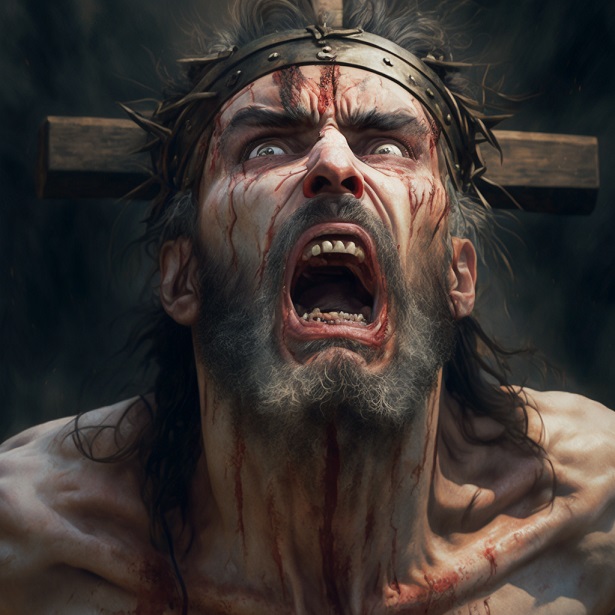
Judas being crucified

I guess the love your enemies bit went out the window with this version of the story, lol. In these instances, the body swapping of Jesus is to rid him of the “Son of God” position and just present him as a prophet and to denounce followers of Christianity. So I understand the reasoning of it. What about the Gnostic stories? First up is the “Apocalypse of Peter”:

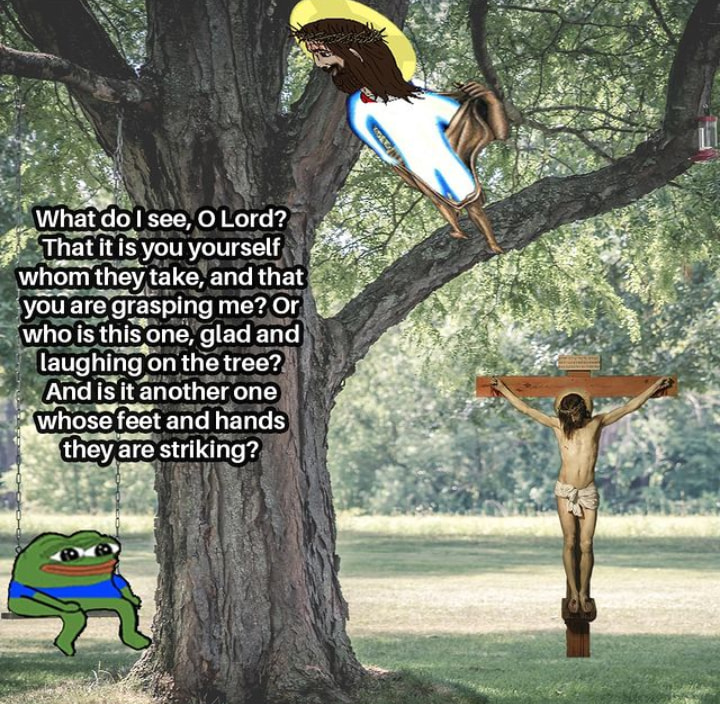
When he had said those things, I saw him seemingly being seized by them. And I said "What do I see, O Lord? That it is you yourself whom they take, and that you are grasping me? Or who is this one, glad and laughing on the tree? And is it another one whose feet and hands they are striking?"

The Savior said to me, "He whom you saw on the tree, glad and laughing, this is the living Jesus. But this one into whose hands and feet they drive the nails is his fleshly part, which is the substitute being put to shame, the one who came into being in his likeness. But look at him and me."

But I, when I had looked, said "Lord, no one is looking at you. Let us flee this place."

But he said to me, "I have told you, 'Leave the blind alone!'. And you, see how they do not know what they are saying. For the son of their glory instead of my servant, they have put to shame."

And I saw someone about to approach us resembling him, even him who was laughing on the tree. And he was <filled> with a Holy Spirit, and he is the Savior. And there was a great, ineffable light around them, and the multitude of ineffable and invisible angels blessing them. And when I looked at him, the one who gives praise was revealed.
The Savior said to me, “He whom you saw on the tree, glad and laughing, this is the living Jesus.

And from the “Second Treatise of Seth”:

For Adonaios knows me because of hope. And I was in the mouths of lions. And the plan which they devised about me to release their Error and their senselessness - I did not succumb to them as they had planned. But I was not afflicted at all. Those who were there punished me. And I did not die in reality but in appearance, lest I be put to shame by them because these are my kinsfolk. I removed the shame from me and I did not become fainthearted in the face of what happened to me at their hands. I was about to succumb to fear, and I <suffered> according to their sight and thought, in order that they may never find any word to speak about them. For my death, which they think happened, (happened) to them in their error and blindness, since they nailed their man unto their death. For their Ennoias did not see me, for they were deaf and blind. But in doing these things, they condemn themselves. Yes, they saw me; they punished me. It was another, their father, who drank the gall and the vinegar; it was not I. They struck me with the reed; it was another, Simon, who bore the cross on his shoulder. I was another upon Whom they placed the crown of thorns. But I was rejoicing in the height over all the wealth of the archons and the offspring of their error, of their empty glory. And I was laughing at their ignorance.

And I subjected all their powers. For as I came downward, no one saw me. For I was altering my shapes, changing from form to form. And therefore, when I was at their gates, I assumed their likeness. For I passed them by quietly, and I was viewing the places, and I was not afraid nor ashamed, for I was undefiled. And I was speaking with them, mingling with them through those who are mine, and trampling on those who are harsh to them with zeal, and quenching the flame. And I was doing all these things because of my desire to accomplish what I desired by the will of the Father above.

The Gnostic stories are used as an allegory (ignorance of the blind) and that Jesus is more than just flesh, but rather spirit. Now various groups had different opinions on the crucifixion, so this does not apply to all, just within these particular texts.

Below is a meme I found regarding the Apocalypse of Peter that I thought was very well done and gets the point across:

I must say though, it does some kind of messed up that Jesus would laugh when another is being crucified in his place. I get why there is laughter and it’s not really directed at the person being crucified, but……

-bP

Sources:

https://quran.com/4?startingVerse=157

https://www.sacred-texts.com/isl/gbar/index.htm

http://gnosis.org/naghamm/2seth.html

http://gnosis.org/naghamm/apopet.html

The Temptation of Allogenes

As I mentioned in my previous post, there is a text in the Codex Tchacos that rarely gets spoken of and that is “A Book of Allogenes”, also known as “The Temptation of Allogenes”. This is not the actual name of the text but what was given to it due to the contents, and it is not to be confused with the “Allogenes” text in the Nag Hammadi Library. This very fragmented text, featured in the book, “The Gospel of Judas: Critical Edition” has been translated by Marvin Meyer and François Gaudard.

While the text is missing quite a bit, a read through will become quite familiar if you have read the canonical “Gospel of Matthew”. In that story, which is only 11 verses, we have Jesus being tempted by the devil while in the wilderness. For those unfamiliar with the actual text, here is the ESV translation:

Then Jesus was led up by the Spirit into the wilderness to be tempted by the devil.  And after fasting forty days and forty nights, he was hungry.  And the tempter came and said to him, “If you are the Son of God, command these stones to become loaves of bread.”  But he answered, “It is written,

“‘Man shall not live by bread alone,
    but by every word that comes from the mouth of God.’”

Then the devil took him to the holy city and set him on the pinnacle of the temple and said to him, “If you are the Son of God, throw yourself down, for it is written,

“‘He will command his angels concerning you,’

and

“‘On their hands they will bear you up,
    lest you strike your foot against a stone.’”

Jesus said to him, “Again it is written, ‘You shall not put the Lord your God to the test.’”  Again, the devil took him to a very high mountain and showed him all the kingdoms of the world and their glory.  And he said to him, “All these I will give you, if you will fall down and worship me.”  Then Jesus said to him, “Be gone, Satan! For it is written,

“‘You shall worship the Lord your God
    and him only shall you serve.’”

Then the devil left him, and behold, angels came and were ministering to him.

The “Temptation of Allogenes”, while extremely fragmentary, tells a similar story. In this particular text, the main character is Allogenes. Those unfamiliar with Allogenes, this figure is the “child” of Barbelo, i.e., the Logos, The Christ, etc…. This figure is a bridge between the upper and lower Aeons. While the beginning of the text is missing, once it picks up we are introduced with prayers to the Great Invisible Spirit. These prayers are similar to what we see in other Gnostic texts.

“O Lord God, you who are above
 all the great Aeons, 
you who have no beginning and no end, 
grant us a spirit of knowledge for the revelation of your mysteries, 
so that we may know ourselves, namely, 
where we have come from, 
where we are going, 
and what we should do in order that we may live.”

I must say that’s a great prayer! After Allogenes states the prayer, Satan shows up. The text breaks up after this. When it resumes, it has Satan offering Allogenes all the good things of world including food, silver, gold and clothes. Allogenes tells Satan:

“Depart from me, Satan, for I seek not you but my Father,
Who is superior to all the great Aeons.  
For I was called Allogenes, 
because I am from another race; 
I am not from your race.” 

(The picture at the top of this blog post was made using this phrase in the Midjourney A.I. program)

The next line of the text refers to Satan as “the one who rules the world”, so in the Gnostic cosmology, this is Yaldabaoth / Saklas. The text is missing during Satan’s speech but picks up with Allogenes’ response where it is said to Satan once again to depart and state that “I do not belong to you”. Satan leaves in shame and Allogenes goes back into prayer. Here is the prayer which unfortunately gets cut off towards the end:

“O God, 
You who are in the great Aeons,
Hear my voice, have mercy on me, and
Save me from everything evil.
Look on me and hear me
In this forsaken place.
Now [let your] ineffable [light] shine on me.
[---]
[---]
[---]
[---]
[---] your light
[---].  Yea, Lord, help me, for [I] do not know
[---] for ever and ever.”

Again, a really great prayer, from what is presented. After Allogenes said this prayer, a cloud of light surrounds Allogenes and begins to speak. The voice states that the prayer has been heard and it has been sent here to speak of the good news before Allogenes leaves this place. Unfortunately the texts breaks up and only fragmented words remain at random spots.

So what we have left is a Gnostic retelling of the Gospel of Matthew temptation story. It is a shame the ending is no longer there but to have what we have, that in itself is a great treasure. I do like the prayers that are presented in the text and believe they will work quite well in one’s practice.

The full text, along with photos of the actual papyrus, can be found in the following book:

-bP

First Apocalypse of James – Tchacos vs NHL

The Codex Tchacos is famous for having the “Gospel of Judas” but what many seem to forget, it actually contained four Gnostic texts! Besides Judas, there is “The Letter of Peter to Philip”, “Book of Allogenes” and “James”. The “Book of Allogenes” is a newly discovered book, and not to be confused with “Allogenes” from the Nag Hammadi Library. I will make a post about the BoA in the near future. The copy of “James” that appears in Tchacos is an alternate version of the “First Apocalypse of James” that is also found in the Nag Hammadi Library. There is a third version of JAMES, a Greek fragmented version, that was found in the Oxyrhynchus dig, and only identified in 2017. As of posting this blog, the translation has not been published for the public.

So let’s compare the Tchacos version with the Nag Hammadi Library one. I am using the Marvin Meyer & Gregor Wurst translation of the Tchacos version (only available via the “Gospel of Judas: Critical Edition” book), and the William R. Schoedel translation of the NHL version, which is available at gnosis.org. Where both copies have existing fragments, they actually match up rather well. Some areas do get expanded upon. At the beginning of the text after Jesus informs James that he is a brother but not a “physical” brother, he goes into a dialogue regarding the ONE. Here is the Tchacos version:

Nothing existed except the One Who Is.  It is unnamable and ineffable among those who are or who will be.  For my part, I am from the One Who Is and is unnamable, and while I have been called by many names that do not belong to me, they are foreign to me.  And I am not first; I am second, from the One Who Is.  Since you have inquired about femaleness, listen.  Femaleness did exist, but it did not preexist.  It created powers and deities for itself.  So the One Who Is preexists, and femaleness also exists, but it does not preexists.
As for me, I have come from the image of the One Who Is to show you the One Who Is.  And I have also come to show you the image of the powers, so that the children of the One Who Is may understand what is theirs and what is not theirs.  Look, I have revealed the mystery to you.  They will arrest me after three days.  A multitude of elders will ---- me, and they will condemn me and curse me, but my deliverance is near.”  

Now compare that with the NHL version:

"Nothing existed except Him-who-is. He is unnameable and ineffable. I myself am also unnameable, from Him-who-is, just as I have been given a number of names - two from Him-who-is. And I, I am before you. Since you have asked concerning femaleness, femaleness existed, but femaleness was not first. And it prepared for itself powers and gods. But it did not exist when I came forth, since I am an image of Him-who-is. But I have brought forth the image of him so that the sons of Him-who-is might know what things are theirs and what things are alien (to them). Behold, I shall reveal to you everything of this mystery. For they will seize me the day after tomorrow. But my redemption will be near."

A bit more detailed in the Tchacos version, but really, both say the same thing. While not a difference in terms of content, the NHL version is more complete in some areas where the Tchacos version is not. Since the NHL version is easily available, I will not cover those sections. Presented below are sections where the Tchacos version fills in gaps of the NHL version.

NHL version:
But this (people) existed as a type of the archons, and it deserved to be destroyed through them. But [...] the archons, [...] who has [...] but since it [...] angry with [...] The just [...] is his servant. Therefore your name is "James the Just".

Tchacos version:
Rather, this was inflicted upon the figure of the rulers, for whom it was fitting to be prepared.  It was the rulers who have prepared him.  Then he came to his end.  But watch out, because the just God is angry, for you have been a servant to him, and that is why you received the name ‘James the Just.’

NHL version:
He will say to you, 'What sort of son are you, and to what father do you belong?' You are to say to him, 'I am from the Pre-existent Father, and a son in the Pre-existent One.' When he says to you, [...], you are to say to him [...] in the [...] that I might [...]."

'[...] of alien things?' You are to say to him, 'They are not entirely alien, but they are from Achamoth, who is the female.

Tchacos version:
And he will say to you, ‘What son and what father?’  You will say to him, ‘The preexistent Father, and the Son who exists in the preexistent One.’  And he will say to you, ‘Where have you come from?’  You shall say to him, ‘From the preexistent One.’  And he will ask me, ‘Why have you come?’  You shall say, ‘I have come to all those who are mine and those who are not mine.’  He will say, ‘So what have you come after --- those who are not yours?’  And you shall say, ‘They are not at all alien to me, but to Achamoth, that is, the female, and she has created these for herself.

NHL version:
"But when you come to these three detainers who take away souls by theft in that place [...] these. You [...] a vessel [...] much more than [...] of the one whom you [...] for [...] her root. You too will be sober [...]. But I shall call upon the imperishable knowledge, which is Sophia who is in the Father (and) who is the mother of Achamoth.

Tchacos version:
But when you come to these three who carry off the soul, there is indeed a great struggle in that place, if you say these things to them: ‘I am a vessel that is more precious than Achamoth, the female who created you.  And if your mother is ignorant of her own root, then when will you become sober?  But I have called upon undefiled Sophia, who is in the Father, the mother of Achamoth

The following is a pretty extensive “gap filler”…..

NHL version:
And when he writes them down [...] and they are to give them [...] he has the [...] he is called Levi. Then he is to bring [...] word [...] from what I said earlier [...] a woman [...] Jerusalem in her [...] and he begets two sons through her. They are to inherit these things and the understanding of him who [...] exalts.

Tchacos version:
And then, when he has written them out, they will be taken from him and given to Manael--this is a holy name, and it has the same meaning as Masphel.  Let this person keep this very book as an inheritance for the children.  And there will come from him a seed, holy and worthy to inherit these things I have said.  And when his little child grows up --- he --- living, he will receive the name ‘Levi.’  Then the land will be at war again.  But Levi, as a little child, will hide there, and not a word from what I have said will pass his lips.  And he will marry a woman from Jerusalem, from his generation, and he will produce two sons from her, and the second (?) will inherit these words.  

NHL version:
 And may these things remain hidden in him until he comes to the age of seventeen years [...] beginning [...] through them. They will pursue him exceedingly, since they are from his [...] companions. He will be proclaimed through them, and they will proclaim this word. Then he will become a seed of [...]."

Tchacos version:
he will keep them hidden until he reaches his seventeenth birthday.  
And then the land will go to war.  But since he is not there, he will be safeguarded in accordance with providence, and he will grow up and rule over many provinces.  Many will be saved through him, and he will make this word become dogma for many provinces.  But he will be severely persecuted by his fellows ----.  And he will be attacked by them, and they will despise this very word.  And these things will happen to restrain the rulers.”

Another big chunk missing from the NHL version. It seems that the NHL version is very fragmented towards the end, more so than you may think.

NHL version:
James said, "I am satisfied [...] and they are [...] my soul. Yet another thing I ask of you: who are the seven women who have been your disciples? And behold all women bless you. I also am amazed how powerless vessels have become strong by a perception which is in them." The Lord said, "You [...] well [...] a spirit of [...], a spirit of thought, a spirit of counsel of a [...], a spirit [...] a spirit of knowledge [...] of their fear.

Tchacos version:
(James:) “Rabbi, I have come to believe all these things, and they are well placed in what is within my soul.  Yet I shall ask you this: who are the seven women who have become your disciples and whom all the generations bless?  And I am amazed that they are in weak vessels and have found powers and perceptions.”  (Jesus:) “James, you do well to be amazed, but the Son of Man has come and has revealed the secrets about the children of light, so that they may possess the secrets when they are revealed.  These seven women are seven spirits who are introduced in this (?) scripture: A spirit of wisdom and insight, a spirit of counsel and strength, a spirit of understanding and knowledge, a spirit of fear.
NHL version:
[...] when we had passed through the breath of this archon who is named Adonaios [...] him and [...] he was ignorant [...] when I came forth from him, he remembered that I am a son of his. He was gracious to me at that time as his son. And then, before <I> appeared here, <he> cast them among this people. And from the place of heaven the prophets [...]."

Tchacos version:
When I passed through the land of the great ruler, who is called ‘Addon,’ I went in by him.  And he was ignorant.  And when I left him, he thought that I was his son, and he was gracious to me as though to his own son.  And before I appeared in these places, these spirits already were there with this very people, where no prophets spoke without these seven spirits.  And these are the seven spirits who have preached about me through the mouths of people as they were able to speak, because I had not yet spoken with all strength.  But I came and brought it to completion, and I am not yet completed.”  
NHL version:
James said, "Rabbi, [...] I [...] all together [...] in them especially [...]." 

Tchacos version:
(James:) “You have also convinced me of all these things.  Rabbi, because it is the case, then, that after they have received the seven, they leave them with each other, do you have some who are more honored than others?” 
NHL version:
The Lord said, "James, I praise you [...] walk upon the earth [...] the words while he [...] on the [...]. For cast away from you the cup which is bitterness. For some from [...] set themselves against you. For you have begun to understand their roots from beginning to end. Cast away from yourself all lawlessness. And beware lest they envy you. When you speak these words of this perception, encourage these four: Salome and Mariam and Martha and Arsinoe [...] since he takes some [...] to me he is [...] burnt offerings and [...].

Tchacos version:
(Jesus:) “I praise you even more, O James, for you ask about the details, and you will not say a single idle word.  Truly, you are worthy of your own root, and you have cast away from yourself the cup of drunkenness.  Not a single ruler can stand against you, for you have begun to recognize those who are yours.  Cast far away from yourself all ignorance, and beware lest they become jealous of you because you have received these words, that is, the knowledge that makes one high-minded.  Let yourself also be persuaded by this other circumstance, which is that of Salome, Mary, and Arsinoe, whom I shall introduce to you, because they are worthy of the One Who Is.
NHL version:
But I [...] not in this way; but [...] first-fruits of the [...] upward [...] so that the power of God might appear. The perishable has gone up to the imperishable and the female element has attained to this male element."

Tchacos version:
For they also have become sober and have been saved from the blindness that was in their hearts, and they have recognized who I am.  This has happened in accordance with the providence of the Father, because he has sent me as a priest.  And everywhere one has to give me the firstfruits and the firstborn.  The priest of this world receives the firstfruits and assigns sacrifices and offerings.  But I am not like this.  Rather, I receive the firstfruits of those who are defiled, so that I may send them up undefiled, that the true power may be revealed.  For the defiled has separated from what is undefiled, and the work of the female (?) has attained to the male.”  
NHL version:
James said, "Rabbi, into these three (things), then, has their [...] been cast. For they have been reviled, and they have been persecuted [...]. Behold [...] everything [...] from anyone [...]. For you have received [...] of knowledge. And [...] that what is the [...] go [...] you will find [...]. But I shall go forth and shall reveal that they believed in you, that they may be content with their blessing and salvation, and this revelation may come to pass."  
And he went at that time immediately and rebuked the twelve and cast out of them contentment concerning the way of knowledge [...].

Tchacos version:

(James:) “Rabbi, the three, then, have perished and have not suffered, if in fact they deserved it and have been persecuted by others and have been told things that do not exist?”  (Jesus:) “James, it is completely unnecessary for anyone to perish.  These very three are separated from a place of faith --- the hidden knowledge.  These are the names of the three: Sapphira and Susanna and Joanna.  Look, I have revealed everything to you, and you are not a stranger to these very words.  For you have received the beginning of knowledge --- from those who are mine

At the very end here, both versions get very fragmented.

NHL version:
[...]. And the majority of them [...] when
they saw, the messenger took in [...]. The
others [...] said, "[...] him from this
earth. For he is not worthy of life."
These, then, were afraid. They arose,
saying, "We have no part in this blood,
for a just man will perish through
injustice" James departed so that [...]
look [...] for we [...] him.
The Apocalypse of James

Tchacos version:
Now go, and you will find the rest of
them. And I shall go to these and
appear to them, for they have ----
---
---
--- the twelve
--- he communicated to them
--- and knowledge
--- he persuaded them
--- are from them
---. The rest
---. It happened after
a while (?) that they seized James
instead of another man, against whom
they had brought charges, for he had fled
from ---- . And --- prison, but it was
another man named James who go out of
the prison. They seized this person
instead of him, and they brought him
before the judges. Most of the judges
saw that he was innocent, and they let
him go. But the others and all the
people stood there and said, “Make him
leave the earth; he is not worthy of life.”
But these were afraid, and they rose up
and said, “We are not ---- ---- .”
---
---
---
he remembered ---
he became --- ,
for the men ---
him, but the ---.
And when they were stoning him, he
said, “My Father, you who are in the
heavens, forgive them, for they do not
know what they are doing.”
JAMES

As you can see, towards the end of the text, the Tchacos version really steps up and fills in a lot of gaps to really give the text a more proper ending. If you are curious to read the full Tchacos version, as far as I know, it is only available in the book pictured below:

The book also features full color scans of the actual papyri. The translation of Judas in this book is an older one, and since then, more fragments have been returned (that in itself is a whole story, as the history of the codex is quite fascinating). I recommend Marvin Meyer’s 2011 translation, pictured below, as it includes the found fragments and goes a more neutral stance on the whole daemon issue (and that too, is quite the story, LOL).

To read the Nag Hammadi version of James, go to:

http://www.gnosis.org/naghamm/1ja.html

bP

Black Madonna shrine – Pacific, Missouri

It’s been over a month since my last post, and I usually try not to let that happen. Unfortunately in the past month, I had to deal with the passing of my beloved senior dog (Krypto, 15 years old). The leading up to his death, and the grief afterwards, has been pretty tough. Thanks to some built up vacation time from work, I decided to take off the end of October for a few weeks to sort of get my mind back on track. One of the things I have been wanting to do for awhile is visit the Black Madonna shrine in Pacific, MO (USA). There are not many Black Madonnas in the US, but when I found out about this shrine about 4 hours away, I knew I would have to make it out there some time, and now it was good as time as any.

Located in the deep forest about 40 minutes south west of St. Louis, MO, this shrine is just up the road from a Franciscan Monastery. A history of the site can be found here: https://theblackmadonnashrine.org/who-we-are/

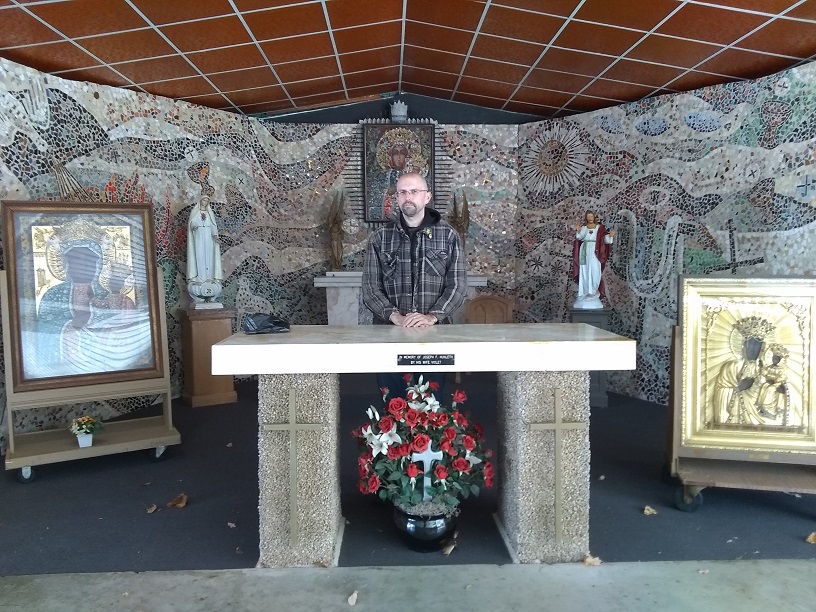
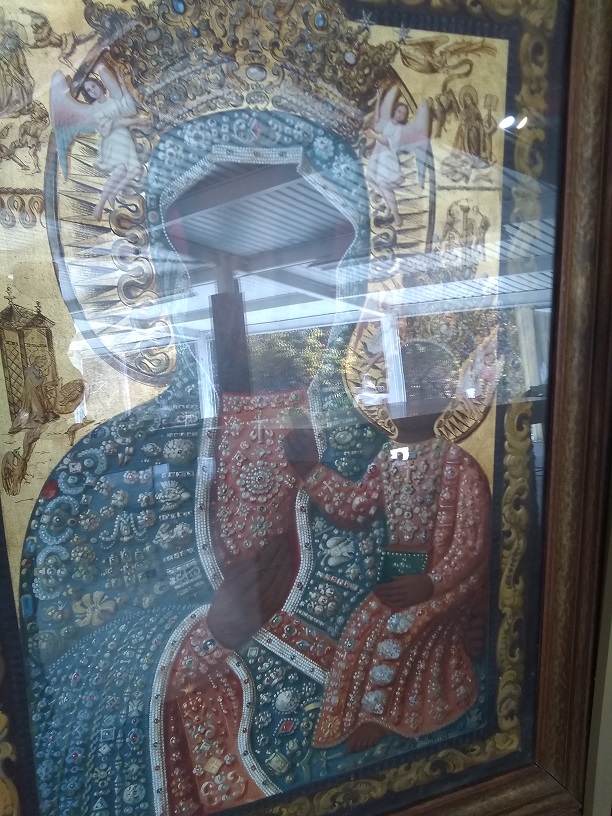
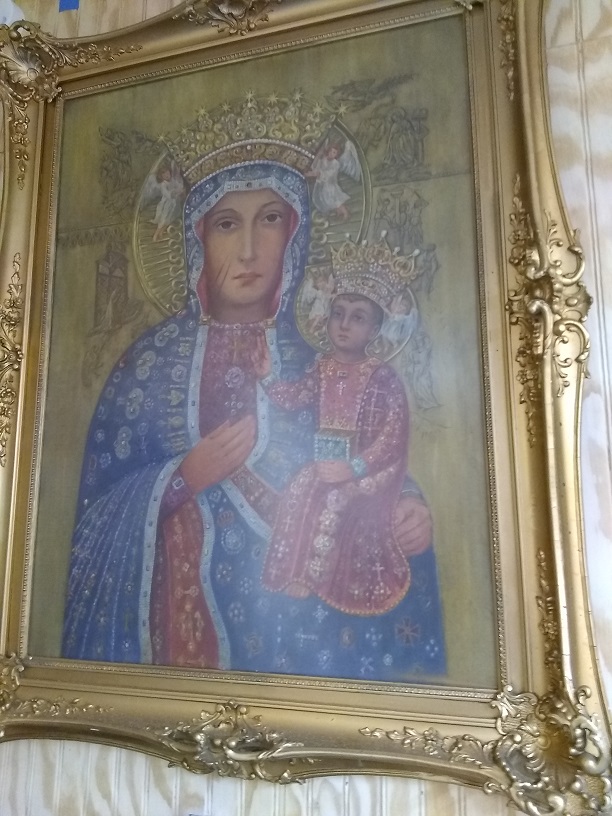
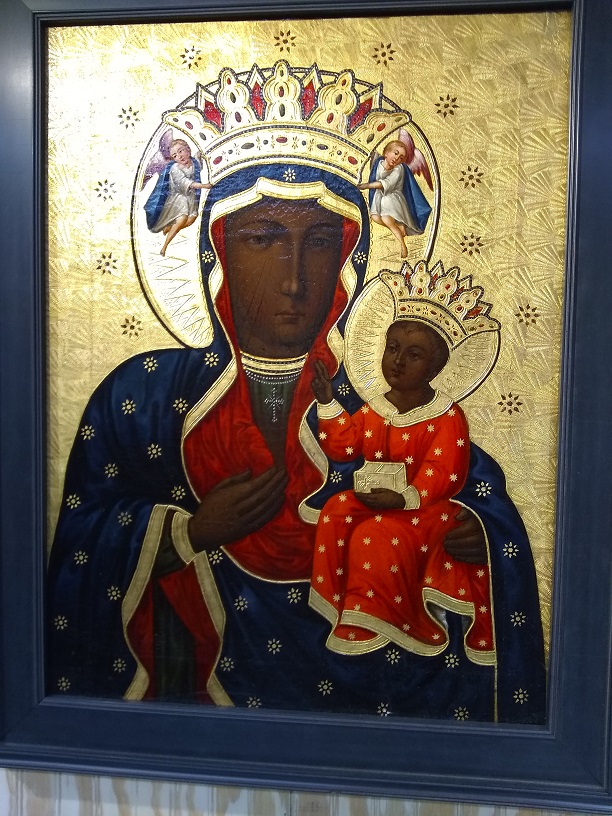
Upon arriving at the site, there is an outdoor chapel that had three variants of Our Lady of Czestochowa on display. Two of these were framed portraits on pull carts and a third was a mosaic version on the wall behind an altar. See the pics and video below:

The outdoor chapel

To the left of the altar is a mini museum. Inside are various artifacts either relating to the site, donated items or souvenirs of Our Lady of Czestochowa. Below is a few pics, as well as a quick video walk through.

At the other end of the chapel, there is a gift shop that features Catholic items, but what really impressed me was the amount of Our Lady of Czestochowa items they had! I expected a few things, but wow, this went into another level! So I ended up getting quite a few items like a small medal coin, a sticker suncatcher, 8×10 print in frame, a magnet and a gold leaf icon (the smaller version, as they had three different sizes). To find Black Madonna icons for sale can be a hassle at times, so I was thrilled to get one, especially one of such high quality. Pic below:

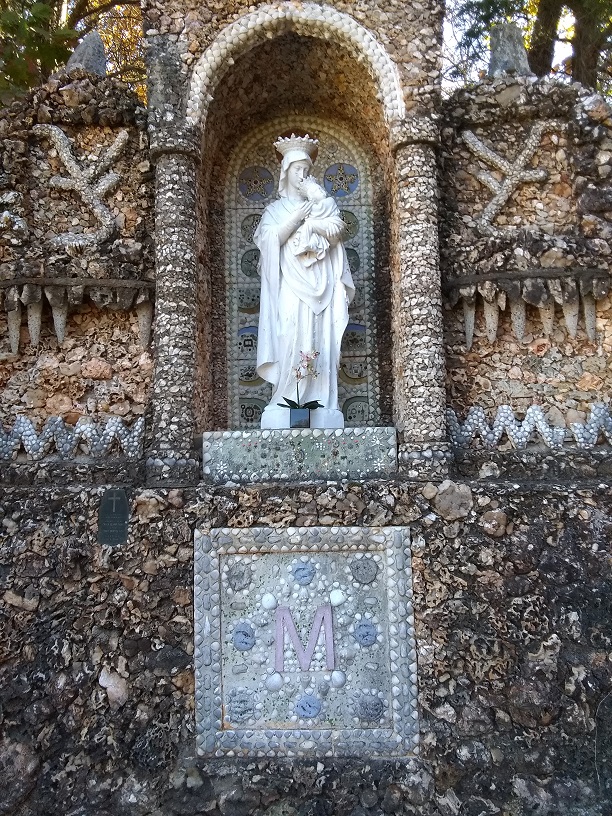
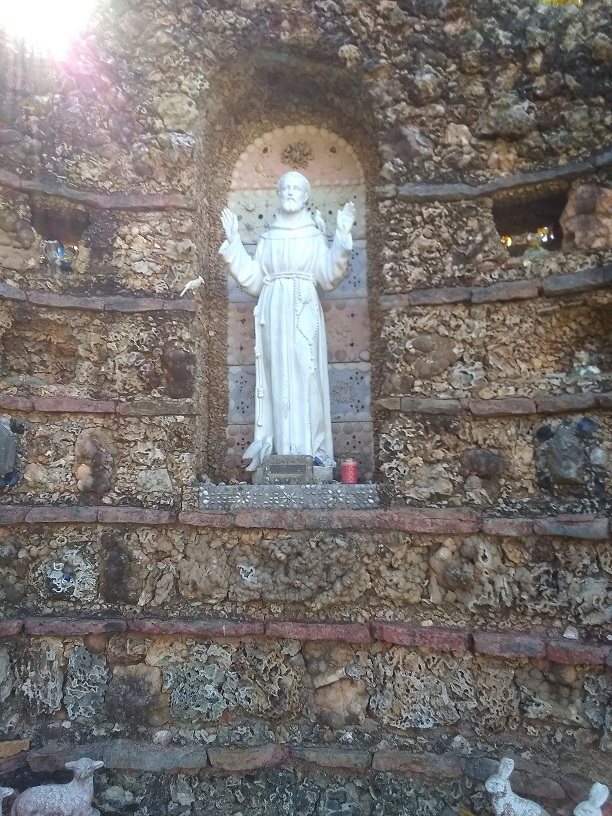
Besides this amazing shrine to Our Lady, the grounds also feature a large grotto that was built using locally found items. There is a geode grotto here locally that is similar to this one, so I have seen something like this before. It is one of those projects that is an absolute labor of love that took years to put together. Very impressive and is definitely an example of “folk art.” Here are a few pics below:

Main part of the grotto, but there are other exhibits on the flip side.

I was extremely happy that my wife and I made the trip to the shrine. While I do like seeing the large cathedrals, these little “labors of love” that exist in the middle of nowhere really warm my heart. Check it out if you are near to the area. Their official website is: https://theblackmadonnashrine.org

-bP

Summer Harvest

While we have various Valentinian texts in the NHL, there are fragments that exist elsewhere, usually in the writings of the church Fathers, and are typically presented for negative commentary directed towards them. That being said, they do preserve these tidbits, so hey, I’ll take it. The following survives thanks to Hippolytus of Rome, in the writing, Against Heresies. This psalm is apparently complete and not a fragment. It is rather short but the imagery it conjures up is quite interesting. Here is the translated version I did for the short video recording:

In the spirit I see all suspended,
In the spirit I know everything held:
The flesh hanging from the soul
The soul held aloft by the air
The air suspended from the ether
Fruits manifest themselves out of the Depth
A child emerges from the womb

Here is a commentary on the psalm by an unnamed Valentinian teacher that gives the reader a perspective on the meaning of the psalm:

He means this: "flesh" is matter which is "hanging" from the "soul" of the Craftsman. "The soul held aloft by the air" means the Craftsman held aloft by the Spirit that comes from the Fullness (i.e. Achamoth). And "the air suspended from the ether" means that the exterior Wisdom (Achamoth) is suspended from the inner Limit and the entire Fullness. "Fruits manifest themselves out of the Depth" having become the complete emanation of the Aeons from the Father.

I ran the psalm through the Midjourney AI and eventually got the photo that is presented on this post.

Source: http://gnosis.org/library/valentinus/Fragments_Valentinus.htm

bP

A mantra for Barbelo

I like to pick out phrases / paragraphs from various Gnostic texts and put them in a binder for my own personal practice. This binder goes with me when I’m heading to my weekly pilgrimage to the Monte Cassino shrine or when I go out wanting to do any spiritual work. This binder has become a “travel binder”. Being that space is an issue, this is why I pull out various phrases / sections from numerous texts that I think I need to meditate / study upon. Recently I pulled a mantra/prayer to Barbelo from the NHL text Melchizedek. This particular text is a bit fragmented, but this short mantra / prayer is intact. It is as follows:

"Holy are you, Holy are you, Holy are you, Mother of the aeons, Barbelo, for ever and ever, Amen."

I really like the short and simple aspect to this and figured others would appreciate such a mantra for your practice. The artwork featured on this blog post is another MidJourney A.I. creation I put together of Barbelo. It’s a bit different than others I did, but I like it!

Source: http://gnosis.org/naghamm/melchiz.html

bP

Readings from “Gospel of Truth” & “Gospel of Judas”

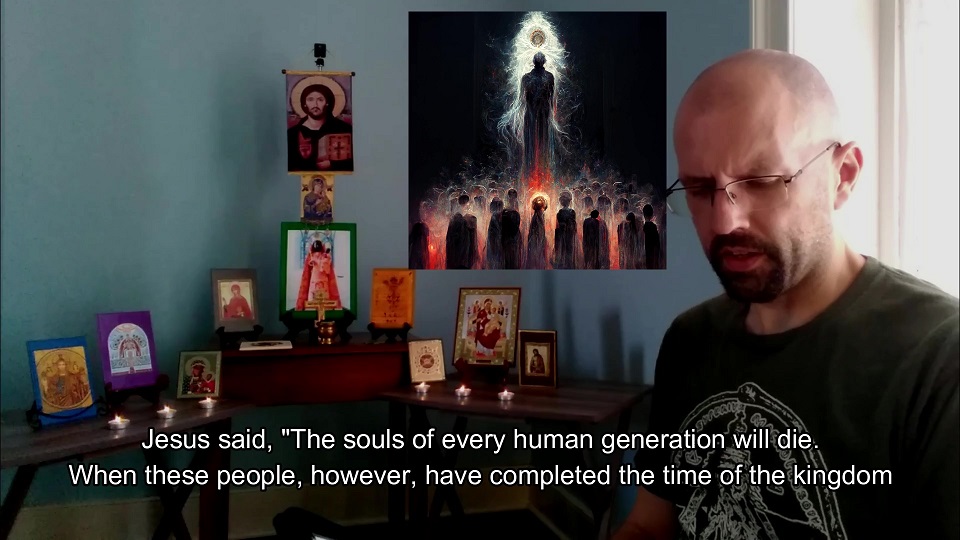
Another reading video, this time sections from the “Gospel of Truth” and the “Gospel of Judas”. With the Judas reading, I included some MidJourney AI artwork to accompany the text. I’ll post one of those pics below with the transcript of the text.

The section of Truth I decided to recite is of the section titled “Putting Knowledge into Practice.” What I really like about this section is that it’s a call to action. To “practice what you preach” in so many words.

PUTTING KNOWLEDGE INTO PRACTICE

Speak concerning the truth to those who seek it and of knowledge to those who, in their error, have committed sins.  Make sure-footed those who stumble, and stretch forth your hands to the sick. Nourish the hungry, and set at ease those who are troubled. Raise up and awaken those who sleep. You are this understanding that seizes you.  If the strong follow this course, they are even stronger. Turn your attention to yourselves. Do not be concerned with other things, namely, that which you have cast forth from yourselves, that which you have dismissed. Do not return to them to eat them. Do not be moth-eaten. Do not be worm-eaten, for you have already shaken it off. Do not be a place of the devil, for you have already destroyed him. Do not strengthen your last obstacles, because that is reprehensible. For the lawless one is nothing. He harms himself more than the law. For that one does his works because he is a lawless person. But this one, because he is a righteous person, does his works among others. Do the will of the father, then, for you are from him.

The section from “Gospel of Judas” I recite is as follows:

Judas said to him, "Rabbi, what kind of fruit does this generation produce?"

Jesus said, "The souls of every human generation will die. When these people, however, have completed the time of the kingdom and the spirit leaves them, their bodies will die but their souls will be alive, and they will be taken up."

I ran Jesus’ response through the MidJourney A.I. and after several variations, I ended up with one I really liked. I included two of these in the video, but the one below is my favorite:

External links:

Gospel of Truth: http://gnosis.org/naghamm/got-barnstone.html

Gospel of Judas: https://southerncrossreview.org/48/gospel-judas.htm

-bP